
Umamusume: Pretty Derby - Beginning of a New Era
REACH OUT AND GRASP GREATNESS.
Jungle Pocket, known to her close friends as "Pokke," is a free-spirited Umamusume who has proven her dominance in the freestyle racing scene. Overwhelmed by Fuji Kiseki's majestic performance at a graded Twinkle Series race, she resolves to take on the Twinkle Series herself.
Shortly after joining the Umamusume training school Tracen Academy, Pokke comes under the wing of Tanabe, a veteran trainer who fostered Fuji Kiseki's talent. Together, they aspire to dominate the Triple Crown series, a set of three races that can only be attempted once in a lifetime. Awaiting them are formidable rivals of Pokke's generation, whose talents surpass even her own.
There's Dantsu Flame, whose diligence and determination to win are second to none; Manhattan Cafe, who chases the shadowy silhouette of a "friend" that only she can see; and Agnes Tachyon, a veritable mad scientist seeking to push the very boundaries of what is possible for Umamusume.
These four runners take to the track with their very pride, spirit, and souls on the line. Past the finish of their epic clash is a door waiting to be opened—one that leads to the beginning of a new era.
"It doesn't matter who stands in my way! I'm gonna be the greatest!"
(Source: Umamusume: Pretty Derby - Beginning of a New Era Site)
📺Anime Details
📝Editorial Analysis
The first time Pokke stumbles mid-stride on the rain-slicked track at Tracen Academy—her hooves slipping, her breath catching not from exhaustion but from the sudden, hollow silence where her rhythm used to live—that’s when it hits you. Not as spectacle, but as weight: the quiet fracture of a body that once moved like wind, now learning how to hold itself upright again. Her fingers curl into fists at her sides, not in anger, but in rehearsal—rehearsing the shape of control she hasn’t earned yet.

That moment isn’t about speed or victory. It’s about rehabilitation as ritual—the slow, unglamorous recalibration of self after greatness has already been witnessed, named, and then taken away—not by failure, but by the sheer, indifferent physics of motion and injury. Umamusume: Pretty Derby - Beginning of a New Era doesn’t trade in triumph arcs. It trades in resumption: the way Tanabe watches Pokke’s gait with clinical patience, the way silence hangs between them not as emptiness but as shared, unspoken calculus—how much can this body remember? How much must it forget to begin again? This is psychological not because of mind games or twists, but because every stretch, every resisted rep, every delayed start line pulses with the question: Who are you when your defining gift becomes your most demanding teacher?
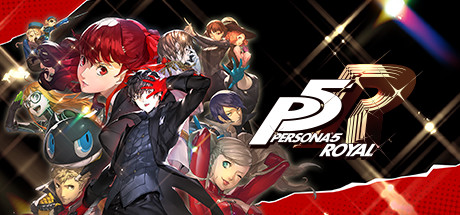
That feeling—the ache of embodied memory, the dignity in incremental return—echoes sharply in Persona 5 Royal. Its player review praises “the seamless transition between daily life…”—exactly the texture Umamusume lives in: Pokke’s rehab isn’t isolated training montages; it’s folded into cafeteria conversations, hallway glances, the way she adjusts her earpiece before stepping onto the treadmill, syncing her breath to a playlist no one else hears. Like Joker balancing schoolwork and Phantom Thief duties, Pokke’s identity isn’t split—it’s layered, each role pressing gently, insistently, against the others. The emotional narrative isn’t delivered in cutscenes alone; it’s in the rhythm of Tokyo’s urban pulse beneath Tracen’s floors, in the way a trainer’s voice lowers just slightly when correcting form—not as critique, but as witness.
Then there’s Jade Empire™: Special Edition, whose description invites you to “step into the role of an aspiring martial-arts master and follow the path of the open palm or the closed fist.” That duality—openness versus restraint, yielding versus resistance—is Pokke’s core tension. Her freestyle racing wasn’t chaos; it was embodied philosophy, a language written in stride and lean and release. Now, rehabilitation forces her into the closed fist: discipline, limitation, containment. Yet the game’s own player review—burdened by technical friction (“copy and paste ‘steam.dll’…”)—mirrors Pokke’s reality: greatness isn’t hindered only by injury, but by systems that weren’t built for her pace, her needs, her particular kind of fire. Both demand resilience within constraint—not despite it.
And Dragon Age: Origins, with its legacy-defining stakes and “pause attack mechanic” that “help[s] a lot to strategize your tactic…”—that pause is Pokke’s breath before the starting gate. It’s the split-second Tanabe gives her to reset her stance, the tactical stillness before movement resumes. The review’s quiet awe—“the story is great”—lands because Dragon Age, like Umamusume, treats trauma not as backstory but as tactical terrain. Every companion’s loyalty quest, every moral choice, reshapes how the party moves forward—just as Pokke’s evolving trust in Tanabe, her shifting rapport with Fuji Kiseki’s shadow, reconfigures how she carries her own history into each new lap.
These aren’t stories about becoming more. They’re about becoming precise: precise in grief, in adaptation, in the quiet courage of showing up—hoof or hand—when the body remembers what the mind hasn’t yet forgiven.
You’d love these pairings if you’ve ever sat through physical therapy counting seconds between reps, if you’ve ever loved something so fiercely it scared you to keep holding on, if you believe dignity lives in the micro-adjustment—the tilt of a chin, the timing of a breath, the way a soundtrack swells not at the finish line, but right as someone chooses to try again. Not for glory. Not for proof. But because the rhythm is still there, waiting—not to be reclaimed, but relearned, note by careful note.
🎮43 Games That Match the Vibe









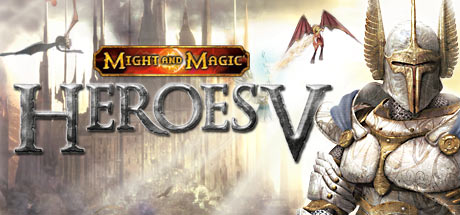









Match Dimensions Explained
❓Frequently Asked Questions
Why does Umamusume: Pretty Derby - Beginning of a New Era feel so different from Dragon Age: Origins despite both having emotional narratives?
Because Umamusume leans hard into upbeat, character-driven idol-sports energy—think training minigames, stamina management before big races like the Tokyo Yushun, and voice-acted story moments with characters like Special Week or Silence Suzuka—while Dragon Age: Origins delivers brooding, morally gray political drama in Thedas, with pause-and-plan combat during darkspawn sieges and legacy-defining choices like siding with Loghain or the Grey Wardens. Their shared 'Emotional Narrative' dimension masks wildly different tones: one’s about aspirational growth under pressure, the other’s about sacrifice in a crumbling world.
Is there an anime or manga adaptation of Jade Empire that captures its martial-arts story like Umamusume’s anime does for its horse-girls?
No—Jade Empire has never been adapted into anime or manga, unlike Umamusume’s multiple seasons. Its story unfolds entirely in-game: you play as the Spirit Monk trained by Master Li, choosing between the Open Palm (mercy) or Closed Fist (power) paths during pivotal fights like the showdown at the Temple of Light. Fans love its cinematic kung-fu choreography and moral weight—but if you're craving that same visual storytelling energy, Persona 5 Royal’s anime-style cutscenes and Phantom Thieves heists (like infiltrating Shido’s palace) come much closer.
How does Heroes of Might & Magic V compare to Umamusume in terms of strategic depth and pacing?
HoMM V is turn-based strategy on a grand scale—building towns, managing resources across provinces like AvLee or Krewlod, and commanding armies in tactical hex battles where positioning a single griffin can swing victory—whereas Umamusume’s strategy lives in real-time rhythm minigames and race-day split-second decisions like when to unleash your horse-girl’s special skill mid-stretch. HoMM V fans praise it as 'the best HoMM ever made' for its deep faction asymmetry and campaign replayability, but it lacks Umamusume’s kinetic, personality-forward pacing and daily life simulation loop.
What’s the best game like Umamusume if I want that same uplifting, high-energy vibe but with deeper character relationships and a killer soundtrack?
Persona 5 Royal is your perfect match—it’s got that same infectious, stylish energy: think jazz-infused battle themes dropping right as you execute a perfect All-Out Attack, or heartfelt confidant scenes with characters like Ann Takamaki or Ryuji Sakamoto that unfold over in-game days. Its 'Stunning Soundtrack' and seamless daily-life-to-dungeon rhythm mirrors Umamusume’s blend of training, bonding, and triumph—and both games reward persistence with emotional payoffs that hit just as hard as a photo finish at Nakayama.