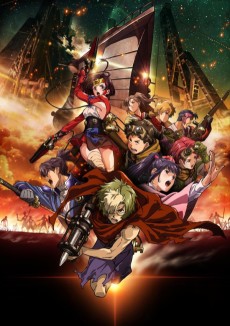
Kabaneri of the Iron Fortress
As the world is in the middle of an industrial revolution, a monster appears that cannot be defeated unless its heart, which is protected by a layer of iron, is pierced. By infecting humans with its bite, the monster can create aggressive and undead creatures known as Kabane. On the island Hinomoto, located in the far east, people have built stations to shelter themselves from these creatures. People access the station, as well as transport wares between them, with the help of a locomotive running on steam, called Hayajiro. Ikoma, a boy who lives in the Aragane station and helps to build Hayajiro, creates his own weapon called Tsuranukizutsu in order to defeat the creatures. One day, as he waits for an opportunity to use his weapon, he meets a girl named Mumei, who is excused from the mandatory Kabane inspection. During the night, Ikoma meets Mumei again as he sees Hayajiro going out of control. The staff on the locomotive has turned into the creatures. The station, now under attack by Kabane, is the opportunity Ikoma has been looking for.
📺Anime Details
📝Editorial Analysis
The iron clang of the Kabane’s chest-plate shuddering under a rifle’s impact—then the sickening crunch as the bullet punches through, not flesh, but iron, and the thing collapses mid-lunge, its eyes still burning with hollow hunger. That sound—the brutal, metallic punctuation of survival—is where Kabaneri of the Iron Fortress lives. Not in grand speeches or slow-motion leaps, but in the split second between breath and rupture: steam hissing from ruptured pipes, gears grinding under siege, a girl’s hand trembling as she reloads a lever-action rifle while blood streaks her cheek and the train lurches into darkness.

What makes this world ache isn’t just the zombies—it’s the weight. The weight of the locomotive’s riveted hull, the weight of a station gate groaning shut behind you as screams fade outside, the weight of knowing every heartbeat could be your last and your first Kabane pulse. It’s melancholic not because it’s sad, but because it’s resigned: people build stations, not cities; they ride trains, not settle soil; they craft armor, not art. There’s no nostalgia for what was lost—only the grim, tactile labor of holding on. You feel the grit of coal dust in your teeth, the heat bloom of a boiler under pressure, the way hope doesn’t arrive like sunlight—it arrives like a scheduled departure time, written in chalk on a soot-blackened board.
That feeling echoes—not in flashy combat sims or breezy match-3 puzzles—but in games where emotional narrative is woven into systems that resist ease. Take Tank Universal: its description cites melancholic exploration and emotional narrative, and one player recalls playing it with their dad at six—“Love the cool sound effects, and the colors. time goes on; loose access to game. Grew up dad passes away…” That line isn’t just backstory—it’s Kabaneri’s core rhythm: machinery humming with memory, vast empty arenas where scale dwarfs the player, and meaning buried not in cutscenes but in sound, in light, in the quiet after gunfire fades. Both ask you to move forward inside something heavy and beautiful—even when the person who taught you how is gone.
Then there’s Hollow Knight, also tagged melancholic exploration and emotional narrative. Its description invites you to “explore twisting caverns, battle tainted creatures and befriend bizarre bugs, all in a haunting, atmospheric world.” A player calls its OST great, its art beautiful, its story lovely. That resonance isn’t about insects versus Kabane—it’s about architecture as elegy. In Kabaneri, stations aren’t safe—they’re tombs repurposed; rails aren’t progress—they’re lifelines strung across graves. So too in Hollow Knight, where every abandoned chapel, every hollowed-out husk of a god, hums with the same quiet tragedy: civilization didn’t fall—it wore down, gear by gear, heart by heart. You don’t conquer the world—you witness its rust.
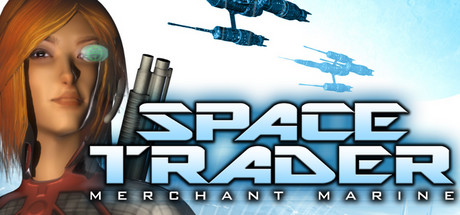
And though Space Trader: Merchant Marine scores lower (76), its tags—survival & crafting, melancholic exploration, emotional narrative—lock in. Its description frames it as “an open world trading colony sim wrapped in a shooter,” where you “buy low, sell high… and place well-placed bullets.” One player calls it “a funny little game made with the doom engine… where you try to do some mini fetch quests.” That dissonance—funny beside doom, fetch quests beside colonies—mirrors Kabaneri’s own tonal tension: the absurd precision of reloading mid-chaos, the dark humor in naming a train Kibō (“Hope”) while its boiler leaks steam like a dying lung. Both treat survival as bureaucratic ritual—inventory management, route planning, resource triage—where emotion hides in the margins of the interface.
Who loves this pairing? Not just fans of steampunk or zombies. It’s the person who pauses mid-fight to watch rain slick the rails in Kabaneri, then boots up Hollow Knight just to sit on a bench in Dirtmouth and listen to the wind. It’s the player who, after clearing a wave in Tank Universal, doesn’t rush the next objective—they tilt the camera, watching their tank’s shadow stretch long across the grid, remembering how light fell in their childhood basement. It’s someone who feels history in metal, loss in silence, and dignity in the act of keeping the engine running—even when the destination is unknown, even when the heart beneath your ribs feels just as armored, just as fragile, as any Kabane’s.
🎮29 Games That Match the Vibe















Match Dimensions Explained
❓Frequently Asked Questions
Why does Hollow Knight keep coming up in 'Games Like Kabaneri of the Iron Fortress' lists?
Because both lean hard into melancholic exploration and emotional narrative—like wandering the decaying, fog-choked ruins of Hallownest while uncovering tragic backstories (Mern, the Pale King, the Abyss), much like Kabaneri’s train-bound journey through a broken, plague-ravaged Japan. Hollow Knight’s oppressive atmosphere, somber OST, and themes of sacrifice and lost humanity hit the same gut-level resonance as Kabaneri’s iron-clad dread and quiet heroism.
Is there a Kabaneri of the Iron Fortress game adaptation?
No—there’s no official Kabaneri game adaptation. But if you’re craving that same blend of grim survival, emotional weight, and atmospheric worldbuilding, Space Trader: Merchant Marine nails the melancholic exploration and emotional narrative dimensions (score 76), especially in its lonely deep-space trading runs and morally gray back-alley deals—think Mumei’s isolation and Ikoma’s quiet resolve, but with lasers and fuel shortages.
Hollow Knight vs. Dragon Age: Origins—which is better for Kabaneri fans who love tactical depth *and* emotional payoff?
Dragon Age: Origins wins on tactical warfare (its pause-attack mechanic lets you orchestrate precise, high-stakes combat like defending the Kabane-infested train), while Hollow Knight delivers deeper melancholic exploration and environmental storytelling—like piecing together the fate of the Hollows just as you piece together Kabaneri’s lore from fragmented logs and ruined stations. Both score highly on emotional narrative, but DA:O adds that layered party-driven tragedy (e.g., Alistair’s arc) that mirrors Kabaneri’s character-driven stakes.
What’s the best game like Kabaneri if I want that slow-burn, heavy-feeling journey—not action-packed, but immersive and emotionally draining?
Tank Universal is your match—it scores 81 on melancholic exploration and emotional narrative, and players describe it as hauntingly nostalgic, with vast empty sci-fi landscapes and evocative sound design (‘cool colors’, ‘time goes on; loose access to game. Grew up dad passes away…’). That sense of solitary traversal, memory-laced weight, and quiet scale? It’s the closest digital echo of riding the Iron Fortress through mist-shrouded wastelands at dawn, watching the world burn slowly behind you.