
Heaven’s Design Team
I made the light, the water, and the earth below. Now it's time to make the life that dwells upon it. Actually... that sounds like a giant headache, so I'll contract it out! Heaven's Design Team is an agency that creates made-to-order life forms for their client, God. Why does this life form look like that? Why does this life form live this way? Watch the trials and successes of the designers and engineers forced to breathe life into God's absurd requests!
(Source: Crunchyroll)
📺Anime Details
📝Editorial Analysis
The pencil tip snaps—again—as Mutsuki slumps over her sketchpad, a half-drawn pangolin curled around a concept for “a creature that can roll into a perfect sphere and digest volcanic rock.” Her coffee’s gone cold. The whiteboard behind her is a fever dream of sticky notes: “NO EYES? BUT THEN HOW DOES IT SEE GOD’S WILL?” “IS A THREE-HEADED SQUIRREL TOO ON-THE-NOSE?” “GOD SAID ‘ELEGANT’—DOES THAT MEAN SYMMETRY OR JUST LESS FUR?” There’s no thunderclap, no divine wrath—just the quiet, exhausted sigh of someone who’s just realized evolution isn’t magic. It’s revision. It’s iteration. It’s showing up on Monday with a new draft of a flamingo’s knee joint and hoping it doesn’t get rejected because “the angle implies existential doubt.”
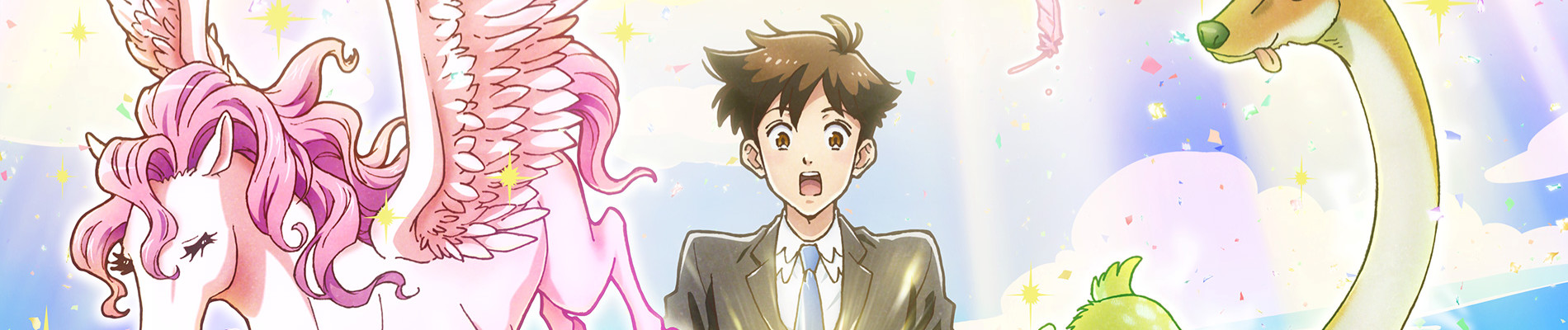
That’s the feeling Heaven’s Design Team lives inside: warm exhaustion, not burnout—collaborative uncertainty, not chaos. It’s the hush after a brainstorm where no one’s sure if the idea is genius or absurd, but everyone leans in anyway. This isn’t satire that mocks labor—it honors the quiet dignity of drafting, testing, failing, and redrafting under impossible constraints. You don’t feel like you’re watching gods play; you feel like you’re sitting beside the designers, hearing the rustle of tracing paper, smelling dry-erase marker, sensing how deeply adult this kind of creation is—not in cynicism, but in patience, in humility before complexity. It makes you think about how every living thing is a compromise between function, physics, and sheer, stubborn hope.
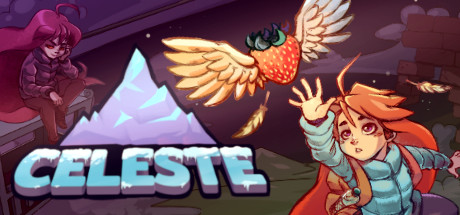
That emotional DNA—the melancholic exploration of purpose amid constraint, the adult & dark seinen weight of responsibility disguised as whimsy—resonates sharply with Celeste. Not because Madeline climbs mountains and Mutsuki sketches armadillos, but because both are structured around brave, iterative self-construction. The description calls it “a super-tight platformer” where you “brave hundreds of hand-crafted challenges”—just like the design team braves God’s ever-shifting briefs. And that player review says, “I feel like I don’t need to review this game, since I would be nowhere near the first to talk about…”—exactly how the anime feels: so familiar in its emotional grammar that it bypasses explanation. Both ask you to move forward even when your own design feels flawed, unstable, human.
Then there’s Tomb Raider: Legend, where Lara Croft “travels the globe to remote, exotic locales… in search of one of history’s greatest artifacts, that unleashes unwelcome figures from Lara’s mysterious past.” That phrase—unwelcome figures from Lara’s mysterious past—mirrors how Heaven’s Design Team treats biology: every trait carries ancestral baggage, every adaptation echoes old failures. The team doesn’t invent life from void—they rework, repurpose, debug inherited systems. And the player review admits, “some boss fights [are] little bit annoying…”—a line that could’ve been spoken by a designer staring at a failed amphibious mammal prototype: annoying, yes—but necessary, instructive, part of the process.
Even Sacred Gold, buried under jank and instability—“full of bugs and is not very stable on modern systems”—echoes the anime’s gentle embrace of imperfection. Its description promises battle against “blood-thirsty orcs & lumbering ogres,” but the review doesn’t praise polish—it praises commitment: “Of course I am! It goes without saying that I would recommend not ju…” (the sentence cuts off, raw and unedited). That’s the same energy: loving something not despite its flaws, but within them—because the act of building, of trying, of showing up with a half-broken engine or a slightly-too-slim giraffe neck, is itself sacred.
This pairing isn’t for people who want clean answers or heroic arcs. It’s for the ones who keep a notebook full of discarded creature concepts, who pause mid-game to admire how a crumbling bridge in Underworld still holds weight—even as it groans—and who understand that melancholy isn’t sadness, but the quiet awe of standing at the edge of what’s possible, pencil in hand, controller in lap, heart open to the beautiful, exhausting, imperfect work of making something alive.
🎮54 Games That Match the Vibe











Match Dimensions Explained
❓Frequently Asked Questions
Why does Heaven’s Design Team match with Celeste when they’re so different?
Great question — it’s not about genre, but shared emotional DNA: both dig deep into melancholic exploration and adult/dark seinen themes. Madeline’s climb up Celeste Mountain mirrors the show’s quiet, introspective moments where characters like Koyama or Yajima grapple with self-doubt and purpose — no flashy battles needed, just raw, resonant inner work.
Is there an anime or game adaptation of Heaven’s Design Team?
No official anime or game adaptation exists yet — but the match list hints at why fans keep hoping for one. Games like Tomb Raider: Anniversary and Underworld share that same tone of solitary, artifact-hunting exploration and layered personal stakes (think Lara confronting her past like Yajima confronts his imposter syndrome), making them spiritual cousins waiting for a proper crossover treatment.
How is Celeste different from Tomb Raider: Legend in terms of mood and pacing?
Celeste leans hard into intimate, claustrophobic melancholy — Madeline’s panic attacks mid-jump, the oppressive silence of the mountain’s quieter zones — while Legend uses globe-trotting set-pieces (like the Bolivia temple collapse) to channel similar dark-seinen weight through spectacle and mystery. Both hit 74 on the match score, but Celeste whispers; Legend echoes.
What’s the best Heaven’s Design Team-like game if I want something thoughtful but not stressful?
Go with Tomb Raider: Anniversary — it’s got that same deliberate, puzzle-driven rhythm as Heaven’s Design Team’s ‘aha!’ creature-design scenes, minus the jank of Underworld or Sacred Gold. Players call it ‘the best Tomb Raider game’ for its tight pacing and emotional clarity, much like how Koyama’s calm expertise grounds the show’s wilder ideas.