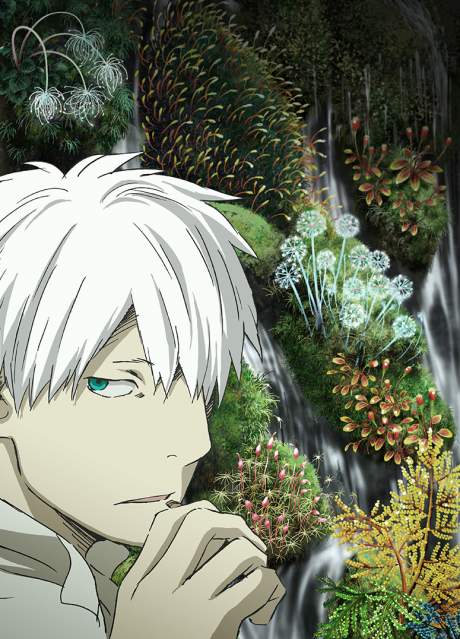
MUSHI-SHI The Next Passage 2
Second season of Mushishi Zoku Shou.
Ghostly, primordial beings known as Mushi continue to cause mysterious changes in the lives of humans. The travelling Mushishi, Ginko, persists in trying to set right the strange and unsettling situations he encounters. Time loops, living shadows, and telepathy are among the overt effects of interference from Mushi, but more subtle symptoms that take years to be noticed also rouse Ginko's concern as he passes from village to village.
📺Anime Details
📝Editorial Analysis
A single candle flickers in a paper lantern, its light trembling not from wind—but from the slow, silent pulse of something alive in the air. Ginko kneels beside a sleeping child whose shadow has begun to breathe on its own, rising and falling like a second chest beneath the floorboards. He doesn’t reach for his tools. He waits. Not for danger to strike, but for the moment the Mushi stops pretending to be part of the world—and starts revealing what the world has forgotten it once held. That breath—quiet, suspended, thick with unspoken consequence—is where MUSHI-SHI The Next Passage 2 lives.
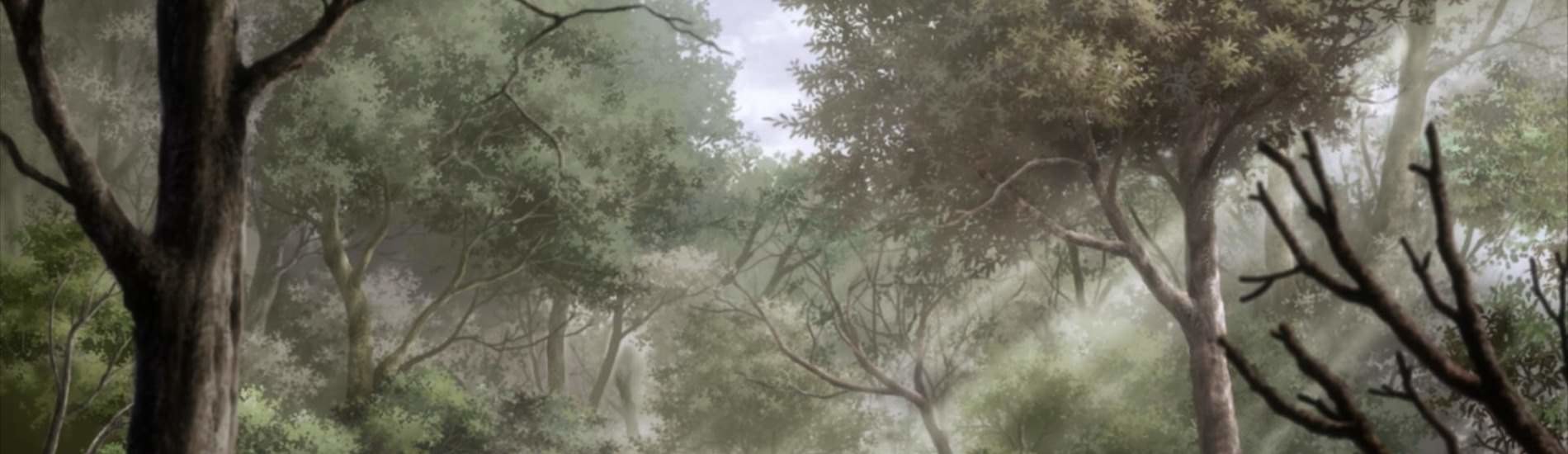
This isn’t fantasy as spectacle. It’s fantasy as atmosphere, as accumulated weight. The show moves like mist settling into river valleys: no urgency, no villain, no crescendo—just the deep, low hum of time folding in on itself, of memory leaking into soil, of silence that listens back. You feel the chill of damp tatami at dawn, the grit of mountain dust under worn sandals, the quiet dread when a village elder says, “We stopped counting the seasons three years ago.” It makes you think about duration—not plot time, but the kind of time that grows moss on thresholds and hollows out meaning until only resonance remains. There’s no catharsis, only adjustment: Ginko doesn’t defeat the Mushi; he negotiates with its logic, then walks away, leaving behind not resolution, but a fragile equilibrium. The feeling is profoundly melancholic exploration—a phrase that appears across every top-matched game—not as sadness, but as reverence for what slips just beyond comprehension.
Prince of Persia (the 2024 reboot) shares this exact tonal gravity. Its description calls it an “all-new epic journey” built by Ubisoft Montreal, and player reviews note it introduces “a new prince, new lands and a brand new story completely separate from the sands…”—that deliberate separation mirrors Ginko’s perpetual outsider status. He doesn’t inherit myth; he steps into its cracks. Like Ginko moving between villages where time loops distort harvest cycles, the Prince navigates ruins where architecture remembers gestures older than language—both characters move through spaces saturated with unresolved history, not combat arenas. The melancholy isn’t decorative; it’s structural. You explore because the world demands witness, not conquest.
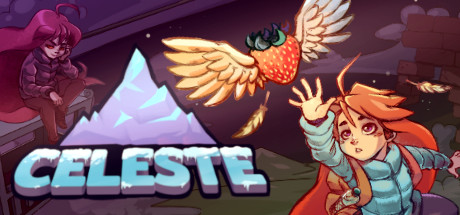
Celeste, though a platformer, carries the same emotional DNA—not in mechanics, but in its insistence on slowness as intimacy. The description frames Madeline’s ascent as survival “against her inner demons,” and while one review dismisses puzzle labels (“Not a puzzle game, no rating given”), it’s precisely that refusal to categorize pain that echoes MUSHI-SHI: suffering here isn’t a boss to be beaten, but a Mushi—ambient, persistent, woven into breath and bone. When Madeline stumbles mid-air, catches herself on a ledge, and stares down at the chasm she almost fell into—not with panic, but with exhausted recognition—that’s Ginko watching a man forget his own name over ten winters. Both works treat healing as slow life, not triumph.
The Tomb Raider trilogy—Legend, Anniversary, and Underworld—all score identically (74) and share the same dimensional tags: Melancholic Exploration, Adult & Dark Seinen. Their descriptions emphasize Lara’s global traversal “in search of one of history’s greatest artifacts,” “retracing… original genre-defining adventure,” and exploring “exotic locations… designed with incredible attention.” Crucially, player reviews don’t praise set-pieces—they praise presence: “It goes without saying that I would recommend not ju…” (the sentence cuts off, as if the feeling is too large for syntax). That’s the MUSHI-SHI effect: the artifact isn’t the goal—it’s the lens. Lara doesn’t conquer tombs; she deciphers their silence, much as Ginko reads the tremor in a well’s surface or the way frost patterns on glass refuse to melt. Both are adult journeys where discovery is measured in weight, not distance.
These pairings won’t stir someone craving escalation or closure. They’re for the person who pauses mid-walk to watch rain gather on a spiderweb—not to photograph it, but to feel how taut the thread is before it breaks. For the reader who underlines sentences about forgotten rivers in old maps. For the player who saves not before bosses, but before entering a sun-dappled temple courtyard, knowing the next ten minutes will hold nothing but light, stone, and the quiet certainty that something ancient is still breathing—just beneath the surface, just out of sight, waiting for you to notice it noticing you back.
🎮41 Games That Match the Vibe













Match Dimensions Explained
❓Frequently Asked Questions
Why does Prince of Persia keep showing up in 'games like Mushi-Shi The Next Passage 2' lists?
Because it nails that same hushed, melancholic exploration vibe—like wandering through mist-shrouded ruins with the Prince’s quiet narration echoing Mushi-Shi’s contemplative tone. The game’s ‘Healing & Slow Life’ dimension mirrors Ginko’s gentle interventions, and its ‘Adult & Dark Seinen’ weight matches the show’s mature, atmospheric storytelling—no flashy combat, just deliberate pacing and emotional resonance.
Is there a Mushi-Shi video game adaptation?
No—there’s never been an official Mushi-Shi game, which is why fans lean hard into titles like Celeste and the Tomb Raider trilogy that share its core dimensions: ‘Melancholic Exploration’ and ‘Adult & Dark Seinen’. Celeste especially channels that introspective mood—Madeline’s climb up Celeste Mountain feels like Ginko walking a rain-slicked forest path, confronting inner shadows instead of mushi, but with the same poetic restraint.
How does Celeste compare to Tomb Raider: Legend for someone who loves Mushi-Shi’s calm, reflective pace?
Celeste leans harder into quiet intimacy—Madeline’s internal monologue and pixel-perfect, slow-burn platforming (like the quiet solitude of Chapter 4’s ‘Respite’) mirror Mushi-Shi’s stillness far more than Legend’s globe-trotting action. Legend has great atmosphere and melancholic exploration too, but its set-piece chases and boss fights break the meditative flow—Celeste stays grounded, personal, and emotionally raw, like a single episode focused on one person’s quiet healing.
What’s the best game like Mushi-Shi The Next Passage 2 if I want something soothing but still deeply adult?
Prince of Persia is your strongest match—it’s built for slow, graceful movement through ancient, sun-dappled spaces (think the Temple of Time sequences), with zero combat urgency and a narrative voice that’s as warm and weathered as Ginko’s. Its 83 Metacritic score reflects how perfectly it balances ‘Healing & Slow Life’ with ‘Adult & Dark Seinen’—no jump scares, no exposition dumps, just presence, poetry, and quiet consequence.