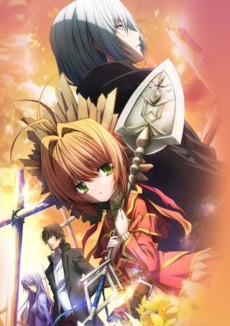
Sunday Without God
Fifteen years ago, God abandoned the world and closed the gate to Heaven, leaving the souls of humankind trapped in limbo. With the dead unable to rest and the living unable to have children, the world is slowly coming to a halt. The only key to mankind’s salvation rests with the Gravekeepers, mysterious beings charged with the task of sending the deceased to their final resting place. Twelve-year-old Ai, one of the last children in the world, soon finds herself shouldered with the burden of becoming her village’s newest Gravekeeper. But beneath the village’s unassuming exterior lies a dark secret that is revealed with the arrival of a gun-wielding stranger in black. With her position as a Gravekeeper now uncertain, Ai has no choice but to set out to put the living dead to rest. But in a world where no one can die, is death truly the ultimate blessing?
(Source: Sentai Filmworks)
📺Anime Details
📝Editorial Analysis
The silence after the bell tolls in Sunday Without God—not the chime itself, but the hollow, suspended second that follows, when Ai stands alone in the rain-slicked cemetery gate, her small hand resting on cold, unmarked stone, and no wind answers. No birds call. No child laughs in the distance. Just the weight of a world holding its breath, waiting for a door that won’t open.
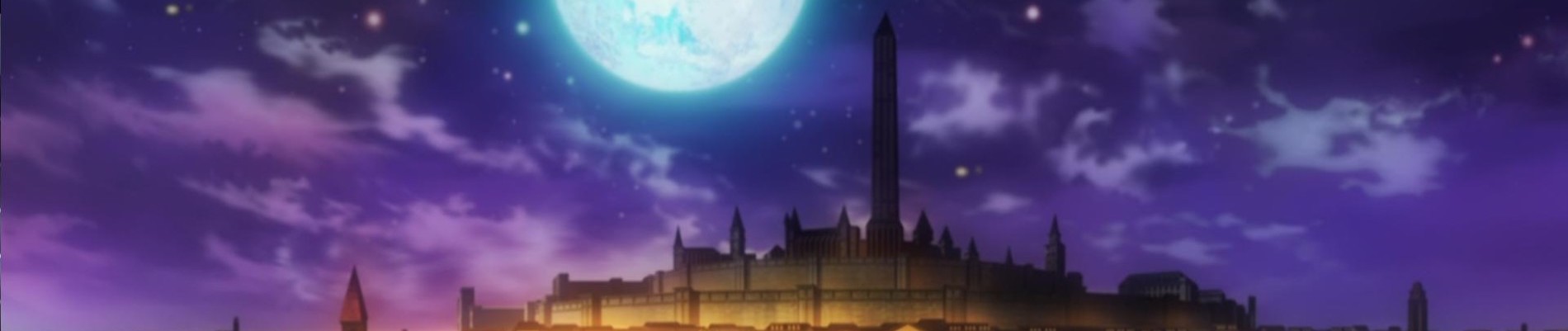
That silence isn’t emptiness—it’s presence. A thick, aching presence of absence. This anime doesn’t trade in spectacle or shock; it lives in the tremor of a gravekeeper’s glove as she lowers a coffin lid, in the way sunlight catches dust motes above a nursery that hasn’t held a baby in fifteen years. Its atmosphere is grief made architectural: crumbling churches with stained glass cracked like dried tears, towns where clocks all stop at 3:17—the hour God left—and cemeteries that bloom with unnatural, silver-white flowers that smell faintly of ozone and old paper. It makes you feel the weight of memory—not as nostalgia, but as gravity. Every forgotten name, every suppressed sorrow, every buried ritual presses down, not on the characters alone, but on the viewer’s chest. You don’t watch it—you inhabit its stillness, and in that stillness, you start questioning what it means to bury something that can’t be buried, to mourn someone who never died, to grow up when time itself has gone slack.
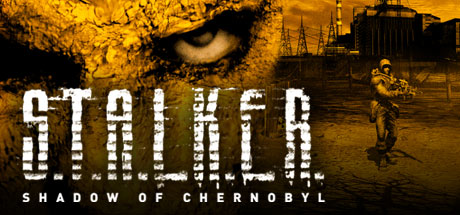
Of the games listed, S.T.A.L.K.E.R.: Shadow of Chernobyl resonates with startling fidelity—not because of zombies or gods, but because of how it makes desolation breathe. Its Zone isn’t just dangerous; it’s sentiently indifferent, humming with invisible forces that warp physics and perception, much like Sunday Without God’s world, where memory manipulation warps identity and graves shift underfoot. The player review nails it: “you fear not only the radiation, anomalies and deadly creatures, but other S.T.A.L.K.E.R.s”—that layered dread mirrors Ai’s journey, where threat comes less from monsters than from the quiet erosion of meaning, from fellow humans clinging to broken rites or weaponizing forgotten truths. Both ask: what do you protect when nothing lasts? What do you trust when even your own recollection might be curated?
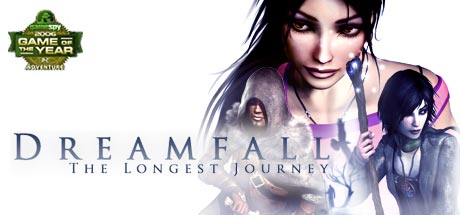
Then there’s Dreamfall: The Longest Journey, whose player review cuts deep: “It's less a long journey than a long drama. And somehow, the drama is compelling enough that you keep watching scene after scene…” That’s Sunday Without God in a sentence—not plot propulsion, but emotional accumulation. Both works move at a deliberate, almost ritual pace, trusting the audience to sit with grief, ambiguity, and moral exhaustion. Dreamfall’s dual-world structure—where logic frays at the seams between realities—echoes the anime’s fractured metaphysics: Heaven sealed, souls stranded, children born into a world that refuses to renew itself. Neither offers catharsis on demand. They offer witnessing—and in that witnessing, a kind of sacred, shared weariness.
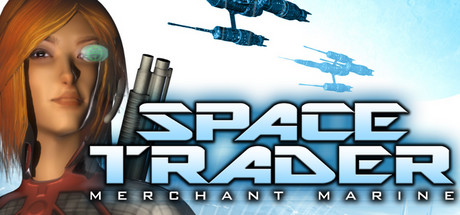
And Space Trader: Merchant Marine, absurd as it sounds beside such solemnity, shares something vital: its emotional narrative unfolds not through cutscenes, but through systemic erosion. The description calls it “an open world trading colony sim wrapped in a shooter,” and the review calls it “a funny little game where you try to do some mini fetch quests…” But beneath the jank and the Doom-engine charm lies a lived-in dystopia where survival depends on negotiation, scarcity, and quiet compromises—exactly how Sunday Without God frames its stakes. Ai doesn’t wield a sword or cast spells; she negotiates with grieving families, bargains with corrupt officials, and chooses which memories to preserve and which to let fade. Like the trader bartering for fuel in a dying starport, her power is relational, not heroic—and that’s what makes both works ache with authenticity.
This pairing speaks to the person who cries not at grand sacrifices, but at the sight of a single, untouched toy left on a shelf. Who replays a quiet dialogue scene three times, not for lore, but to hear the tremor in a voice. Who walks slowly through game worlds, pausing at gravestones, reading every faded sign, listening to the wind where music should be. Not the seeker of adrenaline or resolution—but the one who carries silence like a second skin, and recognizes holiness in the act of tending to what’s already broken.
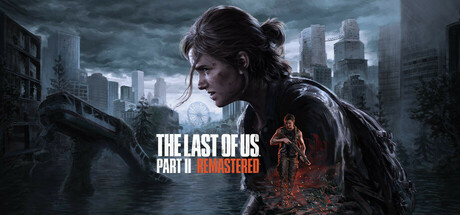
🎮65 Games That Match the Vibe















Match Dimensions Explained
❓Frequently Asked Questions
Why does Sunday Without God feel so similar to Dreamfall: The Longest Journey?
Both lean hard into melancholic, adult-oriented storytelling with strong female leads navigating fractured worlds—Ayano in Sunday Without God and Zoë in Dreamfall both carry heavy emotional burdens while uncovering cosmic truths about faith and decay. The tone matches too: quiet, introspective cutscenes, morally gray choices, and that distinct 'dark seinen' vibe where hope feels fragile and earned, not guaranteed.
Is there a Sunday Without God anime or visual novel adaptation?
No official anime or visual novel adaptation exists—but if you're craving that same blend of existential dread and tender character writing, Dreamfall: The Longest Journey (78 score) nails it with its award-winning narrative and layered voice acting, while Chains (80 score) delivers unexpected emotional weight through minimalist match-3 mechanics tied to themes of connection and loss.
How does S.T.A.L.K.E.R.: Shadow of Chernobyl compare to Sunday Without God tonally?
They’re tonal cousins—not twins. Sunday Without God leans poetic and sorrowful, like Ayano’s silent walks through rain-slicked graveyards; S.T.A.L.K.E.R. trades poetry for palpable dread—the Zone’s radioactive fog, the groan of mutated creatures, and that constant tension as you scavenge near an abandoned Pripyat school (yes, *that* one). Both use desolation as a character, but S.T.A.L.K.E.R. makes you sweat; Sunday Without God makes you sigh.
What's the best game like Sunday Without God if I want something haunting but peaceful?
Chains (80 score) is your quiet miracle—it swaps apocalyptic stakes for serene, physics-driven bubble-linking, yet somehow captures the same wistful, meditative mood as Ayano tending her graveyard at dusk. Player reviews even call it 'relaxing' and 'compelling in its simplicity,' and its Emotional Narrative dimension means every chain you form feels like a small, meaningful act of order in chaos—just like Sunday Without God’s core theme.