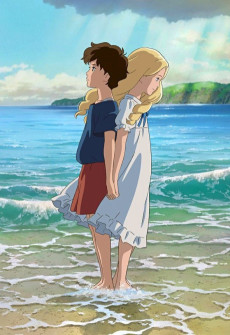
When Marnie Was There
Suffering from frequent asthma attacks, young Anna Sasaki is quiet, unsociable, and isolated from her peers, causing her foster parent endless worry. Upon recommendation by the doctor, Anna is sent to the countryside, in hope the cleaner air and more relaxing lifestyle will improve her health and help clear her mind. Engaging in her passion for sketching, Anna spends her summer days living with her aunt and uncle in a small town near the sea.
One day while wandering outside, Anna discovers an abandoned mansion known as the Marsh House. However, she soon finds that the residence isn't as vacant as it appears to be, running into a mysterious girl named Marnie. Marnie's bubbly demeanor slowly begins to draw Anna out of her shell as she returns night after night to meet with her new friend. But it seems there is more to the strange girl than meets the eye—as her time in the town nears its end, Anna begins to discover the truth behind the walls of the Marsh House.
Omoide no Marnie tells the touching story of a young girl's journey through self-discovery and friendship, and the summer that she will remember for the rest of her life.
(Source: MAL Rewrite)
📺Anime Details
📝Editorial Analysis
The salt-stung air clings to Anna’s skin as she crouches beside the marsh, charcoal smudging her thumb, sketchbook open on damp grass. Her breath hitches—not sharply, not in panic, but with that familiar, quiet weight, the kind that settles deep in the ribs when asthma tightens its grip and the world narrows to the rhythm of her own inhale, exhale, pause. She doesn’t look up when the reeds part. She just keeps drawing—the curve of a willow branch, the tilt of a weathered roof across the water—because the act itself is a kind of holding-on, a way to anchor herself while everything else drifts: her foster mother’s worried silence, the hollow echo of her own name in an unfamiliar house, the strange, soft pull toward the abandoned manor at the edge of the marsh.

This isn’t melancholy dressed up as prettiness. It’s stillness with tremors. When Marnie Was There doesn’t pulse with urgency or spectacle—it breathes in slow, uneven measures. The rural setting isn’t pastoral postcard charm; it’s humid, textured, alive with insect hum and the low groan of tide receding. The mystery isn’t about solving a crime, but about reclaiming—a self fragmented by disability, displacement, and unspoken grief. Time doesn’t jump or fracture; it thickens, like honey poured over memory. Amnesia here isn’t amnesia as plot device—it’s the fog between what happened and what you’re allowed to feel. And the ghost? Not a specter of vengeance, but a mirror held up to longing so tender it aches.
That emotional DNA—quiet intensity, embodied fragility, memory as landscape rather than timeline—resonates in surprising places. Take Chains, described as a “relaxing arcade match 3 casual game” where you “link adjacent bubbles… clear enough till you can proceed.” A player calls it “reminds me of connect 4 in nutshell.” But look closer: the healing & slow life dimension isn’t about pace alone—it’s about rhythm, repetition, small acts of order imposed on chaos. Like Anna sketching the same willow day after day, each line a tiny assertion of presence. The physics-driven challenge mirrors how Anna’s body resists her will—not through drama, but through stubborn, granular resistance: breath catching, hand trembling, light blurring at the edges. It’s the same kind of calm focus required to steady a shaky hand over charcoal and over a touchscreen bubble.
Then there’s BioShock Infinite, tagged with Time & Memory, Body Horror & Occult, and Adult & Dark Seinen. Its description centers on Booker DeWitt “indebted to the wrong people,” his life “on the line,” forced into rescue. A player review admits bitterness—but also says, “after…” That trailing ellipsis feels crucial. Because When Marnie Was There lives in that ellipsis too: the unsaid trauma, the debt Anna carries without knowing the ledger, the way memory folds back on itself not with violence, but with the quiet horror of recognition—this is mine, this is gone, this was never mine to begin with. Both works treat time not as a river but as tidal mud: you sink, you surface, you find traces of yourself half-buried in the silt.
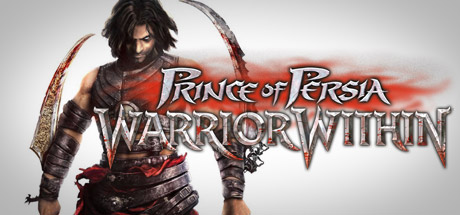
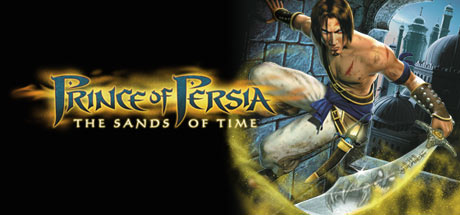
And Prince of Persia: Warrior Within, with its Time & Memory and Body Horror & Occult dimensions, features the Dahaka—a “hunt[er]… an immortal incarnation of Fate.” A player calls the chase “goated,” but what lingers is the exhaustion in the phrasing: “my childhood completing it was a journey.” That’s the resonance—not the swordplay, but the weariness of being pursued by your own past, the physical toll of running while your body remembers every stumble. Anna doesn’t flee Dahaka, but she flees the weight of her own breath, the shame of collapse, the fear that her body is the site of a tragedy she didn’t choose. Both are stories where the horror isn’t external—it’s the slow, inevitable return of what you tried to leave behind.
These pairings aren’t for fans of ghosts or time travel as spectacle. They’re for the person who’s ever drawn the same window over and over because it felt safer than looking away. For the one who plays a match-3 game not for points, but to feel their own hands settle. For the reader who underlines passages in Wuthering Heights not for the romance, but for the way Catherine’s illness makes her voice fray at the edges—real, unvarnished, aching. They’re for those who understand that healing isn’t a destination, but the quiet, repeated act of choosing to breathe—and draw—and link one fragile thing to another.
🎮61 Games That Match the Vibe





































Match Dimensions Explained
❓Frequently Asked Questions
Why does BioShock Infinite show up in 'games like When Marnie Was There' matches?
It’s not about the surface vibe — it’s the shared dimension of 'Time & Memory' that links them. Like Marnie’s layered past and Anna’s fragmented memories tied to constants and variables, BioShock Infinite uses time loops, unreliable narration, and emotional revelations (especially with Elizabeth’s tears and Columbia’s shifting realities) to explore how memory shapes identity. Critics even noted how its ending lands with the same quiet, gut-punch weight as Marnie’s final confession at the marsh house.
Is there a video game adaptation of When Marnie Was There?
No — there’s never been an official video game adaptation of *When Marnie Was There*, despite Studio Ghibli’s other films inspiring titles like *Ni no Kuni*. That’s why the 'games like' list leans on emotional resonance instead: *Chains* mirrors the film’s gentle pacing and healing arc through its slow, meditative bubble-linking — think of how Anna’s quiet moments sketching by the sea or tending the garden feel just as restorative as clearing a calm, sunlit level in Chains.
How is Prince of Persia (2024) different from Prince of Persia: Warrior Within for someone who loves Marnie’s mood?
If you’re drawn to *Marnie*’s melancholy beauty and slow-burn emotional healing, go with the 2024 *Prince of Persia* — it scores high on 'Healing & Slow Life' and leans into atmospheric exploration, quiet dialogue, and rebuilding relationships (like Anna reconnecting with her foster mom, mirrored in the Prince’s bond with his companion). *Warrior Within*, meanwhile, is all 'Time & Memory' + 'Body Horror & Occult' — think Dahaka’s relentless chases and visceral combat — way too intense and jagged for Marnie’s tender, rain-soaked stillness.
What’s the best game like When Marnie Was There if I want something soothing and introspective?
Go straight to *Chains* — it’s the only match scoring high on 'Healing & Slow Life' and built entirely around rhythm, patience, and gentle progression. Linking bubbles feels like sketching in a journal or watching reeds sway in the wind at the marsh — no timers, no fail states, just soft colors, subtle physics, and that same sense of quiet agency Anna finds when she finally opens the attic door. One player even said it ‘reminds me of connect 4 in a nutshell’, which nails how accessible and grounding it is.