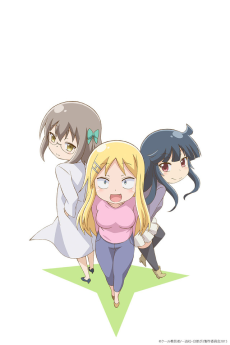
I Can't Understand What My Husband is Saying 2nd Thread
The second season of Danna ga Nani wo Itteiru ka Wakaranai Ken.
📺Anime Details
📝Editorial Analysis
The steam from a just-poured cup of instant coffee curls upward as Hiroko sits cross-legged on the living room floor, her back against the sofa, watching her husband Koichi—in full maid costume, hairnet askew—attempt to fold laundry while humming an off-key anime OP. A stray sock dangles from his mouth. She doesn’t sigh. Doesn’t roll her eyes. Just takes a slow sip, exhales, and reaches for the remote to rewatch that same 30-second clip of him tripping over the vacuum cord—again. It’s not laughter that rises in her chest. It’s something quieter: recognition, warm and slightly tired, like finding your favorite sweater folded exactly where you left it.
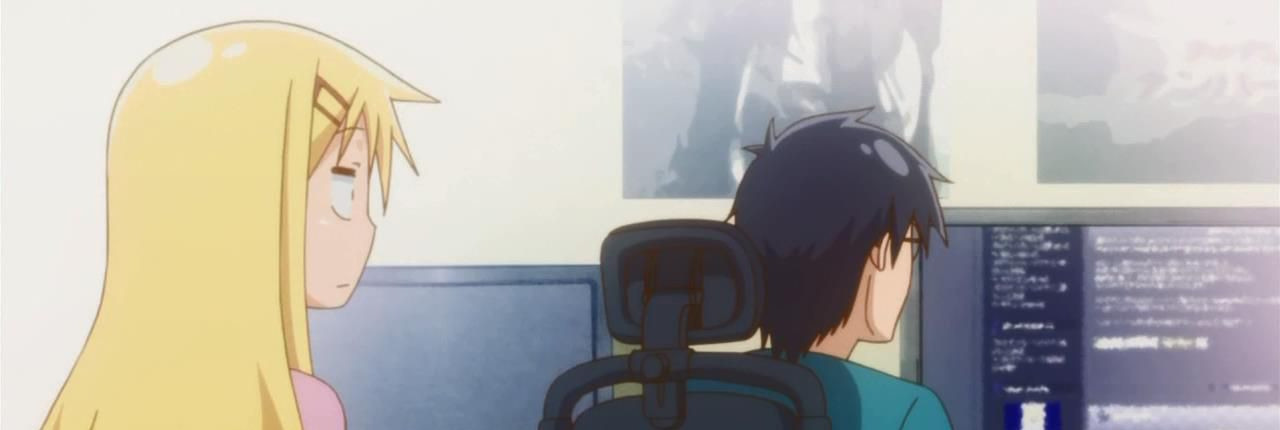
That’s the atmosphere—not chaos, not farce, but domestic gravity: the gentle, persistent weight of two adults choosing each other, day after day, inside a world that never stops being mildly absurd. I Can't Understand What My Husband is Saying 2nd Thread doesn’t chase big emotional climaxes. It lingers in the aftermath of small misunderstandings—the pause after Koichi earnestly explains why his collection of vintage erasers needs its own display case; the way Hiroko’s expression softens just before she teases him about it. There’s no crisis to resolve, no arc to complete—just the low hum of shared routine, seasoned with otaku idiosyncrasy and the quiet dignity of adult love that doesn’t need to prove itself. It makes you feel seen, not as a fantasy version of yourself, but as someone who also forgets to buy soy sauce, who laughs at their partner’s terrible puns, who finds profound comfort in the fact that yes, he really did wear that cat-ear headband to the grocery store—and yes, she still held his hand while picking out rice crackers.
That same emotional resonance flickers in Celeste, where Madeline climbs not to conquer, but to witness herself—her breath ragged, her body trembling, her thoughts looping like Hiroko replaying Koichi’s latest crossdressing mishap in her head. The description calls it “Melancholic Exploration,” and that’s precise: it’s not despair, but the tender ache of being known, even by your own stubborn, flawed self. Like Hiroko watching Koichi fumble with a rice cooker, Madeline stumbles, resets, tries again—not because victory matters, but because showing up does. One player review says, “Not a puzzle game, no rating given. In some ways, I feel like I don’t need to review this game…” — echoing how Hiroko wouldn’t review her marriage; she lives it, moment by unremarkable, luminous moment.
Then there’s Tomb Raider: Legend, where Lara Croft moves through “remote, exotic locales” chasing an artifact that “unleashes unwelcome figures from Lara’s mysterious past.” That phrase—unwelcome figures from the past—lands with startling intimacy beside Hiroko’s quiet reflections on her pre-marriage self: the office lady who thought she’d never date an otaku, the woman who once worried love meant losing control. Lara’s journey isn’t about domination—it’s about reconciliation, stepping into ruins not to loot, but to understand what built them. A player notes it’s “a nice game not great but one will enjoy the game”—that understated, almost apologetic warmth mirrors Hiroko’s tone when she describes Koichi’s latest cosplay: not awe, not irony, just affectionate acceptance. Same with Tomb Raider: Anniversary, called “the best Tomb Raider game” by a player who admits they haven’t tried the remakes—loyalty to the original texture, to the specific rhythm of those early controls, just as Hiroko loves Koichi’s particular brand of earnest, slightly clunky devotion.
Even Sacred Gold, buried under jank and bugs—“full of jank, bugs and is not very stable on modern systems”—holds that same DNA. Its description promises battle against orcs and ogres, but the player’s real investment isn’t in polish—it’s in continuity, in returning to a world that feels stubbornly, messily alive, however broken. Like Hiroko choosing to reheat last night’s curry instead of ordering takeout, like Koichi painstakingly repairing his third-generation Gundam kit with glue that smells faintly of childhood—all acts of love performed despite imperfection, not in spite of it.
This pairing sings for the person who cries during grocery lists, who bookmarks fan art of their spouse’s favorite character, who finds holiness in the way light hits dust motes above a shared futon. For the adult who knows love isn’t fireworks—it’s steam rising, socks lost, erasers displayed with reverence, and the quiet, unshakeable certainty that you’re exactly where you’re supposed to be.
🎮24 Games That Match the Vibe







Match Dimensions Explained
❓Frequently Asked Questions
Why does 'I Can't Understand What My Husband is Saying 2nd Thread' match with Tomb Raider: Legend and not the newer Survivor trilogy?
Because both '2nd Thread' and Legend share that slow-burn, melancholic exploration vibe—Lara’s quiet grief over her mother’s disappearance mirrors the protagonist’s emotional isolation in the manga, and the game’s atmospheric ruins (like the Bolivia temple) echo the same adult & dark seinen tone. The Survivor trilogy leans more into visceral action and survival horror, which breaks the match’s core 'Melancholic Exploration' dimension.
Is there an anime or visual novel adaptation of Celeste?
No—Celeste is purely a game, no anime or VN adaptation exists. But if you loved the raw, introspective voice of Madeline confronting her anxiety on Celeste Mountain, you’ll feel that same emotional weight in '2nd Thread’s' quiet domestic scenes where the husband misreads his wife’s exhaustion as indifference—both use sparse, deliberate pacing to land heavy feelings.
How is Sacred Gold similar to Tomb Raider: Anniversary despite one being an ARPG and the other a 3D action-adventure?
They both nail 'Melancholic Exploration' through oppressive, decaying environments—Anniversary’s lost Atlantean temples drip with ancient sorrow, while Sacred Gold’s blighted Ancaria forces you to trek through fog-choked forests and crumbling dwarven halls, all underscored by that same Adult & Dark Seinen gravity. Neither lets you rush; both make solitude feel like a character.
What if I only like games where the main character is emotionally withdrawn but physically capable—what’s the best match for that specific vibe?
Tomb Raider: Underworld is your perfect fit—Lara’s stoic, almost numb resolve while diving into Norse tombs or scaling rain-slicked cliffs mirrors '2nd Thread’s' husband: highly competent, outwardly calm, yet emotionally distant in ways that quietly unravel across the story. Even the player review says it ‘goes without saying’ they’d recommend it—just like how fans of the manga don’t need convincing about that particular ache.