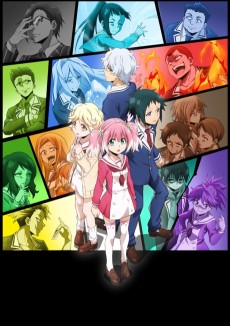
Talentless Nana
It is the year 20XX. Earth has been assaulted by monsters known as 'the Enemy of Humanity'. In order to deal with this threat, special schools comprised of teenagers with extraordinary abilities were formed. These people, who came to be known as 'the Talented', have abilities that defy the rules of reality. Among these superpowered individuals was an outlier, someone who was sent to one of these schools despite having no innate special abilities whatsoever. This is the story of our protagonist, who attempts to defeat the Enemies of Humanity through the use of intelligence and manipulation.
📺Anime Details
📝Editorial Analysis
The cafeteria lights hum too brightly. Nana sits across from a classmate whose eyes glow faintly gold—a Talent, she knows, though she’ll never name it aloud. She smiles, adjusts her sleeve, and slides a napkin toward him. Her fingers don’t tremble. Her pulse doesn’t spike. But you feel it—the cold weight of the lie pressing down like atmospheric pressure before a storm. Not fear. Not guilt. Something sharper: calculation wearing the mask of kindness. That’s where Talentless Nana lives—not in explosions or power-ups, but in the silence between words, in the way a glance lingers half a second too long, in the quiet horror of realizing empathy has been weaponized.
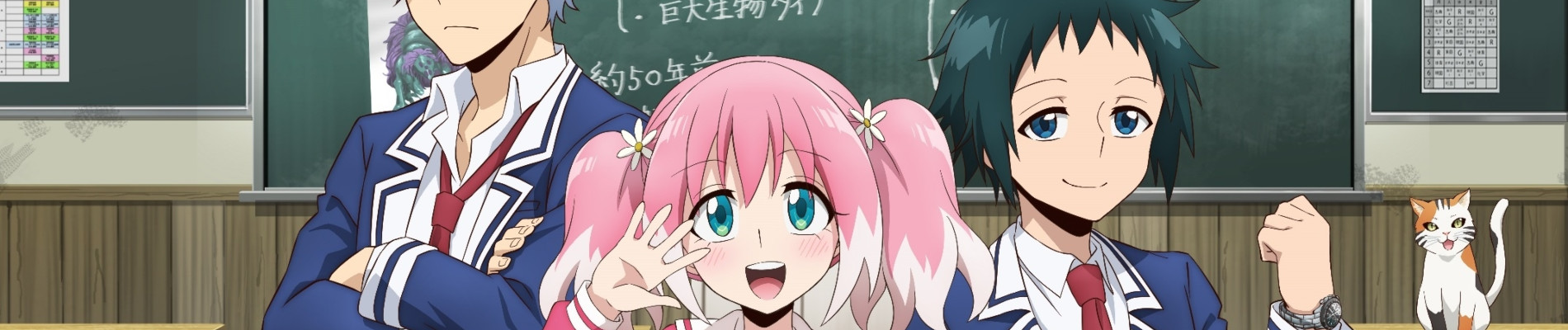
This isn’t dread built on jump scares or grotesque monsters. It’s the slow, suffocating chill of trust as infrastructure—a system you’re expected to believe in, even as its foundations crumble beneath your feet. The school isn’t just a setting; it’s a gilded cage wired with surveillance, propaganda, and unspoken hierarchies. Every “heroic” act is choreographed. Every tragedy is curated. You don’t just watch Nana lie—you participate in the cognitive dissonance of applauding her performance while recoiling from what it costs her. It makes you question loyalty, not as feeling, but as protocol. It makes you wonder: when truth is a liability, is sincerity just another form of weakness? The atmosphere isn’t dark—it’s sterile, fluorescent, clinically precise—and that’s what makes it unbearable.
That same sterile dread pulses through Disco Elysium - The Final Cut, where every dialogue choice feels like walking across a floor rigged with ideological landmines. Its description calls it a “Political Thriller” and “Neon Noir”—but what binds it to Talentless Nana is how both treat ideology as environmental hazard. In Disco Elysium, the city of Revachol doesn’t just host corruption—it breathes it, metabolizes dissent, and repurposes critique into fuel for the machine. A player review nails it: “Capital has the ability to subsume all critiques into itself. Even those who would critique capital end up reinforcing it instead.” That’s Nana’s entire existence: operating inside the system she’s meant to dismantle, her very competence deepening its legitimacy. Both force you to navigate moral terrain where resistance looks identical to compliance—until it isn’t.
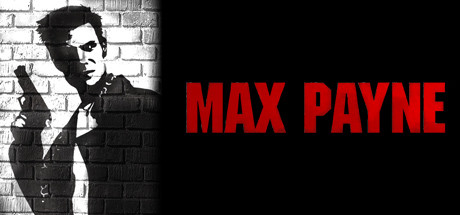
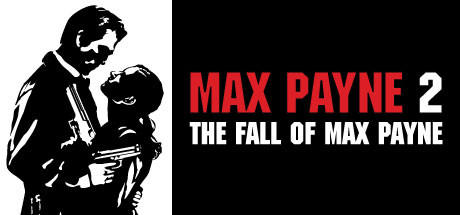
Then there’s Max Payne, described as “a man with nothing to lose in the violent, cold urban night… hunted by cops and the mob.” His world is noir not because of rain-slicked streets, but because every ally could be a vector. Like Nana, Max moves through institutions that perform justice while manufacturing victims. His narration is weary, ironic, self-aware—but never self-pitying. A player recalls passing the controller after dying, turning trauma into ritual. That’s the emotional DNA: exhaustion as armor, grief as operational procedure. Max Payne 2: The Fall of Max Payne, labeled a “violent, film-noir love story,” doubles down—its tragedy isn’t in loss, but in how love becomes another tactical vulnerability. Nana doesn’t love her classmates. But she studies them like case files, and that clinical intimacy—knowing someone’s heartbeat pattern, their tell when lying, their favorite snack—is just as devastating as affection.
Assassin's Creed™: Director's Cut Edition might seem like an outlier—“Tactical Warfare,” “next-gen action”—but read deeper: its description emphasizes redefining genre through systems, not spectacle. And the player review admits flaws (“dated models… no issues with me”)—a shrug at surface imperfections because the architecture holds. That’s Talentless Nana’s genius: its worldbuilding isn’t about flashy powers, but about how the school’s bureaucracy enables horror. The grading system. The surveillance logs. The mandatory counseling sessions. Like Assassin’s Creed’s Animus layering memory onto mission, Nana’s reality is always mediated—filtered through reports, broadcasts, and curated footage. You’re never just watching events. You’re watching how they’re sold.
This pairing isn’t for fans of “cool powers” or “epic battles.” It’s for the ones who pause mid-episode to rewind Nana’s blink timing before answering a question. For players who spend twenty minutes debating whether a single line of dialogue in Disco Elysium reveals systemic collapse—or just bad HR policy. For people who don’t flinch at tragedy, but lean in when the real horror isn’t the monster outside the door—it’s the perfectly folded uniform hanging in the closet, waiting to be worn again tomorrow.
🎮120 Games That Match the Vibe





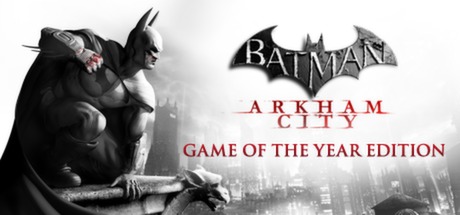











Match Dimensions Explained
❓Frequently Asked Questions
Why does Talentless Nana feel so similar to Max Payne 2's tone?
Because both lean hard into tragic, film-noir love stories wrapped in neon-drenched urban decay—Max Payne 2’s doomed romance with Mona Sax mirrors Nana’s twisted emotional manipulation and fatalistic atmosphere. The dim Neon Noir + Mystery & Detective dimensions overlap tightly, and that signature slow-motion 'bullet-time' during tense confrontations (like Max clearing a rain-slicked warehouse or Nana’s silent, calculated takedowns) creates the same visceral, melancholic rhythm.
Is there an anime or game adaptation of Talentless Nana that captures its psychological tension?
No official anime or game adaptation exists—but Disco Elysium nails that same cerebral, morally slippery tension: think Harry DuBois interrogating a corrupt union boss in Martinaise while his own mind fractures, just like Nana dissecting allies’ weaknesses mid-conversation. Both use internal monologue as a weapon, and Disco’s 82-scored Political Thriller + Neon Noir blend hits the same nerve as Nana’s layered deception and ideological ambiguity.
How does Crash Time 2 compare to Max Payne for someone who loves Talentless Nana’s investigative dread?
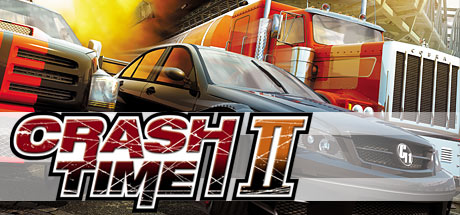
Crash Time 2 tries for Mystery & Detective + Neon Noir vibes—chasing suspects through foggy Autobahn overpasses at night, digging into criminal files—but it fumbles hard: janky physics, awful controls, and zero narrative weight (per that brutal player review calling it 'factually BAD'). Max Payne, by contrast, delivers tight, scripted noir dread—like Max piecing together the Punchinello conspiracy in a blood-stained apartment—making it far closer to Nana’s precise, high-stakes psychological unraveling.
What’s the best game like Talentless Nana if I want that cold, politically charged paranoia vibe?
Disco Elysium — hands down. Its 82-scored Political Thriller + Neon Noir combo mirrors Nana’s world where ideology is a battlefield: you’re not just solving crimes—you’re arguing dialectical materialism with a communist bartender or watching capitalism cannibalize dissent (just like that player quote about 'capital subsuming all critiques'). The mystery isn’t just 'who did it?'—it’s 'what system made this inevitable?', exactly like Nana’s chilling institutional critique.