
GOLDEN BOY
Kintarou Oe doesn't look like it, but he is a genius who completed all his university courses and then quit before graduating. He becomes a wandering student, going from place to place on his bicycle, seeking to learn what he can about life, the world, and women. He is willing and able to do any job he has to prove himself. His travels take him to a variety of locations and a variety of women, each who learns to love the hardworking guy, but not before he can run off.
(Source: Anime News Network)
📺Anime Details
📝Editorial Analysis
The clatter of a single-speed bicycle chain, gritty and unrelenting, as Kintarou Oe pedals down a sun-bleached coastal road—sweat on his brow, backpack slung haphazardly, shirt untucked, eyes fixed not on the horizon but on the next turn, the next job, the next person who might teach him something real. His tires kick up dust that hangs in the humid air like suspended time. There’s no fanfare, no dramatic music—just the low hum of cicadas, the distant crash of waves, and the quiet, stubborn rhythm of forward motion. He doesn’t know what he’ll find at the end of this stretch. He just knows he has to keep moving—not to escape, but to arrive, again and again, raw and unvarnished.
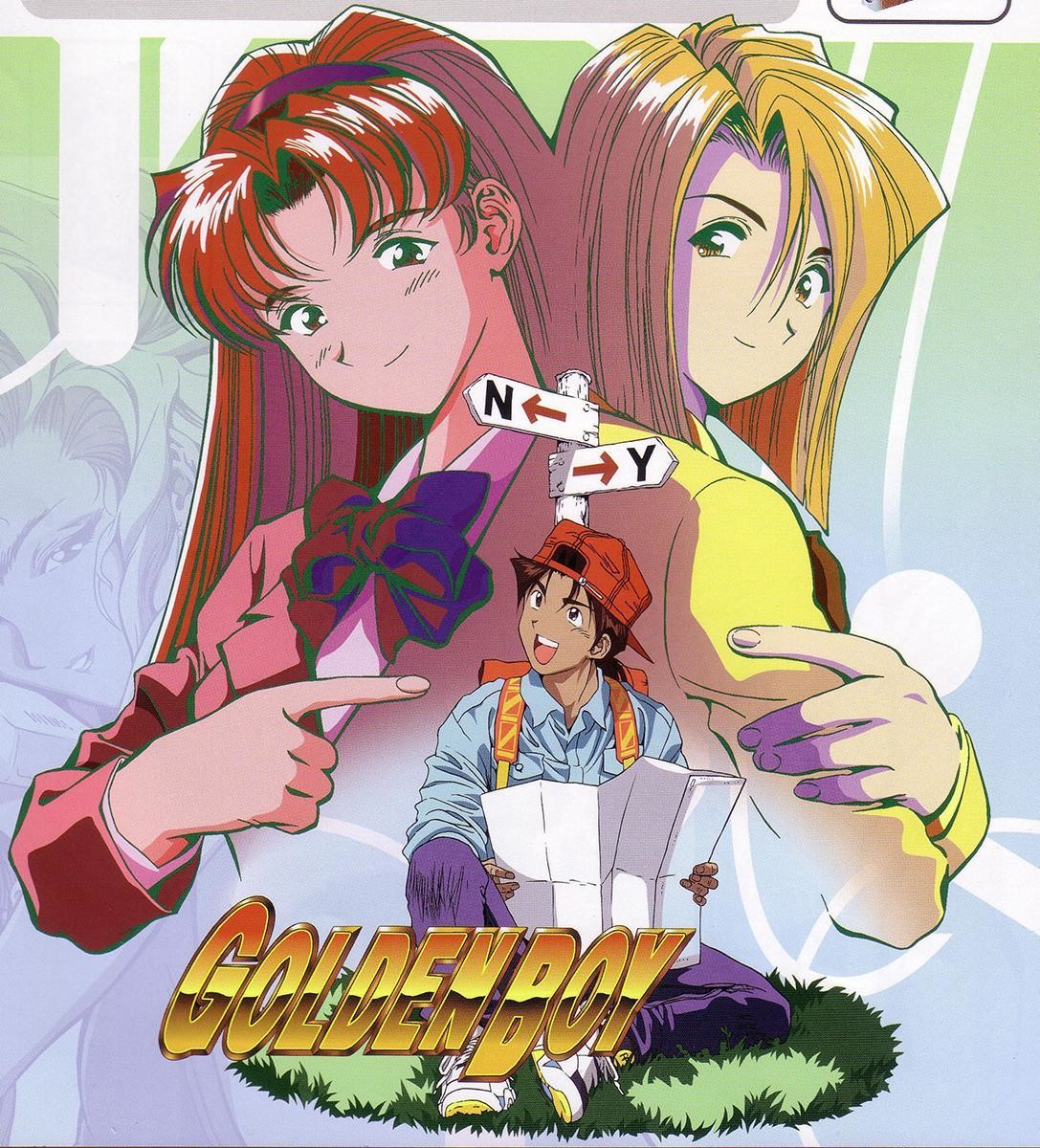
That’s the feeling GOLDEN BOY lives inside: melancholic exploration. Not sadness as defeat—but the gentle, persistent ache of being unfinished, of choosing open roads over diplomas, of learning through calluses and awkward conversations rather than lectures. It’s seinen not because it’s grim or violent, but because it treats adulthood as terrain—not a destination. Every episode is a small excavation: a broken typewriter repaired in a cramped apartment, a stubborn horse calmed with patience instead of force, a woman’s guardedness softened not by grand romance but by shared labor and unguarded honesty. There’s nudity, yes—but it’s never titillation; it’s vulnerability made visible, bodies tired or sun-warmed or momentarily unselfconscious, part of the same honest physicality as sweat-stained shirts and grease-smeared hands. The harem isn’t fantasy—it’s geography. Each woman is a node in Kintarou’s expanding map of human friction and tenderness, and he leaves them not because he’s shallow, but because staying would mean stopping the inquiry.
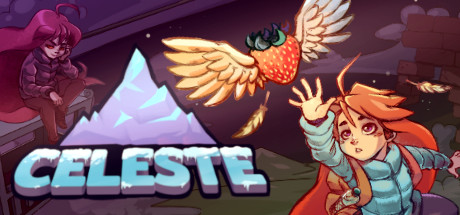
That same melancholic exploration pulses through the Celeste climb—not as metaphor, but as muscle memory. Madeline’s ascent isn’t about conquering a mountain; it’s about feeling every ledge, every slip, every breath held too long. Like Kintarou pedaling uphill past exhaustion, she moves through resistance, not around it. The player review calls it “super-tight”—and that’s the link: both GOLDEN BOY and Celeste trust the weight of small, repeated actions—turning a wrench, placing a pixel-perfect jump—to carry emotional gravity. Neither offers easy answers. Both ask you to endure the process, not just reach the top.
Then there’s the Tomb Raider trilogy—Legend, Anniversary, Underworld—each described as globe-trotting journeys to “remote, exotic locales” in pursuit of artifacts tied to personal mystery. Lara doesn’t chase treasure for wealth; she follows echoes—of her father, her past, her own fractured certainty. Like Kintarou cycling from workshop to seaside inn to rural dojo, Lara moves through spaces thick with memory and silence. The player reviews note “great platforming,” “exotic locations,” even “annoying boss fights”—but what binds them to GOLDEN BOY isn’t action, it’s the texture of travel: the way a rusted ladder in a Thai temple feels different under gloved hands than a crumbling stairwell in Norway, how each locale reshapes her posture, her quietness, her resolve. These aren’t backdrops—they’re teachers. And like Kintarou, Lara doesn’t settle. She returns to the road, not because home is gone, but because understanding requires motion.
Even Sacred Gold, buried under jank and bugs, shares the DNA—not in polish, but in intent. Its description names “a shadow of evil” falling on Ancaria, calling for champions to “journey into the perilous world.” That word—journey—is the hinge. Not victory, not lore dumps, but the act of stepping forward into uncertainty, armed with flawed tools and imperfect knowledge. The player review admits it’s “full of jank,” yet still recommends it—“of course I am!”—because the desire to explore, to push past instability toward something meaningful, overrides the friction. That’s Kintarou fixing a toaster with duct tape and sheer will, laughing as it sparks. That’s the shared heartbeat: imperfection as authenticity, stumbling as the only honest way to move.
This pairing sings to the person who watches Kintarou wipe grease off his nose and thinks, I’ve been there—not in the ecchi moments, but in the quiet pride of finishing a hard task, the loneliness of choosing your own curriculum, the warmth of a stranger’s kitchen after a long ride. It’s for the player who pauses mid-jump in Celeste just to watch the wind stir the grass below, or who lingers in a Tomb Raider ruin not to solve the puzzle, but to feel the cool stone and imagine whose hands carved it. They don’t want heroes. They want humans in motion—tired, curious, stubbornly kind—and they’ll follow that truth anywhere, on two wheels or two feet, across pixels or pavement.
🎮24 Games That Match the Vibe












Match Dimensions Explained
❓Frequently Asked Questions
Why does GOLDEN BOY feel so similar to Celeste despite being about a boxing prodigy?
It’s all in the melancholic exploration vibe and how both games frame struggle as intimate, personal, and emotionally raw—Celeste’s Madeline climbing Celeste Mountain while wrestling self-doubt mirrors GOLDEN BOY’s quiet intensity in the ring and between rounds. Both lean hard into Adult & Dark Seinen tones: no flashy spectacle, just tight controls, hand-crafted challenge pacing, and scenes where silence speaks louder than dialogue.
Is there a GOLDEN BOY anime or manga adaptation?
No official anime or manga exists yet—but fans often compare its tone to what you’d get if Tomb Raider: Legend got adapted with the same brooding, globe-trotting gravitas: Lara chasing fragmented memories across ancient ruins feels spiritually adjacent to GOLDEN BOY’s layered, introspective storytelling. That Melancholic Exploration + Adult & Dark Seinen combo is rare outside niche visual novels or these tightly written action-adventures.
How is GOLDEN BOY different from Sacred Gold?
Sacred Gold is pure jank—full of bugs, unstable on modern systems, and built around chaotic ARPG combat against orcs and ogres—while GOLDEN BOY shares Sacred Gold’s ‘Melancholic Exploration’ and ‘Adult & Dark Seinen’ dimensions but executes them with precision: think restrained pacing, emotional weight in small gestures (like a paused glove tap before a match), not loot drops or spell spam. They’re tonal cousins, not gameplay siblings.
What’s the best game like GOLDEN BOY if I want that lonely, rain-soaked, late-night train station kind of mood?
Tomb Raider: Anniversary nails that exact vibe—Lara alone in misty, echoing tombs beneath Bolivia or navigating silent, waterlogged ruins in Greece, all underscored by that same Adult & Dark Seinen weight. It’s not about bombast; it’s about solitude, history pressing down, and every platforming leap feeling like a quiet act of defiance—just like GOLDEN BOY’s most hushed, reflective moments between rounds.