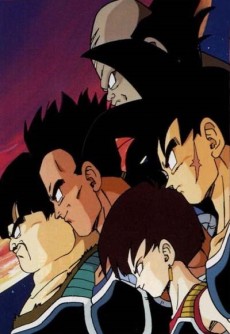
Dragon Ball Z: Bardock – The Father of Goku
Bardock, Son Goku's father, is a low-ranking Saiyan soldier who was given the power to see into the future by the last remaining alien on a planet he just destroyed. He witnesses the destruction of his race and must now do his best to stop Freeza's impending massacre.
(Source: Anime News Network)
📺Anime Details
📝Editorial Analysis
The silence after the vision hits—not the roar of battle or the crackle of ki—but the hollow, breathless pause as Bardock staggers back from the alien’s dying touch, his knuckles white on his scouter, the stars behind him suddenly cold, not infinite. That moment isn’t about power scaling or plot mechanics. It’s the exact second a soldier realizes he’s not just fighting for something—he’s fighting against time itself, and he’s already losing.

What makes Dragon Ball Z: Bardock – The Father of Goku ache so deeply isn’t its Saiyan rage or Freeza’s cruelty—it’s the weight of foresight without recourse. Bardock sees his son’s face in the rubble before he’s even born. He sees his comrades’ deaths before they’ve drawn breath for the next mission. There’s no grand council to convene, no army to rally—just one man, low-ranked, uncelebrated, staring into a future that refuses to bend. It’s sci-fi stripped bare: space isn’t wondrous here; it’s empty, indifferent, littered with dead planets and quieter, quieter grief. The tragedy isn’t that he fails—it’s that he tries, fully aware his effort is a whisper against a supernova. You don’t feel heroic watching it. You feel tender, resigned, and fiercely protective—not of the universe, but of one man’s last act of love.
That same emotional DNA pulses in Tank Universal, where a player recalls playing “cool tank game with dad when you were 6”, then notes, “time goes on; loose access to game. Grew up dad passes away…” The resonance isn’t in the Tron-inspired neon or the tank combat—it’s in how memory and loss orbit each other in the same quiet orbit. Like Bardock seeing Kakarot’s infant face in a flash of light, this review holds onto a tactile past—sound effects, colors, shared presence—now irrevocably gone. Both are stories where scale doesn’t dilute intimacy: galactic genocide and a childhood game session both collapse into the same fragile, human center.
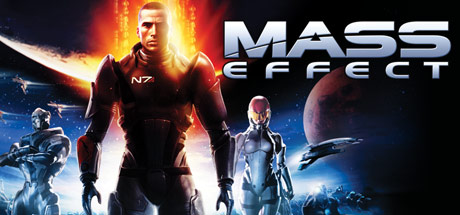
Mass Effect (2007) lands with similar gravity—not because of its squad-based combat or galaxy-spanning stakes, but because, as the player says, “None of the follow-ups really captured what this game did.” That specificity mirrors Bardock’s singular, unrepeatable arc: a self-contained, devastatingly focused narrative where consequence isn’t deferred across sequels—it lands, hard and final, in one tight, 30-minute descent. Bardock doesn’t get a trilogy. He gets a vision, a choice, and an end. So too does Shepard’s first mission carry that rare, unrepeatable weight—the urgency of now, the rawness of forging loyalty before it’s tested in blood. Both refuse the comfort of escalation; they demand emotional finality in the moment.
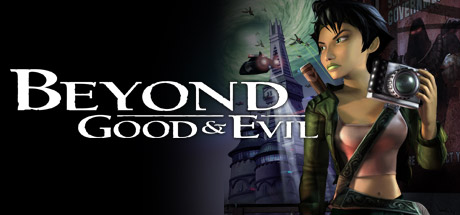
And then there’s Beyond Good and Evil™, where Jade fights not for glory, but to “save your planet and its inhabitants”—a line that echoes Bardock’s desperate, futile plea to King Vegeta: “We’re being used!” Her investigative drive, her loyalty to Pey’j, her quiet courage under systemic oppression—all mirror Bardock’s moral pivot after the vision. He stops being a soldier executing orders and becomes a witness bearing truth no one wants to hear. The player review calls it “Crazyyy”, but that energy isn’t chaos—it’s the electric shock of awakening, of seeing the machinery of power clearly for the first time. Just like Bardock, Jade operates in the shadows of empire, armed only with empathy and stubborn care.
This pairing isn’t for fans of spectacle alone. It’s for the ones who replay a boss fight not to win faster, but to linger in the music a few seconds longer. For the readers who dog-ear pages where a character touches a photo they’ll never see again. For the players who pause mid-mission—not to strategize, but to watch the rain fall on a ruined cityscape they helped save, knowing it won’t last. They’re the ones who recognize tenderness in a raised fist, love in a final transmission, and heroism not as victory—but as bearing witness, clearly, fiercely, and alone.
🎮7 Games That Match the Vibe
Match Dimensions Explained
❓Frequently Asked Questions
Why does Bardock’s final stand against Frieza feel so different from Mass Effect’s (2007) Normandy battles?
Bardock’s last fight is a raw, silent, emotionally charged one-man sacrifice—no squad commands, no dialogue trees—just desperate ki blasts and time-slowing visions. Mass Effect (2007), by contrast, leans into tactical squad coordination, dialogue-driven stakes, and galaxy-shaping choices during Normandy firefights; it’s heroic but layered with consequence, not catharsis. Both hit hard emotionally, but Bardock’s scene is pure shonen tragedy, while Shepard’s battles are sci-fi military drama with RPG weight.
Is there a Dragon Ball Z: Bardock anime or movie adaptation I should watch before playing similar games?
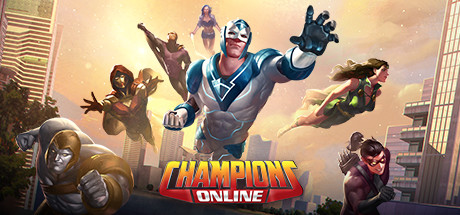
Yes—the 1990 TV special *Dragon Ball Z: Bardock – The Father of Goku* is the definitive canon source, and it directly inspired the game’s tone and imagery (like Bardock’s psychic flashbacks to Planet Vegeta’s destruction). While none of the matched games—Champions Online, Chains, Tank Universal, Beyond Good and Evil™, or Mass Effect (2007)—are adaptations, they echo its emotional narrative + sci-fi/space dimensions in different ways: Mass Effect nails the galactic stakes, Beyond Good and Evil™ channels its quiet heroism amid oppression.
How does Champions Online compare to Mass Effect (2007) for someone who loves Bardock’s lone-warrior intensity?
Champions Online gives you full hero creation and solo mission flexibility—think designing a Saiyan-inspired brawler with energy blast powers and tackling Dr. Destroyer alone—but it’s more comic-book flashy than Bardock’s grounded desperation. Mass Effect (2007) offers deeper narrative weight and isolation in moments (like the Virmire choice or the Citadel’s quiet dread), but always with squad support. If you want *Bardock’s vibe*—powerful yet vulnerable, personal yet cosmic—Mass Effect’s emotional narrative hits closer, even if Champions has flashier customization.
What’s the best game like Bardock for when I want that melancholic, space-opera ‘last stand’ mood?
Mass Effect (2007) is your strongest match—it’s got the same blend of doomed grandeur, alien worlds under siege (like the geth attacking Eden Prime), and intimate character weight (Shepard’s loyalty missions echo Bardock’s visions of his family). Beyond Good and Evil™ also delivers that quiet, defiant melancholy—Jade fighting alone against an occupying regime on Hillys, with Pey’j as her only anchor—mirroring Bardock’s isolation and love-driven resolve. Neither has ki blasts, but both nail the emotional narrative + sci-fi/space dimensions Bardock embodies.