
Puella Magi Madoka Magica the Movie Part 1: Beginnings
The first movie in the Madoka tetralogy; a recap of the first eight episodes of the series.
📺Anime Details
📝Editorial Analysis
The air in Mitakihara City doesn’t just feel heavy—it cracks. Not with thunder, but with the brittle silence after Sayaka Miki’s wish is granted and she first sees her reflection flicker—just for a frame—in the rain-slicked window of her classroom. Her fingers tighten on the desk. Her breath hitches—not from joy, not from fear yet, but from the slow, sickening realization that something has already slipped. That moment isn’t spectacle. It’s the quiet before the fracture widens. And it repeats—not as nostalgia, but as dread wearing the mask of familiarity.
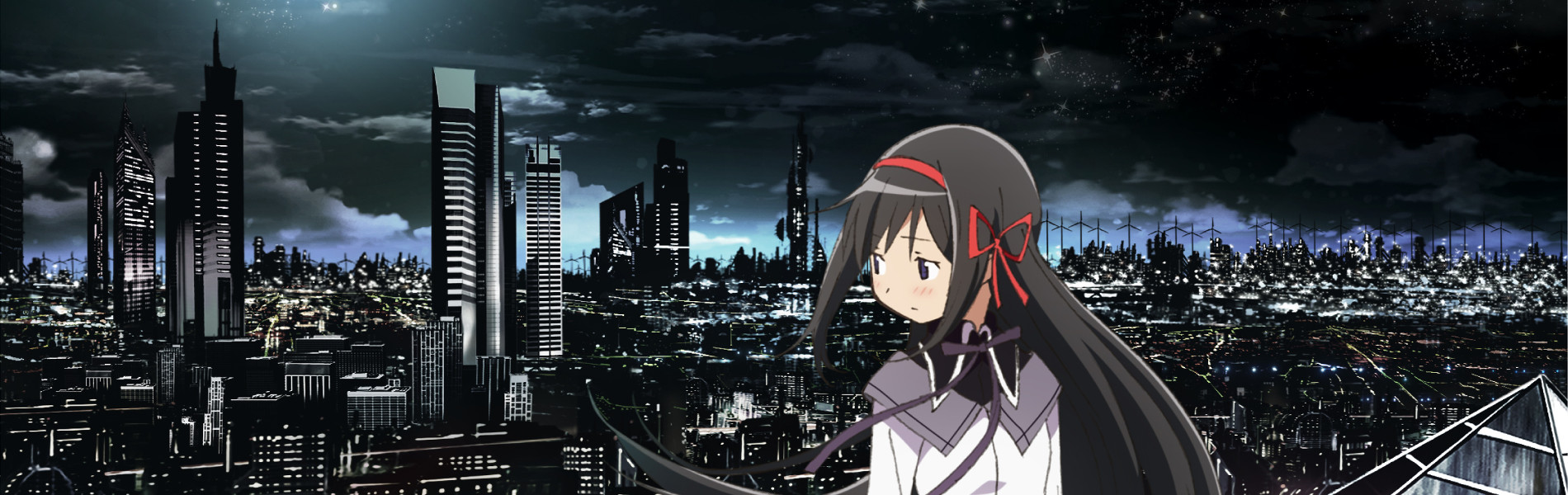
What makes Puella Magi Madoka Magica the Movie Part 1: Beginnings so singular isn’t its mahou shoujo trappings or even its philosophical scaffolding. It’s the weight of recurrence: every smile, every hallway chat, every pink ribbon fluttering in the wind carries the echo of what comes next. You watch Homura Akemi brace herself mid-step—not because she’s preparing to fight, but because she’s bracing against memory. The film doesn’t recap; it reloads, like a corrupted save file that refuses to overwrite. Time isn’t a loop here—it’s a lens, warped and thick, through which hope looks dangerously like resignation, and kindness feels like complicity. It makes you sit very still. It makes you question whether witnessing is the same as consenting. It makes you ache—not for answers, but for the innocence you know won’t survive the next scene.
That emotional gravity finds unexpected resonance in games where narrative tension lives not in exposition, but in mechanical repetition, unspoken stakes, or haunting sensory echoes. Take Chains, scored 81 for Emotional Narrative and Survival & Crafting. Its description calls it “a relaxing arcade match 3 casual game”—but the player review cuts deeper: “link 3 or more of the same color and clear enough till you can proceed and hit the next stage.” That phrase—“till you can proceed”—mirrors Homura’s entire existence: a grinding, pixel-perfect rhythm of failure, reset, and fragile forward motion. No lore dump, no cutscene—just the quiet insistence of pattern recognition under pressure. Like watching Madoka hesitate before signing the contract, again and again, each time the bubbles align just slightly differently.
Then there’s Quake III Arena, tagged Adult & Dark Seinen and described as a battle “for the amusement of an ancient alien race.” The player review notes servers still running “as of typing this.” That persistence—of infrastructure, of ritual, of combat stripped bare of motive—is chillingly familiar. In Beginnings, the witches’ labyrinths aren’t just arenas—they’re stages built by entities who observe, judge, and entertain themselves with human despair. The arena isn’t metaphorical. It’s architectural. And the fact that real players still log into Quake servers decades later? That’s the same eerie endurance as Homura’s timeline: systems humming long after their original purpose has curdled into something colder, older, and utterly indifferent.
And Tank Universal, with its evocative description—“Explore a rich virtual sci-fi 3D world… take part in large-scale tank combat between your AI allies and the forces of…”—leaves the enemy unnamed. The player review is even more telling: “Play cool tank game with dad when you were 6… Love the cool sound effects, and the colors. time goes on; loose access to game. Grew up dad passes away…” That ellipsis—“the forces of…”—is where Madoka Magica lives. Not in named villains, but in absences, in erasures, in the way grief reshapes memory until even the sound of a childhood game becomes a vessel for loss. The tank’s rumble, the flicker of neon grids—it’s all surface noise over something vast, silent, and irrevocable.
This pairing isn’t for fans of “dark fantasy” or “sci-fi action” as genres. It’s for the person who replays the same 90-second segment of a game not to master it, but to retrace the exact moment their character’s voice cracked—and wonders if they’d hear it differently now. It’s for the one who watches Homura rewind time and thinks, I’ve done that too—closed the tab, reopened the file, tried again with slightly less hope. It’s for those who recognize emotional DNA not in plot points, but in the texture of exhaustion, the hush before collapse, the way light bends just wrong in a room full of people who haven’t yet learned how much they’ll have to forget.
🎮63 Games That Match the Vibe


































Match Dimensions Explained
❓Frequently Asked Questions
Why does Chains show up in 'Games Like Puella Magi Madoka Magica the Movie Part 1: Beginnings' when it's just a match-3 bubble game?
It matches on 'Emotional Narrative' and 'Sci-Fi & Space'—surprising, but Chains’ minimalist, physics-driven chaining mechanic creates quiet, contemplative moments that echo Madoka’s early tone: fragile hope amid looming dread, like Sayaka’s first solo patrol or Madoka staring at the night sky before her contract. Players have noted how clearing chains feels like small, deliberate acts of agency—very much like Madoka’s hesitant steps toward becoming magical.
Is there a Puella Magi Madoka Magica video game adaptation of Part 1: Beginnings?
No official game adaptation exists for *Beginnings*—or any of the movies. The closest are fan-made visual novel mods and mobile titles like *Magia Record*, but those focus on spin-off lore. That’s why recommendations lean into *vibe matches*: games sharing its emotional weight, moral ambiguity, and sci-fi metaphysics—not direct retellings.
How is Tank Universal different from STAR WARS™ Jedi Knight - Jedi Academy™ for fans of Madoka’s tone?
Tank Universal leans hard into isolation and melancholy—its neon-lit, Tron-inspired void and AI allies who fade mid-mission mirror Homura’s time loops and the loneliness of Kyoko’s final stand. Jedi Academy, while also 'Adult & Dark Seinen', emphasizes heroic growth and light-side choice; Tank Universal’s silent cockpit, dying comms, and decaying battlefield feel more like the hollow victory after Walpurgisnacht’s aftermath.
What’s the best game like Madoka Movie Part 1 if I want that slow-burn dread and quiet despair vibe?
Go with Tank Universal—it nails the mood: you’re alone in a vast, beautiful-but-hostile 3D space, hearing your tank’s whine echo as allies glitch out or vanish, just like Madoka watching her friends fracture under pressure. Its 'Emotional Narrative' + 'Adult & Dark Seinen' combo mirrors the film’s descent from wonder to unease, especially in scenes like Mami’s tea party turning brittle, or Homura’s fractured flashbacks.