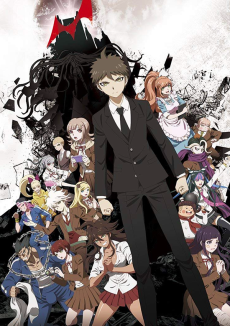
Danganronpa 3: The End of Hope’s Peak High School - Despair Arc
Chisa Yukizome begins her job as homeroom teacher for Hope's Peak Academy's 77th Class of Ultmate students. Meanwhile, Hajime Hinata, a student of the school's Reserve Course for students without talent, prepares to undergo an experiment to make him the Ultimate Hope. What follows is a series of tragic events which lead to the birth of the Remnants of Despair and the realization of "The Biggest, Most Awful, Most Tragic Event in Human History."
Aired alongside of Danganronpa 3: Mirai-hen, with Mirai-hen starting first.
📺Anime Details
📝Editorial Analysis
The fluorescent lights of Hope’s Peak Academy’s hallway hum—too loud, too steady—as Chisa Yukizome watches Hajime Hinata walk past her classroom door. He doesn’t look up. His shoulders are hunched not from fatigue but from anticipation—a quiet, internalized dread that hasn’t yet curdled into despair, but already tastes like rust on the tongue. That moment isn’t dramatic in the traditional sense: no music swells, no camera lingers. It’s just light, silence, and the unbearable weight of knowing what comes next. You feel it in your molars.

This is the core feeling of Danganronpa 3: The End of Hope’s Peak High School - Despair Arc: a slow, suffocating unraveling. Not chaos—but the precise, clinical dismantling of trust, identity, and meaning. It’s less about jump scares or gore and more about the horror of watching ideals calcify into dogma, empathy harden into calculation, and hope become a weapon turned inward. The school isn’t haunted by ghosts—it’s haunted by potential, by the unbearable gap between who these teens are and who they’re being forced to become. Every hallway shot feels like a corridor of memory collapsing in real time. Every teacher-student interaction carries the tremor of betrayal disguised as care. You don’t just watch tragedy unfold—you recognize its grammar. You see the first lie, the first compromise, the first time someone looks away—and you understand, with chilling clarity, how the Remnants of Despair are forged not in fire, but in silence.
That emotional DNA—inescapable intimacy, philosophical corrosion, tragedy as systemic inevitability—resonates sharply with Persona 5 Royal. Its description cites “JRPG Narrative” and “Emotional Narrative” alongside “Adult & Dark Seinen,” and one player calls it “less a long journey than a long drama”—exactly the pacing and tonal gravity of Despair Arc. Both frame rebellion not as spectacle but as exhaustion: Joker’s heists and Yukizome’s classroom interventions are acts of resistance performed under crushing institutional weight. The soundtrack’s brilliance in Persona 5 Royal mirrors Despair Arc’s use of oppressive stillness—sound becomes texture, not ornament. When the player review notes the “seamless transition between daily life…” it echoes how Despair Arc blurs the line between routine and rupture: a homeroom lesson, a lab experiment, a hallway chat—all are potential fault lines.
Dreamfall: The Longest Journey, too, shares this wavelength. Its description highlights “Cyberpunk & Dystopia” and “Emotional Narrative,” and the player review nails the shared rhythm: “It’s less a long journey than a long drama. And somehow, the drama is compelling enough that you keep watching scene after scene…” Like Despair Arc, Dreamfall trades action for atmosphere—its dystopia isn’t exploded across cityscapes but lived in the hollows of characters’ voices, in bureaucratic indifference, in the slow erosion of selfhood across fractured realities. Both works treat despair not as an event but as weather: ambient, persistent, altering how light falls on a face, how a pause hangs in a sentence.
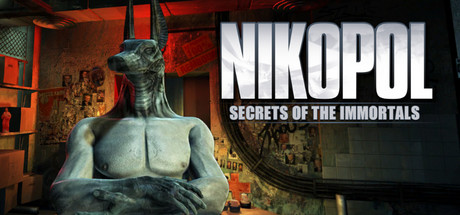
And then there’s Nikopol: Secrets of the Immortals, whose description explicitly names “Cyberpunk & Dystopia” and “Emotional Narrative,” while the player review praises its “cyberpunk atmosphere” and cutscenes that “enhance” rather than distract. Here, the resonance lies in the architectural dread: Paris under a religious dictatorship, like Hope’s Peak under ideological siege, becomes a character—a space where ideology has seeped into brick and wiring. The pyramid ship hovering above the city mirrors the unseen pressure of the Future Foundation’s machinations: both are silent, omnipresent, and inevitable. Neither story asks if collapse will happen—it asks only how much of you survives the fall.
These pairings aren’t for fans of “dark stories.” They’re for people who linger in the aftermath of a confession, who replay a single line of dialogue three times because the subtext vibrates with something unspeakable. For the viewer who watches Chisa’s hands tremble—not from fear, but from the effort of holding back tears while delivering the script she’s been given. For the player who pauses Dragon Age: Origins mid-battle not to strategize, but to reread a companion’s journal entry about losing their home—because the weight of that loss lands harder than any darkspawn blow. This is for those who recognize despair not as absence, but as presence: thick, quiet, and utterly inescapable.
🎮38 Games That Match the Vibe























Match Dimensions Explained
❓Frequently Asked Questions
Why is Persona 5 Royal such a common recommendation for Danganronpa 3: Despair Arc fans?
Because both lean hard into psychological tension, morally grey characters facing systemic corruption, and that gut-punch emotional whiplash—like when Makoto’s quiet resolve mirrors Hajime’s slow unraveling under despair. The Phantom Thieves’ heists even echo the Despair Arc’s claustrophobic, high-stakes group betrayals, especially during the Shibuya Jail dungeon where trust fractures in real time.
Is there a visual novel adaptation of Dreamfall: The Longest Journey like Danganronpa’s anime format?
No—it’s a fully voiced, cinematic point-and-click adventure with real-time cutscenes and branching dialogue, not a visual novel or anime adaptation. But fans of Despair Arc’s slow-burn dread will recognize the same weighty pacing and layered character collapses, like April Ryan’s descent into disillusionment mirroring Chiaki’s quiet erosion of hope across episodes.
How does Dragon Age: Origins compare to Danganronpa 3’s Despair Arc in terms of tone and moral choices?
Both weaponize despair through intimate, consequence-heavy choices—like DA:O’s ‘Broken Circle’ quest where you choose who lives or dies based on ideology, echoing the Despair Arc’s classroom trials where loyalty gets carved up mid-sentence. And just as Junko’s manipulation warps reality, Loghain’s betrayal hits with that same chilling, inevitable dread—especially when you pause mid-combat to weigh your next move.
What’s the best game like Danganronpa 3: Despair Arc if I want that oppressive, rain-soaked dystopian vibe with philosophical dread?
Nikopol: Secrets of the Immortals nails it—Paris under a fascist theocracy, eerie pyramid ships looming overhead, and cutscenes dripping with noir animation. It’s got the same suffocating atmosphere as the Despair Arc’s underground bunker scenes, plus that same blend of existential dread and fragile human connection, like when Nikopol bargains with immortals while his city crumbles outside.