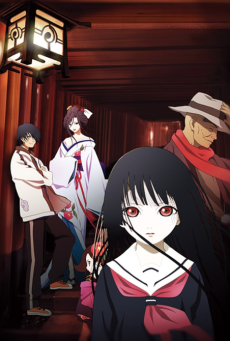
Hell Girl: Two Mirrors
Ai Enma once again returns as the Jigoku Shoujo, who uses Jigoku Tsuushin (Hell Hotline) to allow people to post their grudges on their tormentors, sending them straight to Hell. In exchange, the users of the website will end up in Hell after they die. Meanwhile, a mysterious girl with blue eyes called Kikuri appears and seems to have strange intentions towards Ai and Jigoku Tsuushin's operation.
(Source: Anime News Network)
📺Anime Details
📝Editorial Analysis
The screen holds its breath. Not with jump-scare tension, but with the quiet weight of a single mouse click—deliberate, irreversible—on the Jigoku Tsuushin website’s “Send” button. No fanfare. Just the soft, hollow ping of data submitting, the faint blue glow reflecting in Ai Enma’s unblinking eyes as the name vanishes from the screen and reappears, etched in ash, on the straw doll’s tag. In that silence, you feel it: not vengeance satisfied, but soul surrendered. The grudge is answered—but the cost isn’t paid in blood or time. It’s paid in eternity, deferred, inevitable.
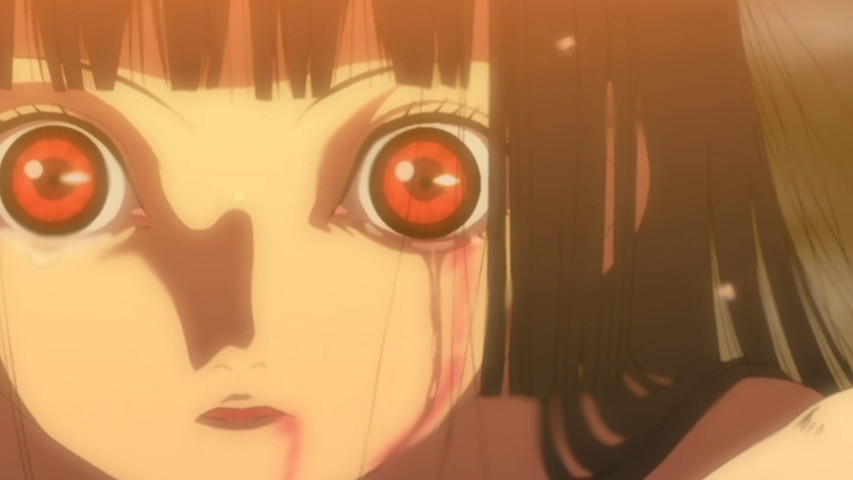
That’s the core ache of Hell Girl: Two Mirrors: not horror as spectacle, but horror as consequence made visible. It doesn’t thrill—it settles, like dust in an abandoned shrine. You don’t flinch from monsters; you ache for the girl who delivers them. Ai isn’t a force of chaos—she’s a function, precise and sorrowful, bound by ancient rules older than language. Kikuri’s blue gaze isn’t sinister—it’s curious, almost tender, as if she’s studying grief like a botanist studies wilted petals. The oiran motifs, the slow-burning episodes rooted in bullying and betrayal—they aren’t set dressing. They’re the texture of lives worn thin by isolation, where revenge feels less like power and more like the last breath before drowning. It makes you think about how easily compassion curdles into complicity, how forgiveness is rarely offered—and even more rarely earned. It leaves you with a hollow warmth, like holding a teacup long after the liquid inside has gone cold.
That same emotional DNA hums in Tank Universal, not in its neon-lit tank combat or Tron-inspired geometry, but in the player review’s raw, unguarded line: “Play cool tank game with dad when you were 6… Grew up dad passes away…” There’s no lore dump, no cutscene explaining loss—just the sudden, devastating pivot from childhood joy to adult absence, wrapped in the tactile memory of sound effects and color. Like Hell Girl: Two Mirrors, it doesn’t dramatize grief—it embeds it in the interface: the game’s accessibility lost, the shared ritual severed, the mechanics themselves becoming relics of a relationship now measured in silence. Both ask you to sit with the echo—not the explosion.
Jade Empire™: Special Edition resonates not through its martial arts systems or faction choices, but in the sheer labor of its emotional access—captured perfectly in the player’s exhausted, practical plea: “to get to launch I had to follow these instructions I got from Reddit: Copy and paste ‘steam.dll’…” That friction—the bureaucratic weight of just reaching the story—is kin to the Jigoku Tsuushin’s interface: a deceptively simple website masking cosmic stakes. You don’t click “Revenge” on a menu—you navigate real-world shame, hesitation, the slow corrosion of hope, before typing a name. The game’s legacy isn’t in its open palm or closed fist, but in the effort required to enter its world at all*—mirroring how Hell Girl: Two Mirrors forces you to sit with moral ambiguity until it becomes your own pulse.
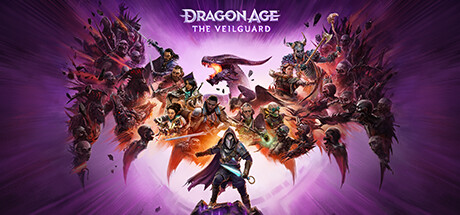
And then there’s Dragon Age: Origins, where the player writes “done finish play this on my deck. have fun with it. the story is great and its pause attack mechanic is amazing.. help a lot to strategist your tactic…” That fragmented, weary syntax—half-remembered, half-lost—echoes the anime’s episodic structure: each arc a self-contained tragedy, resolved not with catharsis, but with the quiet exhaustion of having witnessed. The pause mechanic isn’t just tactical—it’s existential. You stop time to weigh consequences, just as Ai pauses before cutting the thread, just as Kikuri watches, waiting to see if humanity will choose mercy—or simply repeat the pattern. The greatness isn’t in the grand Blight, but in the small, strategic pauses where you realize: no choice is clean. Every victory carries ash.
This pairing speaks to someone who doesn’t seek escape—but recognition. Someone who’s sat through a school hallway thick with unspoken cruelty, who’s typed a message they couldn’t send, who’s held a controller long after the screen went black—not because the game ended, but because the feeling hadn’t yet settled. They love stories where the monster isn’t under the bed, but in the mirror—and where the most terrifying thing isn’t damnation, but the quiet, inevitable way we all keep choosing it, one click, one pause, one copied .dll file at a time.
🎮6 Games That Match the Vibe


Match Dimensions Explained
❓Frequently Asked Questions
Why does Tank Universal show up in 'Games Like Hell Girl: Two Mirrors' lists when it's a tank shooter?
Because both share that heavy, melancholic exploration vibe and adult/dark seinen tone—like when you're wandering Tank Universal's desolate virtual world alone, hearing those haunting sound effects while remembering your dad, it hits with the same emotional weight as Hell Girl’s quiet, inevitable tragedies. It’s not about genre—it’s about that layered sorrow and moral ambiguity woven into the narrative fabric.
Is there a Hell Girl: Two Mirrors anime or game adaptation I can actually play right now?
No official game adaptation exists—but Jade Empire™: Special Edition and Dragon Age: Origins capture its essence best: morally gray choices, emotionally charged betrayals (like choosing the Closed Fist path or deciding who lives/dies during the Warden’s origin), and that mature, atmospheric tension fans of Hell Girl crave. Both are fully playable today—no fan patches needed, though Jade Empire does require that Reddit-sourced steam.dll fix on some setups.
How does Dragon Age: Origins compare to Jade Empire in terms of Hell Girl-style tragedy and consequences?
Dragon Age leans harder into irreversible, gut-punch consequences—like sacrificing Alistair or letting Loghain live—which echo Hell Girl’s ‘no take-backs’ karma, while Jade Empire’s tragedy is more personal and philosophical, like the Emperor’s final confrontation where your choice between Open Palm and Closed Fist reshapes your entire moral identity. Both score 62 in Emotional Narrative and Adult & Dark Seinen, but DA:O’s pause-attack mechanic makes those weighty decisions feel even more deliberate and tense.
What’s the best game like Hell Girl: Two Mirrors if I want that slow-burn, emotionally heavy, late-night-feeling melancholy?
Tank Universal is surprisingly perfect for that mood—even though it’s a tank FPS. Its dimly lit virtual world, lonely AI allies, and that player review about childhood memories fading after loss? That’s pure Hell Girl energy: quiet dread, unresolved grief, and beauty in decay. It scores 78 overall and nails both Emotional Narrative and Melancholic Exploration better than any other match.