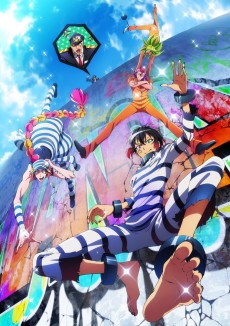
NANBAKA
Four men are assigned to the prison: Juugo, a man who attempted to break out of prison and ended up extending his jail time; Uno, a man who likes to gamble with women; Rokku, a man who likes to get into fights; and Nico, a man who likes anime.
(Source: Anime News Network)
📺Anime Details
📝Editorial Analysis
The fluorescent hum of Cell Block D—low, persistent, slightly warped—cuts through the slapstick chaos: Juugo’s third failed escape attempt ends not in chains, but in him dangling upside-down from a ceiling vent, socks askew, while Uno calmly bets Rokku five cigarettes that Nico will recognize the mecha from episode 12 of Super Robot Wars Z before the guard rounds the corner. No sirens. No dramatic music. Just the sticky heat, the flicker of a dying bulb, and the absurd, tender weight of four men choosing this moment—not vengeance, not freedom, not even dignity—to be here, together, breathing the same stale air.
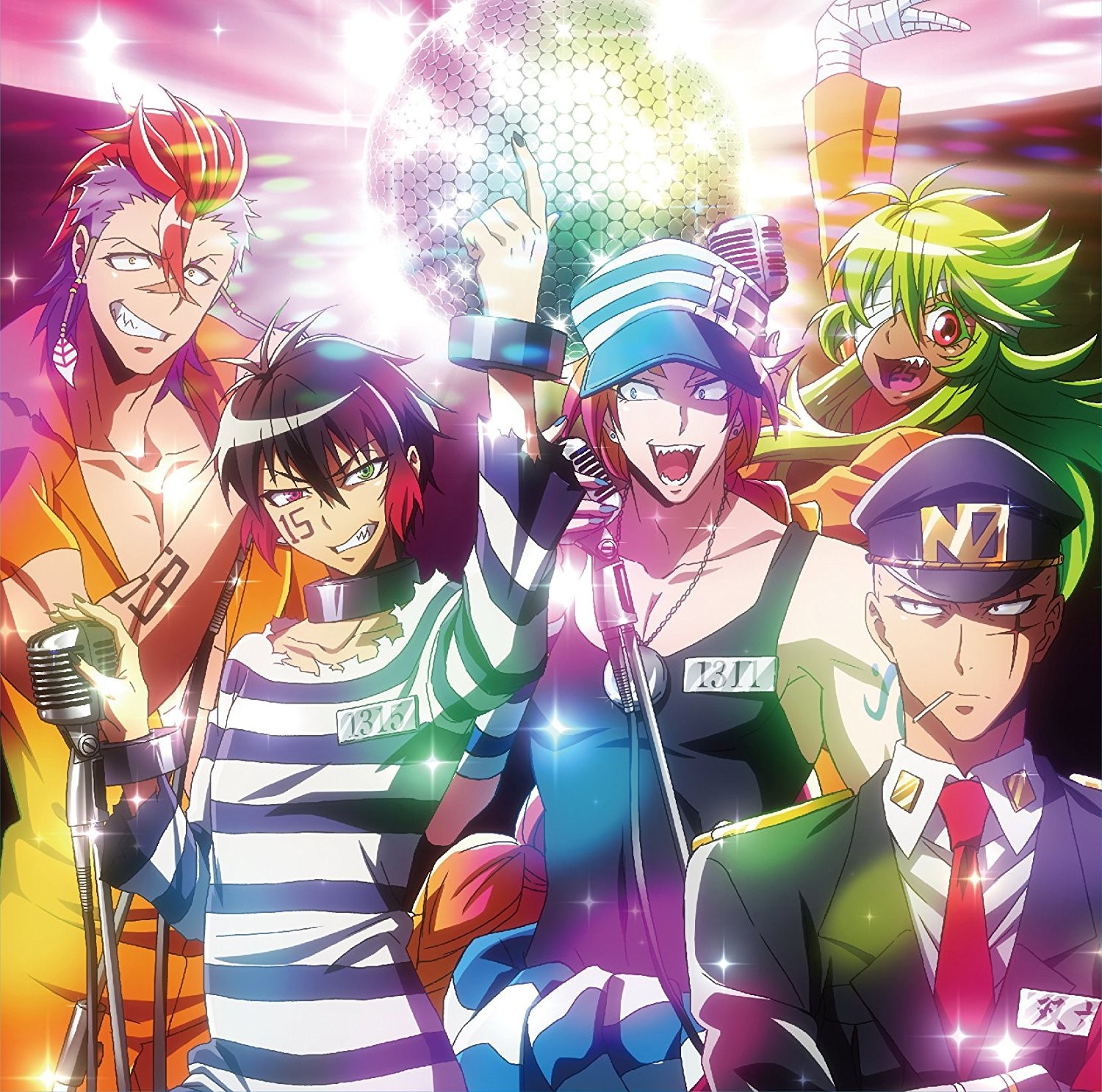
That’s the feeling NANBAKA lives inside: melancholic exploration disguised as farce. It’s not about prison as punishment, but as a suspended world where time bends, identities blur, and tragedy wears cartoon bruises. The ensemble isn’t just male—it’s contained, orbiting each other like gravity wells in a closed system. Revenge simmers beneath jokes; tragedy whispers between Nico’s anime rants and Rokku’s knuckles. There’s no grand liberation arc—just small, stubborn acts of presence. You don’t feel hope for them—you feel with them, in the quiet ache of routines that somehow hold meaning because they’re repeated, because they’re shared, because they’re all they’ve got.
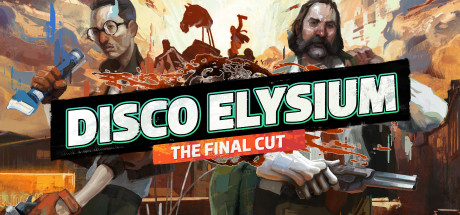
That exact emotional frequency pulses in Disco Elysium - The Final Cut, where melancholic exploration isn’t scenery—it’s physiology. The game’s description calls it “a groundbreaking role playing game” where you carve a path across a city with “a unique skill system,” and the player review drops a line that lands like a cell door clanging shut: “Capital has the ability to subsume all critiques into itself.” That’s NANBAKA’s prison logic too—not walls, but systems so internalized they shape how Juugo calculates angles, how Uno reads a woman’s hesitation like odds, how Nico escapes into frame rates instead of futures. Both refuse catharsis. They linger in the bruise, not the punch.
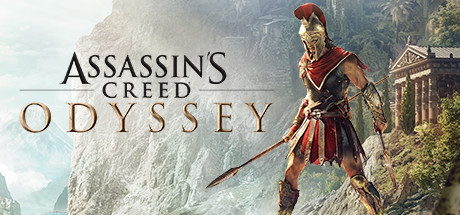
Then there’s Assassin's Creed™: Director's Cut Edition, whose description hypes “next-gen” action but whose player review quietly confesses: “Being an older game now, some of the models and textures are quite dated but no issues with me…” That resignation—cherishing something despite its fraying edges—is pure NANBAKA. The anime doesn’t hide its episodic scaffolding or its low-stakes stakes; it leans into them, like the game’s dated textures become part of its weathered soul. Both wear their imperfections like uniforms—proof they’ve lived, rusted, kept going. The neon noir dim isn’t visual polish—it’s the glow of a single bulb over a shared cigarette, the afterimage of movement that’s lost its original purpose but still means something.
And Prince of Persia, described as “an all-new epic journey” yet reviewed with wistful detachment—“Prince of Persia is the 3rd reboot… completely separate from the sands timeline…”—mirrors NANBAKA’s playful dislocation. Neither is bound by legacy; both treat myth as improv. The comedy & parody dim isn’t just gag-based—it’s structural irony: a prince leaping across crumbling palaces, four convicts staging a heist with stolen cafeteria spoons. Both know the rules are arbitrary, the stakes self-appointed, and the real drama lives in the timing—the pause before the fall, the glance exchanged mid-slapstick, the breath held when the guard almost looks up.
This pairing isn’t for fans of “prison stories” or “open worlds.” It’s for the person who rewatched NANBAKA’s cafeteria food fight scene three times—not for the chaos, but for the way Rokku subtly shields Nico’s plate when the pudding flies. It’s for the player who booted up Disco Elysium at 2 a.m., not to solve the case, but to hear the detective’s voice crack on a line about loneliness being a muscle you stop using. It’s for anyone who’s ever loved something deeply flawed, quietly persistent, and utterly uninterested in selling you salvation—just asking, softly, “Want to stay awhile?” That’s the resonance. Not plot. Not power. Just the rare, warm, melancholic certainty of being seen—in a cell, in a rain-slicked alley, in a tank cockpit lit only by HUD green—and choosing, again, to laugh.
🎮125 Games That Match the Vibe
























Match Dimensions Explained
❓Frequently Asked Questions
Why does the rooftop chase in NANBAKA feel so similar to Assassin's Creed's Damascus sequences?
Because both lean hard into that 'Neon Noir, Melancholic Exploration' vibe — think Altaïr gliding across sun-baked rooftops at dusk, blending parkour with quiet dread, just like NANBAKA’s tense, rain-slicked chases through neon-lit alleyways. Assassin's Creed™: Director's Cut Edition (81) nails that same atmospheric weight and verticality, even with its dated textures — players specifically praise how the city itself feels like a character you’re both fleeing and mourning.
Is there an anime or live-action adaptation of NANBAKA?
No — unlike Vampire: The Masquerade - Bloodlines (78), which got a cult following *because* of its rich lore and inspired multiple tabletop expansions and audio dramas, NANBAKA has no official adaptations yet. Fans keep hoping, but right now the closest thing is diving into Bloodlines’ 'Neon Noir + Body Horror & Occult' world — especially scenes where Ventrue elders whisper threats in smoky nightclubs while your reflection glitches unnervingly in broken mirrors.
How does Disco Elysium compare to NANBAKA in terms of tone and emotional weight?
Disco Elysium - The Final Cut (80) hits *harder* on 'Melancholic Exploration' and 'Emotional Narrative' — imagine NANBAKA’s quieter prison-yard moments stretched across an entire decaying city, with your own inner voices arguing over whether hope is just another coping mechanism. Players quote lines like 'Capital has the ability to subsume all critiques...' because it mirrors NANBAKA’s themes of systemic control — just swap the detention center for Revachol’s rain-soaked streets and the warden for a corrupt city council.
What’s the best game like NANBAKA if I want something bittersweet but with unexpected humor?
Go straight to Prince of Persia (79) — it’s the only match with 'Comedy & Parody' alongside 'Melancholic Exploration'. Think NANBAKA’s absurd guard standoffs or the prince’s sarcastic inner monologue during crumbling palace escapes. One player review calls it 'a brand new story completely separate from the sands timeline', which fits perfectly: it balances grief and gallows humor like when the prince quips mid-backflip off a collapsing pillar — pure NANBAKA energy, just with more sand and less handcuffs.