
Ameku M.D.: Doctor Detective
📺Anime Details
📝Editorial Analysis
The fluorescent hum of a hospital corridor at 3 a.m. — not the sterile white of a procedural, but the slightly yellowed, flickering kind that casts long, wavering shadows on linoleum worn thin by decades of hurried footsteps. Dr. Ameku stands motionless beside a gurney, stethoscope still warm against her palm, listening not to a heartbeat but to the silence after one stops — the kind that doesn’t echo, but settles, thick and irreversible. Her expression isn’t grief, not exactly. It’s the quiet recalibration of someone who has just confirmed what she suspected: that the cause wasn’t disease, but design — a slow, deliberate unraveling masked as misfortune.
That’s the atmosphere: melancholic exploration. Not despair, not shock, but the heavy, deliberate act of moving through spaces where tragedy has already taken root — a clinic waiting room with folded pamphlets on hypertension, a rain-slicked alley behind a shuttered pharmacy, the hushed pause before a coroner’s report is handed over. This isn’t mystery as puzzle-box spectacle. It’s mystery as rescue delayed, as diagnosis delivered too late, as the hollow space between “what happened” and “why no one intervened.” The medicine here isn’t heroic intervention — it’s forensic clarity. The detective work isn’t about catching a killer mid-monologue; it’s about tracing the faint, almost invisible trail of negligence, exhaustion, systemic friction — the kind that leaves no fingerprints, only paper cuts on official forms. It feels adult, not because of gore or language, but because it treats consequence as cumulative, irreversible, and rarely solvable — only witnessed, sometimes named.
That emotional DNA — melancholic exploration, layered with neon noir texture and grounded in mystery & detective labor — finds startling resonance in three games. First, Batman: Arkham Asylum Game of the Year Edition: its Gotham isn’t a city of villains, but of broken infrastructure, of asylum corridors lit by buzzing fluorescents and emergency exit signs bleeding red onto cracked tile — identical in tonal weight to Ameku’s hospital halls. You don’t just fight thugs; you scan, listen, reconstruct — piecing together trauma from blood spatter patterns and discarded prescription bottles, just as Ameku reads dosage logs and shift schedules to expose the quiet violence of understaffing. Then there’s Disco Elysium - The Final Cut, where every dialogue branch, every failed skill check, every grim observation about the city’s rot mirrors Ameku’s own internal monologue — clinical, weary, darkly precise. The player review nails it: “Capital has the ability to subsume all critiques into itself.” That’s Ameku’s world too — where even her correct diagnosis gets filed, stamped, and buried under bureaucratic inertia. She doesn’t overthrow the system; she documents its failures with exhausted precision. Finally, Return of the Obra Dinn shares that same emotional narrative gravity — no combat, no time pressure, just you, a logbook, and the slow, solemn act of bearing witness to lives extinguished not by spectacle, but by cold logic, miscommunication, and cascading failure. Every solved fate carries the same quiet weight as Ameku closing a case file knowing the patient is gone, the family unmoored, and the system unchanged.
This pairing speaks directly to the viewer who keeps a pen beside their coffee mug not to take notes on plot twists, but to underline phrases like “chronic understaffing,” “unreported side effects,” “protocol deviation logged but unaddressed.” It’s for the player who replays Max Payne’s bullet-time not for the gunplay, but for the way rain blurs neon signs into streaks of indigo and rust — the exact color palette of Ameku’s rain-streaked clinic window at dusk. It’s for people who feel recognition, not escapism, in the weight of a clipboard, the hum of a dying lightbulb, the silence after a truth is spoken aloud and nobody moves to change anything. They don’t want catharsis. They want accuracy. They want the ache of knowing, precisely, how the wound was made — and why the bandage arrived too late.
🎮124 Games That Match the Vibe

































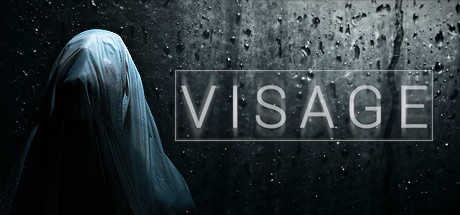

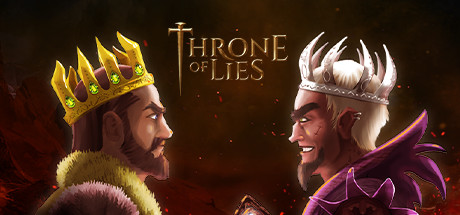

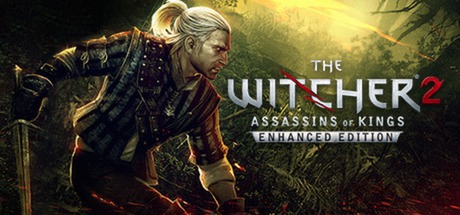


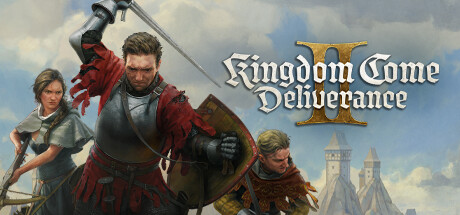












Match Dimensions Explained
❓Frequently Asked Questions
Why does Disco Elysium keep coming up in Ameku M.D. recommendations?
Because both lean hard into melancholic, introspective detective work where your mind is the crime scene—Ameku’s internal monologues and trauma-driven deductions mirror Disco Elysium’s skill-based dialogue trees (like Logic or Empathy rolls) and its rain-soaked, philosophically dense world of Revachol. You’ll feel that same weighty, self-reflective vibe when Ameku stares at a bloodstain and flashes back to childhood, just like when Harry Du Bois debates capitalism with a dead man’s corpse in the ruins of the Whirling-in-Rags.
Is there an anime or manga adaptation of Ameku M.D.?
No—Ameku M.D. is exclusively a visual novel with no official anime, manga, or live-action adaptations (yet). That said, fans often compare its tone to *Monster*’s slow-burn moral tension or *Ghost in the Shell*’s neon-noir autopsy scenes—but those are just stylistic parallels, not adaptations. The closest official media is the original Japanese visual novel and its fan-translated patch.
How does Return of the Obra Dinn compare to Ameku M.D. for puzzle-driven deduction?
Both demand forensic patience, but Obra Dinn strips away dialogue and character arcs to focus purely on spatial logic—like reconstructing a shipboard murder from frozen vignettes and sound cues—while Ameku layers deduction with emotional stakes (e.g., cross-referencing a patient’s tremor with their father’s suicide note). If you love Ameku’s ‘diagnosis-as-revelation’ moments, Obra Dinn’s ‘aha!’ epiphanies feel similarly earned—but colder, quieter, and entirely visual.
What’s the best Ameku M.D. alternative if I want that rainy-night, morally gray doctor-detective vibe?
Max Payne—seriously. Not for the medical angle, but for the exact same neon-noir texture: think Ameku’s late-night hospital hallway walks mirrored by Max’s bullet-time strolls through rain-lashed alleys, both haunted men using sharp intellect to survive systems rigged against them. His ‘fugitive cop framed for murder’ arc hits the same adult & dark seinen notes as Ameku’s ethical tightrope walk diagnosing patients while evading hospital politics.