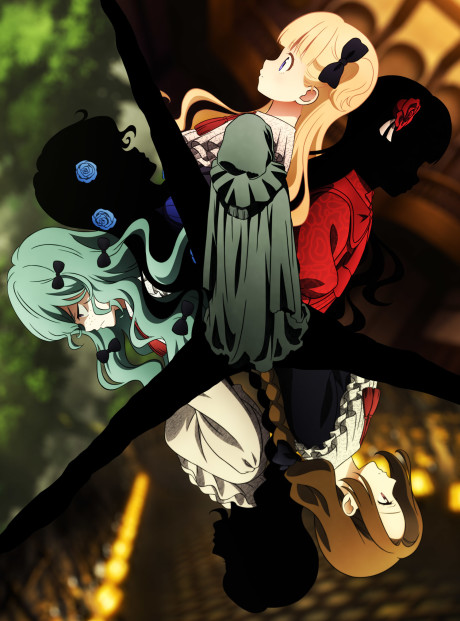
SHADOWS HOUSE 2nd Season
After finishing their "debut," Kate, Emilico and three other pairs who started with them begin a new life as adults. With the mystery of the "Shadows House" still unsolved, a new incident occurs in the children's wing. Kate and Emilico, whom the Star Bearers suspect of being malcontents, investigate a mysterious robed Shadow who may be the culprit.
(Source: Anime News Network)
📺Anime Details
📝Editorial Analysis
The silence after the tea service ends—not the polite hush of a formal salon, but the weight of it: the way Kate’s fingers linger on the rim of her cup while Emilico stands motionless behind her, both of them listening to the hollow echo of footsteps retreating down the marble corridor—footsteps that shouldn’t be there, not in the children’s wing at this hour. No music swells. No shadow flickers across the wallpaper. Just stillness, thick and watchful, as if the house itself is holding its breath.
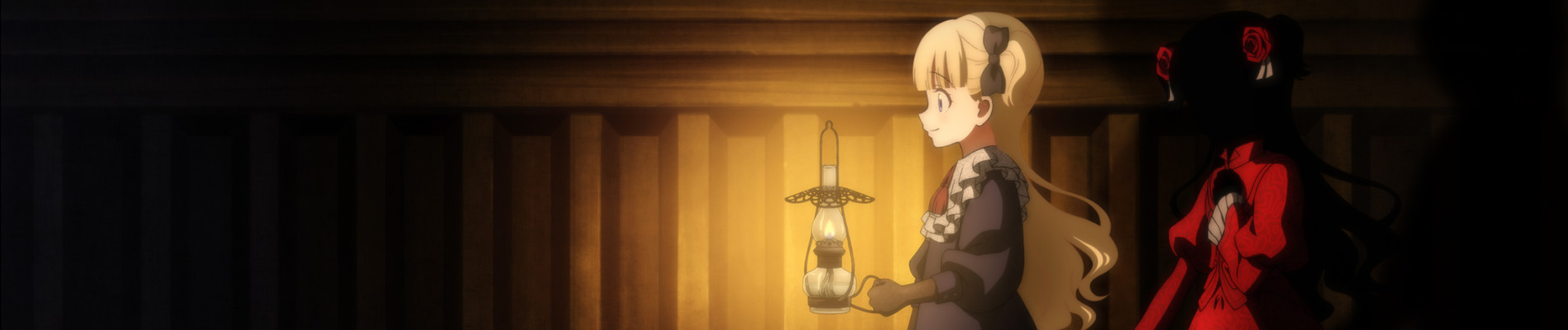
That’s the feeling SHADOWS HOUSE 2nd Season lives inside: not jump-scare horror, but dread as routine. It’s the slow realization that every polished surface reflects something just out of frame—every bow from a maid carries the tremor of suppressed memory, every “Ojou-sama” spoken like a liturgy that no one remembers writing. This isn’t fantasy dressed up as gothic decor; it’s conspiracy as domesticity, where slavery wears gloves and memory manipulation is administered with lavender tinctures before bedtime. You don’t feel afraid of the house—you feel complicit in its quiet machinery, especially when you catch yourself nodding along with the logic of the Star Bearers, even as your stomach knots. It makes you think about how easily hierarchy becomes invisible when served on porcelain, how obedience can look like care, and how adulthood here isn’t freedom—it’s just a wider cage with better upholstery.
That emotional DNA—the suffocating intimacy of power disguised as duty, the erosion of self beneath ritualized roles—resonates sharply with BioShock. Its description calls it a “shooter unlike any you’ve ever played”, but what lingers isn’t the plasmids or the Big Daddies—it’s Rapture’s decaying grandeur, the way its political idealism curdles into something grotesquely personal. A player review calls it “one of the most revolutionary games ever!”—not for its mechanics, but because it made ideology taste metallic, like blood and saltwater in your mouth. Like SHADOWS HOUSE, it weaponizes aesthetics: gilded art deco masking systemic rot, just as lace cuffs hide wrist restraints. Both force you to move through spaces designed to awe you into compliance—and then quietly, devastatingly, ask: Who taught you to kneel?
Then there’s BioShock Infinite, which shares the same Time & Memory dimension—but here, memory isn’t erased. It’s fractured, layered, weaponized across realities. The description frames Booker DeWitt as “indebted to the wrong people, with his life on the line”, a man whose entire identity is a ledger of sins he can’t reconcile. A player review admits “some people are still bitter about the Bioshock Infinite we could have gotten”—but that bitterness mirrors Kate’s own quiet fury: not at villains, but at the architecture of erasure itself. In SHADOWS HOUSE, every “debut” is a forced amputation of childhood; in Infinite, every choice is a ghost limb twitching in another timeline. Both treat memory not as nostalgia, but as evidence—and evidence that keeps getting buried under fresh coats of varnish.
And then—the Prince of Persia trilogy. Not the sun-drenched acrobatics of the first game, but the ones steeped in Time & Memory and Adult & Dark Seinen: Warrior Within, The Two Thrones, The Sands of Time. Their descriptions all orbit consequence—Dahaka hunting the Prince “as an immortal incarnation of Fate”, the kingdom “ravaged by war”, the dagger “borne by blood and ruled by deceit.” Player reviews glow with visceral, decades-old attachment: “my childhood completing it was a journey,” “still plays great,” “Woah, what a game.” That devotion isn’t just nostalgia—it’s recognition. These games understand time not as progress, but as recurrence: the same corridor, the same fall, the same betrayal, each time with sharper edges. Like Kate walking past the same stained-glass window in the children’s wing—knowing now what the light hides behind the lead lines.
This pairing isn’t for fans of lore dumps or power fantasies. It’s for the viewer who watches Kate fold a napkin exactly as instructed—and feels their chest tighten. For the player who pauses mid-leap in Sands of Time, not to reset, but to stare at the sand slipping through the dagger’s grip like hours they’ll never get back. It’s for people who love stories where the monster isn’t in the basement—it’s in the mirror, wearing your face, smiling politely, waiting for you to forget why you’re holding the teacup.
🎮37 Games That Match the Vibe







Match Dimensions Explained
❓Frequently Asked Questions
Why does BioShock Infinite match Shadows House 2nd Season so well despite the different settings?
Both lean hard into psychological unease and fractured identity—Elizabeth’s cage-like tower confinement and Booker’s looping guilt mirror Kate’s gilded prison and the Shadow House’s suffocating hierarchy. The game’s ‘Time & Memory’ dimension (and its Adult & Dark Seinen tone) directly echoes the season’s themes of erased pasts, performative obedience, and slow-burn rebellion—like when Kate confronts her own reflection in the mirror hallway, it hits with the same uncanny weight as Elizabeth opening a tear to reveal alternate versions of herself.
Is there a Shadows House video game adaptation?
No—there’s no official Shadows House game, anime-only adaptation, or even announced mobile title. But if you’re craving that gothic tension and layered power dynamics, Prince of Persia: Warrior Within nails it: Dahaka’s relentless chases through crumbling, candlelit corridors feel like walking the Shadow House’s silent upper floors at midnight, and the Prince’s duality (light/dark self) mirrors how characters like Emilico and Layla navigate split loyalties and hidden selves.
BioShock vs. Prince of Persia: The Sands of Time—which is better for Shadows House fans who love quiet dread over action?
Go with BioShock—it’s slower, more atmospheric, and leans into oppressive stillness: think Rapture’s abandoned halls echoing with distant whispers and distorted lullabies, just like the hushed tension before a Shadow House ceremony. Sands of Time is brilliant, but its acrobatic momentum and frequent combat (like flipping over guards mid-leap) trades that creeping unease for kinetic flow—less ‘waiting for the mask to slip,’ more ‘dodging sand-traps while backflipping off walls.’
What’s the best game like Shadows House 2nd Season if I want that melancholy, elegant decay vibe?
Prince of Persia: The Two Thrones—its Babylon is all crumbling marble, veiled courtyards, and golden light filtering through broken domes, mirroring the Shadow House’s decaying grandeur. The Prince’s internal struggle with his darker half (the Sand Wraith) parallels how characters like Stella and Sophie wrestle with inherited roles and suppressed rage—especially during those quiet, candlelit cutscenes where silence speaks louder than dialogue.