
NEEDY GIRL OVERDOSE
OMGkawaiiAngel, affectionately known as "KAngel", is the top streamer girl with 10 million subscribers, and not a day goes by without seeing her in action. Whether online, on TV, or at a live show, she is always surrounded by her cheering fans.
Striving to catch up with KAngel's popularity is a three-girl streaming unit called Karamazov.
And far removed from the world of these streamers is Kache, a girl who lives with her freeloader boyfriend while working at a theme cafe.
The story of the "Internet Angel" who captivated the world, woven by a girl who shines like a star and girls who reach for that brilliance, and the story of "you" on the other side of the screen, begins here.
(Source: Official Site)
Note: Prior to broadcasting, "NEEDY GIRL OVERDOSE -OVERTURE-" — a theatrical pre-screening of the first 3 episodes rearranged and edited together— debuted in Japan on March 6, 2026.
📺Anime Details
📝Editorial Analysis
The fluorescent hum of a theme cafe kitchen—steam rising from lukewarm bento trays, the muffled thump of KAngel’s latest livestream playing through a cracked phone speaker on the counter, the smell of synthetic strawberry syrup clinging to Kache’s uniform like guilt. She wipes her hands on her apron, stares at her reflection in the stainless-steel fridge door—blurred, warped, already receding—and doesn’t recognize the girl blinking back. That’s the heartbeat of NEEDY GIRL OVERDOSE: not spectacle, but erosion—the slow, quiet unspooling of self beneath layers of performance, obligation, and digital static.

What makes it ache isn’t its tags—idol, VTuber, suicide—but how it treats those words as textures, not tropes. It doesn’t dramatize despair; it saturates air with it—the lag between a streamer’s laugh and the echo in an empty apartment, the way a “10 million subscriber” count glows brighter than any human face. It’s denpa not as kooky energy, but as neurological feedback: the brain misfiring under dopamine debt, scrolling past real pain while curating flawless thumbnails. You don’t watch it—you drown in its ambient dread, where every “good morning, everyone!” feels like a prayer whispered into a void that’s already answered.
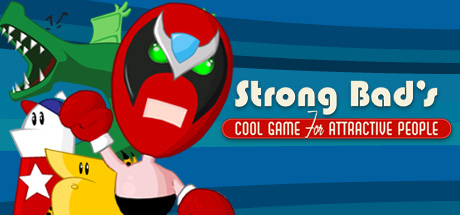
That emotional DNA pulses strongest in Strong Bad's Cool Game for Attractive People: Season 1, whose description promises “Strong Bad's wacky comedic adventures”—but the player review reveals the truth: “With the recent remake of Poker Night, I hope Skunkape considers bringing this game back next…” That longing isn’t for nostalgia—it’s for something irretrievable, a tone that balanced absurdity with aching sincerity. Like NEEDY GIRL OVERDOSE, it weaponizes irony not to deflect feeling, but to frame it—every cartoonish punchline lands because you feel the weight behind the mask. Both treat fame as a funhouse mirror: distorted, inescapable, and ultimately hollow.
Then there’s Persona 5 Royal, whose description name-drops “Tokyo”, “dungeon crawling”, and “Persona fusion”—but the player review zeroes in on what sticks: “Stunning Soundtrack… The seamless transition between daily life…” That rhythm—of grinding school days bleeding into surreal heists, of confessions whispered in train stations after midnight—is kin to Kache’s existence: clocking in at the cafe, then watching KAngel’s stream like scripture, then lying awake calculating how many more views she’d need to matter. Both understand that trauma isn’t always loud—it’s the silence between notifications, the exhaustion of maintaining dual selves, the romance & shoujo dimension curdling into something rawer, quieter, more real.
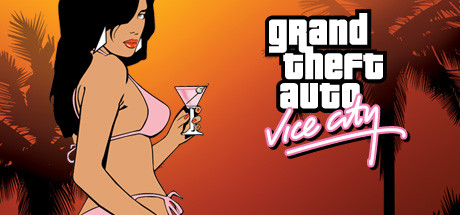
Even Grand Theft Auto: Vice City, with its neon-soaked 1980s crime fantasy, shares this undercurrent—not in action, but in aesthetic vertigo. Its description sells “big hair, excess and pastel suits”, but the player review calls it “The best GTA game. Great music, very fun, and hilarious to play…”—that dissonance is key. Like NEEDY GIRL OVERDOSE, it wraps tragedy in seductive packaging: the glitter of KAngel’s stage lights mirrors Vice City’s palm-lined boulevards, both dazzling enough to obscure the rot underneath. The “Music & Idol” dimension isn’t about melody—it’s about sound as atmosphere, as anesthesia, as the thing you blast to drown out your own pulse.
This isn’t for the casual viewer who wants catharsis or closure. It’s for the person who’s ever muted their own voice to keep a chat alive—who’s stared at a blank Word doc at 3 a.m., wondering if authenticity is just another filter to sell. It’s for the player who replays Jade Empire™: Special Edition not for martial arts mastery, but for the way its “Emotional Narrative” lingers in the quiet moments between battles—like Kache folding napkins while rehearsing a greeting she’ll never deliver. It’s for anyone who’s felt the weight of being watched, the hollowness of being loved only in pixels, the terror of realizing your most intimate self is also your most marketable asset.
These pairings resonate because they all speak the same unsaid language: that modern alienation isn’t loud—it’s buffering, lagging, loading… and sometimes, the most devastating thing isn’t the crash—but the way the screen stays stubbornly, beautifully, alive.
🎮33 Games That Match the Vibe










Match Dimensions Explained
❓Frequently Asked Questions
Why is Persona 5 Royal listed as similar to NEEDY GIRL OVERDOSE when they’re so different?
Great question — it’s not about surface-level gameplay, but shared DNA in tone and structure: both dive deep into emotionally charged, adult-oriented narratives with idol/music themes woven into identity crises (like Joker’s mask vs. NGOD’s performative femininity), plus layered romantic subplots that impact story outcomes. Reviews even highlight how P5R’s 'seamless transition between daily life' mirrors NGOD’s rhythm-driven social sim moments where choices during idol rehearsals or late-night chats shift character trust.
Is there a manga or anime adaptation of NEEDY GIRL OVERDOSE?
Not yet — and that’s actually why fans keep circling back to games like Jade Empire™: Special Edition, which delivers the same kind of rich, morally ambiguous worldbuilding and romance-driven emotional stakes you’d expect from a NGOD anime adaptation. Its 'open palm or closed fist' pathing echoes NGOD’s branching intimacy systems, and players praise how its relationships feel weighty — just like NGOD’s tense rooftop confessions with characters like Miu or Ruri.
How does Grand Theft Auto: Vice City compare to NEEDY GIRL OVERDOSE in terms of vibe?
Surprisingly close — both weaponize 80s nostalgia as emotional camouflage: Vice City’s pastel suits and synthwave soundtrack hide a dark, cynical underbelly (just like NGOD’s glittery idol facade masking trauma and control). Players call Vice City ‘hilarious to play’ while also noting its ‘excess’ and ‘criminal pile’ rise — mirroring NGOD’s satirical take on fame-as-survival, especially in scenes where the protagonist performs under pressure while internalizing abuse.
What’s the best game like NEEDY GIRL OVERDOSE if I want something moody, romantic, and psychologically intense?
Jade Empire™: Special Edition — hands down. It nails the ‘moody + romantic + psychologically intense’ trifecta with its morally gray martial arts world, slow-burn romance options (like the enigmatic Spirit Monk or conflicted Lotus Assassins), and emotionally raw narrative pivots — think NGOD’s hospital scene with Ruri, but set in a mythic, rain-slicked empire. One player even said it’s ‘fantastic’ *because* of how deeply its choices reshape your sense of self — exactly what NGOD does with its rhythm-based confession sequences.