
ONE PIECE
Gold Roger was known as the Pirate King, the strongest and most infamous being to have sailed the Grand Line. The capture and death of Roger by the World Government brought a change throughout the world. His last words before his death revealed the location of the greatest treasure in the world, One Piece. It was this revelation that brought about the Grand Age of Pirates, men who dreamed of finding One Piece (which promises an unlimited amount of riches and fame), and quite possibly the most coveted of titles for the person who found it, the title of the Pirate King.
Enter Monkey D. Luffy, a 17-year-old boy that defies your standard definition of a pirate. Rather than the popular persona of a wicked, hardened, toothless pirate who ransacks villages for fun, Luffy’s reason for being a pirate is one of pure wonder; the thought of an exciting adventure and meeting new and intriguing people, along with finding One Piece, are his reasons of becoming a pirate. Following in the footsteps of his childhood hero, Luffy and his crew travel across the Grand Line, experiencing crazy adventures, unveiling dark mysteries and battling strong enemies, all in order to reach One Piece.
*This includes following special episodes:
The Strongest Tag-Team! Luffy and Toriko's Hard Struggle! (Episode 492)
Team Formation! Save Chopper (Episode 542)
History's Strongest Collaboration vs. Glutton of the Sea (Episode 590)
20th Anniversary! Special Romance Dawn (Episode 907)
📺Anime Details
📝Editorial Analysis
The salt-sting of wind on your face as the Thousand Sunny cuts through the Calm Belt—no waves, no current, just that eerie, breathless silence broken only by the creak of wood and the low hum of Franky’s cola-powered engine. You’re not watching a ship sail; you’re feeling the weight of distance, the quiet enormity of a world that refuses to be mapped—not because it’s unknowable, but because it’s alive, layered with buried histories, unspoken oaths, and the slow, stubborn pulse of people refusing to be erased.
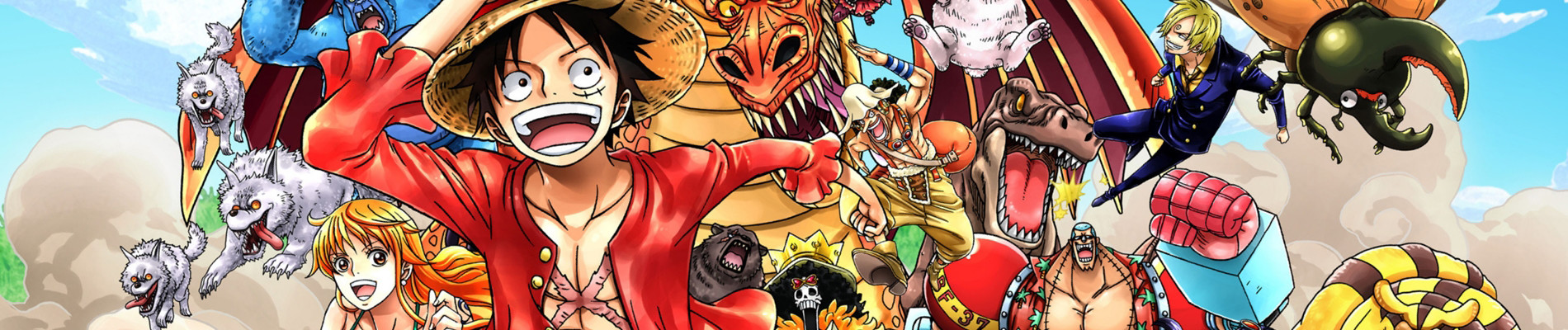
That’s the feeling ONE PIECE gives you: not just adventure, but gravitas wrapped in warmth. It’s the ache of a childhood promise whispered over graves, the laugh that cracks open right after tears, the way a single straw hat carries the weight of two lifetimes. This isn’t shōnen spectacle for spectacle’s sake—it’s tragedy wearing boots and singing off-key, where political conspiracy isn’t abstract, but stitched into the seams of a marine coat, carved into the scars of a fish-man, or buried beneath the ruins of Ohara. The Grand Line doesn’t just test strength—it tests memory, loyalty, and whether you’ll keep choosing kindness when the world has spent centuries teaching you not to.
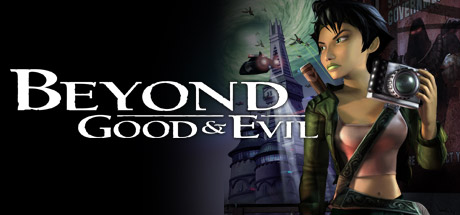
Which is why Beyond Good and Evil™ lands like a gut-punch echo. Its description says: “Play as Jade, a young investigative reporter, and expose a terrible government conspiracy. It is up to you and your loyal pig friend Pey’j to save your planet and its inhabitants.” That loyal pig friend—not a sidekick, but family forged in shared silence and sacrifice—mirrors the unspoken covenant between Luffy and Zoro, or Nami and Usopp: trust earned in mud, not decreed by rank. A player review calls it “Crazyyy game!”—and yes, it’s wild, but the wildness is tethered, like ONE PIECE, to something tender and urgent. Both refuse to let the scale of oppression drown out the intimacy of resistance—the way Jade’s camera captures truth while her hand steadies Pey’j’s trembling shoulder is kin to Robin gently placing her hand over Franky’s blueprint, saying nothing, needing nothing said.
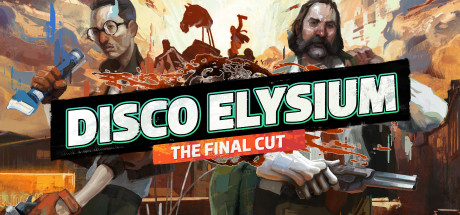
Then there’s Disco Elysium - The Final Cut, whose description names it “a groundbreaking role playing game” where “you’re a detective with a unique skill system… and a whole city to carve your path across.” But the real resonance lives in the player review’s raw, fractured line: “Capital has the ability to subsume all critiques into itself. Even those who would critique capital end up reinforcing it instead.” That’s the chilling logic of the World Government—not cartoon villains, but a self-perpetuating machine that absorbs dissent, co-opts revolution, and rebrands atrocity as order. Like Kimi in Arabasta or the CP9’s “justice,” Disco Elysium’s Revachol doesn’t offer clean answers—it offers complicity, grief, and the exhausting, beautiful labor of choosing meaning anyway. Luffy doesn’t defeat the system with one punch. He breaks it open by refusing to recognize its rules—and so does Disco Elysium’s detective, stumbling drunk through rain-slicked alleys, rewriting his own soul sentence by sentence.
Even BioShock™, described as “a shooter unlike any you’ve ever played… loaded with weapons and tactics never seen,” shares that same vertiginous dread beneath the spectacle. Its player review hails it as “one of the most revolutionary games ever! genuinely changed the gaming world…”—and what made it revolutionary wasn’t the plasmids, but the moment Fontaine’s voice crackles over the intercom and you realize every choice was already scripted. That’s the horror of Enies Lobby, of Marineford, of the Void Century: systems designed to make you complicit, then punish you for seeing the strings. The power isn’t in the gun or the Gomu Gomu no Mi—it’s in the recognition, the gasp before the leap.
These pairings aren’t for fans of “pirates” or “superpowers.” They’re for the person who cried at Laboon’s song, who paused the anime to stare out the window after Ace’s death, who keeps a weathered copy of The Joy of Cooking next to their copy of The Communist Manifesto. They’re for readers who annotate manga panels with historical footnotes, gamers who replay dialogue trees just to hear a side character sigh, and anyone who believes the most radical act is to hold someone’s hand while the world burns—and still believe in the light they make together.
🎮33 Games That Match the Vibe












Match Dimensions Explained
❓Frequently Asked Questions
Why does Assassin's Creed feel like ONE PIECE even though it's set in the Holy Land?
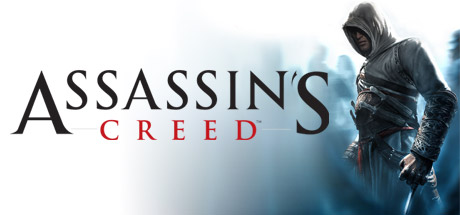
It’s all about that melancholic exploration and political thriller vibe—like when Luffy sails into Arabasta and uncovers the royal conspiracy, or when Robin deciphers ancient Poneglyphs amid crumbling ruins. Assassin's Creed drops you into a rich, layered world where every rooftop leap and hidden blade strike feels like uncovering buried history, just like the Straw Hats digging into the Void Century. The dim ‘Neon Noir’ tone isn’t literal neon, but that same moody, atmospheric weight you get in Marineford or Enies Lobby.
Is there a ONE PIECE game adaptation with BioShock’s kind of dystopian depth?
No official ONE PIECE game matches BioShock’s cyberpunk-dystopian storytelling—but BioShock itself nails that same gut-punch political thriller energy: think how Bartholomew Kuma’s tragic arc mirrors Atlas’s betrayal, or how Rapture’s collapse echoes the World Government’s lies and systemic rot. Its weaponized plasmids and moral choices (save or harvest Little Sisters) echo the high-stakes, ideology-driven conflicts of Dressrosa or Wano, where power corrupts and ideals get weaponized.
Beyond Good and Evil vs. Disco Elysium—which is better for ONE PIECE fans who love emotional, slow-burn stories with found family?
Go with Beyond Good and Evil—the bond between Jade and Pey’j (that loyal pig friend!) is pure Straw Hat energy: scrappy, heartfelt, and fiercely protective. You’ll chase leads across Hillys like the crew chasing the Log Pose, uncovering government lies just as the crew peels back layers of the World Government. Disco Elysium’s brilliant, but its noir-drenched detective work leans more toward Robin’s archaeology arc than Usopp’s heart-on-sleeve loyalty—it’s emotionally rich, but less ‘found family joy’ and more ‘melancholic self-reckoning.’
What’s the best game like ONE PIECE if I want that ‘epic journey with hidden lore and moral weight’ vibe?
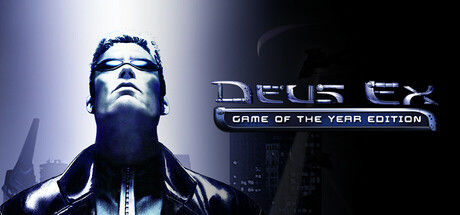
Deus Ex: Game of the Year Edition—it’s the closest match for that ‘sail across uncharted seas to expose ancient truths’ feeling. Like when the Straw Hats piece together the Void Century from scattered clues, Deus Ex drops you into 2052’s fractured world where every hacked terminal, every conversation with UNATCO agents, and every choice (augment or reject) reveals deeper conspiracies—just like Robin decoding Poneglyphs while navigating betrayal. Its ‘Political Thriller + Neon Noir’ dimensions mirror the scale and shadow of Marineford or the Final Saga’s looming dread.