
5 Centimeters per Second
Tohno Takaki and Shinohara Akari, two very close friends and classmates, are torn apart when Akari's family is transferred to another region of Japan due to her family's job. Despite separation, they continue to keep in touch through mail. When Takaki finds out that his family is also moving, he decides to meet with Akari one last time.
As years pass by, they continue down their own paths, their distance slowly growing wider and their contact with one another fades. Yet, they keep remembering one another and the times they have shared together, wondering if they will have the chance to meet once again.
📺Anime Details
📝Editorial Analysis
The snow falls sideways in the final shot—not gently, not dramatically, but relentlessly, filling the frame like static on an old television. Takaki stands alone on the platform, breath visible, train doors hissing shut behind him. He doesn’t turn. He doesn’t wave. He just watches the rails blur under wet concrete as the train pulls away—leaving only the faint, fading echo of a name he no longer says aloud. That silence isn’t empty. It’s heavy. It’s the weight of 5 Centimeters per Second.
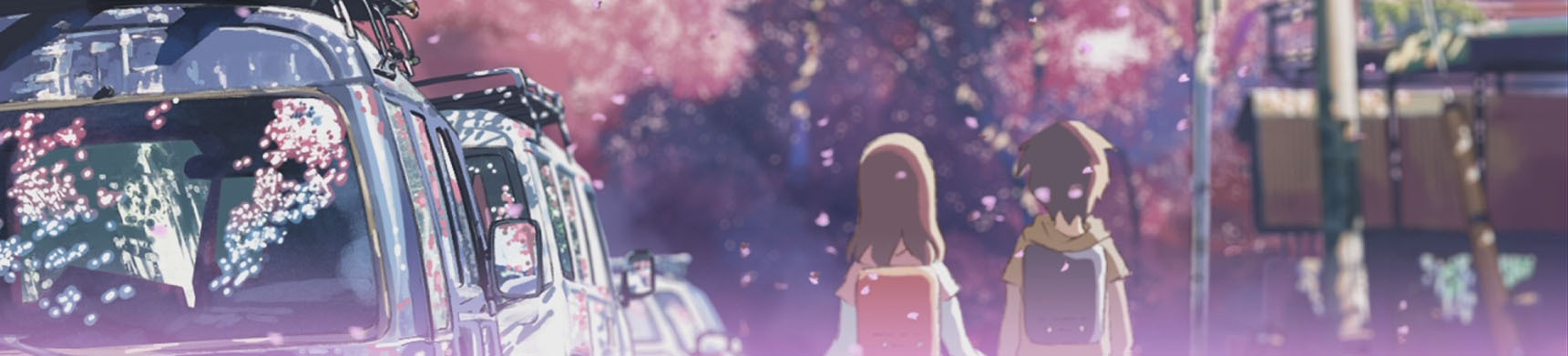
What makes 5 Centimeters per Second ache so precisely isn’t its tragedy—it’s how it refuses to dramatize loss. There are no grand arguments, no betrayals, no villains. Just time, distance, and the quiet erosion of intention. The trains aren’t metaphors; they’re infrastructure—steel arteries carrying people apart while the world keeps humming. The letters stop not because feelings vanish, but because postage stamps expire, addresses change, and “I’ll write soon” becomes a sentence that lands softly, then never lands at all. You don’t feel angry watching it—you feel tender, then tired, then strangely tender again, like remembering a scar you’d forgotten you carried. It’s the emotional equivalent of holding a cold cup of tea long after it’s gone lukewarm: you keep it because letting go feels like admitting the warmth was never really yours to hold.
That same hushed gravity lives in Disco Elysium - The Final Cut, where every dialogue choice carries the weight of accumulated fatigue—not just the detective’s, but yours, as player. The description calls it “a groundbreaking role playing game” built on “a unique skill system” and “a whole city to carve your path across.” But the player review doesn’t mention mechanics—it quotes philosophy: “Capital has the ability to subsume all critiques into itself.” That’s the tone: ideas dissolving into exhaustion, conviction fraying at the edges. Like Takaki staring at a blank letter page, the detective stares at rain-slicked pavement, wondering if meaning is something you build—or something you outlive. Both works treat longing not as fuel, but as weather: ambient, inescapable, slowly reshaping the landscape of the self.
Then there’s Persona 5 Royal, whose description promises “dungeon crawling, party customization, strategic combat”—but the player review fixates on soundtrack and daily life. Not the heists or the masks, but the rhythm of Tokyo: the train chime before class, the way sunlight hits a convenience store awning at 6:47 p.m., the pause between “I love you” and the other person’s reply. Its emotional DNA isn’t in the rebellion—it’s in the intimacy of routine, the quiet accumulation of small choices that, over months, become identity. Takaki and Akari don’t break up; they drift, one semester at a time, just as Joker builds bonds not through confession, but through shared lunches, rainy-day confessions, and the slow, unspoken trust of showing up—again and again—even when nothing urgent is happening.
And Prince of Persia, though framed as “an all-new epic journey,” lands with the same melancholic exploration the anime breathes. The description highlights “next-generation platforms” and “new lands,” but the feeling isn’t conquest—it’s motion without arrival. Like Takaki riding the Shinkansen toward Akari, knowing the meeting won’t reset time, only mark its passage. The player review notes it’s the third reboot—a detail that echoes the anime’s structure: three acts, each a reconfiguration of the same heartbreak, each stripping away another layer of hope until only atmosphere remains. No victory music swells. Just wind, sand, and the soft, inevitable settling of dust.
These pairings aren’t for people who want catharsis. They’re for the ones who’ve ever reread an old text message just to feel the ghost of a tone they once recognized. For readers who underline sentences in novels not because they’re wise, but because they sound like something they almost said. For players who linger in empty rooms—in Kamurocho alleys at 2 a.m., in Revachol’s rain-soaked docks, in Prince of Persia’s sun-bleached ruins—not waiting for plot, but for the quiet permission to remember how it felt to believe in proximity. They love the space between things—the centimeters, the seconds, the pauses where love doesn’t vanish, but simply learns a new grammar: one written in absence, read in silence, and felt most deeply when the train pulls away—and you don’t look up.
🎮25 Games That Match the Vibe


















Match Dimensions Explained
❓Frequently Asked Questions
Why does Prince of Persia keep coming up when I search for games like 5 Centimeters per Second?
Because its 'Melancholic Exploration' dimension hits that same quiet, aching beauty—like wandering empty palace corridors at dusk, watching light fade across sandstone walls, just as Takaki walks Tokyo’s rain-slicked streets. The game’s pacing, visual poetry, and focus on solitude amid vast, evocative spaces (not combat or spectacle) mirror the film’s emotional rhythm far more than its action surface suggests.
Is there a visual novel adaptation of 5 Centimeters per Second?
No official visual novel exists—but Disco Elysium nails the *vibe* you’re after: introspective, dialogue-driven, heavy with unspoken longing and atmospheric melancholy. Think of Kim Kitsuragi’s quiet, layered conversations or the way the game lingers on small moments—like staring out a rain-streaked window in Martinaise—echoing Takaki’s train-window reveries or Sumida River silences.
How does Persona 5 Royal compare to Dragon Age: Origins for emotional storytelling?
Persona 5 Royal leans into intimate, day-to-day emotional intimacy—building bonds with Ann or Futaba over late-night convenience store runs or rooftop confessions—while Dragon Age: Origins delivers grand, tragic romance (like Morrigan’s morally ambiguous farewell or Alistair’s bittersweet coronation). Both score 80 in 'Emotional Narrative', but P5R’s rhythm mirrors 5cm’s slow-burn tenderness; DAO’s feels more operatic and fate-driven.
What’s the best game like 5 Centimeters per Second if I want that lonely, wistful train-ride feeling?
Prince of Persia is your top match—it’s got that exact 'Melancholic Exploration' dimension, where movement itself becomes meditation: gliding across crumbling arches at golden hour, pausing on ledges to watch dust motes drift in sunbeams, just like Takaki watching telegraph poles blur past the shinkansen window. No combat urgency, no time pressure—just atmosphere, memory, and quiet motion.