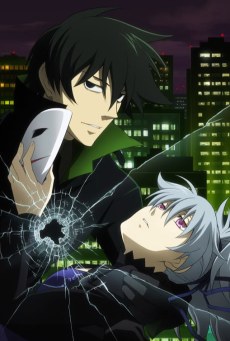
Darker than Black: Origins
Tells the story of what happened to Yin and Hei between the first and second series.
📺Anime Details
📝Editorial Analysis
Rain slicks the neon-drenched pier in Darker than Black: Origins, not with drama, but with quiet exhaustion. Yin stands motionless at the edge, bare feet just shy of the water’s black mirror, while Hei watches her—not as protector, not as partner, but as someone who’s already lost the right to intervene. Her hair catches the sodium-orange glow from a broken streetlamp; his coat is damp at the shoulders, unzipped, sleeves rolled past his wrists like he’s been holding himself together by muscle memory alone. There’s no music—just the low thrum of distant shipping containers being stacked, the hollow clank echoing like a countdown no one named aloud. This isn’t a pause before action. It’s the breath after something irreversible has settled into bone.

What makes Darker than Black: Origins ache so precisely isn’t its triad ambushes or coastal surveillance drones—it’s how deeply it trusts silence to carry weight. It’s the way survival here isn’t heroic endurance but erosion: of identity, of certainty, of even the grammar of trust. You don’t feel adrenaline—you feel the slow, cold seep of consequence. Every decision bleeds sideways. Every glance between Yin and Hei holds more unsaid history than any flashback could deliver. It’s psychological not because of mind games, but because it forces you to sit inside the hollow space where morality used to be—where “right” has been replaced by necessity, and “us” has been reduced to two people who recognize each other’s fractures better than their own names.
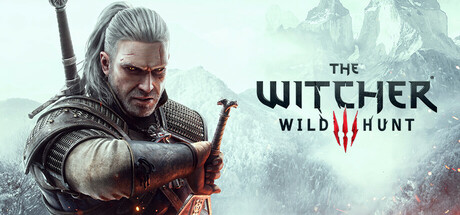
That emotional DNA flickers in The Witcher 3: Wild Hunt, not in its sprawling maps or monster bestiaries, but in how Geralt moves through grief like someone carrying wet sand—each step heavier, each choice narrowing the light without fanfare. The description says he’s tracking Ciri across a war-torn continent—but what lingers is the emotional narrative, the way consequences land not with explosions, but with a letter left unread on a tavern table, or a child’s toy abandoned mid-play. A player review calls it “my favourite game keeps getting better…”—and that’s the resonance: Darker than Black: Origins doesn’t offer closure. It offers continuation, same as Geralt’s decade-long search—neither ending nor beginning, just the persistent, heavy act of moving forward when every direction feels like walking into fog.
Then there’s Tank Universal, whose description paints it as sci-fi tank combat inspired by Tron and Battlezone, but the player review cracks it open: “Play cool tank game with dad when you were 6… time goes on; loose access to game. Grew up dad passes away…” That line—raw, unpolished, suspended between childhood sound design and adult loss—is pure Origins texture. The anime doesn’t shout tragedy; it lets it pool in the background like condensation on a warehouse window. The game’s emotional core isn’t in its virtual world—it’s in the real-world memory layered over it: the warmth of shared play, then the absence where that warmth used to be. Both works treat emotion not as plot fuel, but as atmospheric pressure—something you breathe in without realizing until your chest tightens.
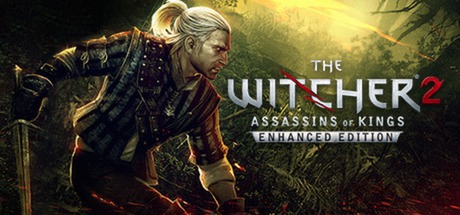
Even The Witcher 2: Assassins of Kings Enhanced Edition, described as a game where “armies on the march are not enough to stop a betrayal,” mirrors Origins’ central tension: power structures collapse, but the real damage is done in private rooms, in glances withheld, in contracts signed not for coin but for silence. A player notes it “feels more thoughtfully designed than the next entry”—a quiet testament to craftsmanship that prioritizes weight over scale. Like Hei choosing not to draw his wire when he knows the outcome won’t change, The Witcher 2 makes you sit with decisions long after the screen fades—not because they’re flashy, but because they leave a residue.
This pairing isn’t for fans of slick power-ups or triumphant last stands. It’s for the person who replays a five-second cutscene just to hear the rain hit the pavement again. For the one who pauses mid-game not to strategize, but to stare at a character’s idle animation—how their fingers twitch, how their breath hitches, how they hold still just a second too long. It’s for those who understand that survival isn’t measured in health bars or mission completions, but in the quiet, stubborn act of staying present—even when presence means standing on a dock, watching the water swallow the light, knowing the next step won’t fix anything… but taking it anyway.
🎮21 Games That Match the Vibe






Match Dimensions Explained
❓Frequently Asked Questions
Why does The Witcher 3 keep coming up when I search for games like Darker than Black: Origins?
Because both lean hard into morally gray espionage, brooding antiheroes with tragic backstories (Geralt’s cursed existence mirrors Hei’s contract-bound duality), and layered political intrigue—like the Nilfgaardian occupation mirroring the Syndicate’s shadow wars. Plus, that signature 'adult & dark seinen' vibe is baked into every dialogue choice and consequence-driven quest.
Is there a Darker than Black game adaptation I can actually play?
No official Darker than Black game exists—but Tank Universal nails the neon-drenched, high-stakes cyberpunk espionage *feel*: piloting your tank through Tron-inspired grids while coordinating with AI allies echoes Hei’s solo ops in the Contractors’ underworld. Even the player review mentions that nostalgic, emotionally charged bond—like playing with a parent who understood the weight of the mission.
How does Chains compare to The Witcher 3 if I want that Darker than Black mood?
It doesn’t—Chains is a chill, physics-based match-3 arcade game about linking colored bubbles, totally missing the noir tension, moral ambiguity, or contractor powers. If you’re craving Hei’s rain-slicked alley chases or amber-eyed betrayals, stick with The Witcher 3 (score 70, 'Adult & Dark Seinen' + 'Emotional Narrative') instead of Chains (score 82, 'Survival & Crafting' + 'Emotional Narrative'—but in a completely different, soothing way).
What’s the best game like Darker than Black: Origins if I want that lonely, rain-soaked, morally exhausted vibe?
The Witcher 2: Assassins of Kings Enhanced Edition—it’s got Geralt navigating war-torn kingdoms where every alliance feels temporary and every victory costs something, just like Hei choosing between loyalty and survival in episode 12’s train station standoff. Player reviews even call it 'more thoughtfully designed' than its sequel, with consequences that linger like cigarette smoke in a Tokyo apartment.