
Made in Abyss: The Golden City of the Scorching Sun
The second season of Made in Abyss.
Directly after the events of Made in Abyss: Fukaki Tamashii no Reimei, the third installment of Made in Abyss covers the adventures of Reg, Riko, and Nanachi in the Sixth Layer, The Capital of the Unreturned.
Note: The last episode aired with a runtime of ~48 minutes as opposed to the standard 24 minute long episode.
📺Anime Details
📝Editorial Analysis
The air in the Sixth Layer doesn’t just press down—it sings. Not with wind, but with a low, resonant hum vibrating up through Reg’s boots as he stumbles across the cracked obsidian plains of the Capital of the Unreturned, Riko’s breath shallow beside him, Nanachi’s quiet vigilance coiled like a spring. There’s no music here—just that subsonic thrum, the brittle crunch of glass-like flora underfoot, and the unbearable weight of knowing every step deeper is a step further from sunlight, from safety, from return. That silence isn’t empty. It’s listening.
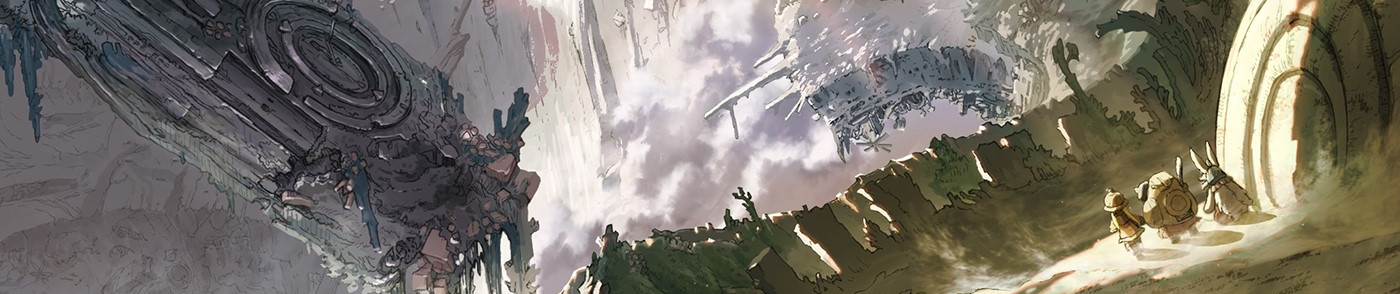
What makes Made in Abyss: The Golden City of the Scorching Sun unlike anything else isn’t its gore or its curses—it’s how it weaponizes wonder until it bleeds. This is adventure stripped of triumphalism: every discovery—a biomechanical ruin, a fossilized giant, a whisper of the Lost Civilization—is laced with irreversible cost. The horror isn’t jump-scares; it’s the slow dawning that the abyss doesn’t hate you—it indifferent. Its beauty is total, its logic alien, its rules absolute. You feel small not because you’re weak, but because scale itself has become cosmic, and childhood innocence isn’t shattered so much as recontextualized: Riko’s curiosity isn’t naive—it’s the only compass that works in a place where morality dissolves at depth. You don’t just watch survival—you taste the metallic tang of exhaustion, the grit of despair mixed with stubborn, unkillable hope.
That same emotional DNA pulses in Hollow Knight. Its description calls it “an epic action adventure through a vast ruined kingdom of insects and heroes”—and yes, it’s about exploration and combat—but the player review nails the resonance: “-Beautiful art style. -Great OST. -Lovely story.” That “lovely” is key. Like the Capital of the Unreturned, Hallownest isn’t a setting—it’s a presence, layered with forgotten gods, hollowed-out faith, and ruins that breathe sorrow. You don’t conquer it; you witness its decay, piece together its tragedies, and carry them forward—not as lore dumps, but as quiet realizations that settle in your chest. Both make melancholy textural: the hush before a boss fight mirrors Riko’s pause before stepping into the golden light of the Sixth Layer—full of awe, dread, and the terrible, tender certainty that nothing will be the same after.
Then there’s Tank Universal, whose description evokes “a rich virtual sci-fi 3D world” and “large-scale tank combat,” but the player review cracks it open: “Play cool tank game with dad when you were 6… time goes on; loose access to game. Grew up dad passes away…” That’s the gut-punch echo—this isn’t about tanks. It’s about memory as terrain. Just as the Capital of the Unreturned is built from collapsed civilizations and buried grief, Tank Universal’s world holds emotional strata: childhood joy, loss, the ache of irretrievable time. Both operate in the seinen space where play isn’t escapism—it’s excavation. You move through environments thick with absence, where color and sound (that “cool sound effects, and the colors”) aren’t decoration—they’re vessels for feeling too large for words.
And The Witcher 3: Wild Hunt, with its “war-torn, monster-infested continent you can explore at will,” lands with uncanny precision—not because Geralt hunts beasts, but because Ciri, like Riko, is a Child of Prophecy moving through layers of consequence. The player review says, “DLC announced 11 years after release, my favourite game keeps getting better…” That longevity isn’t about content volume—it’s about emotional accrual. Every choice in The Witcher 3, like every descent in Made in Abyss: The Golden City of the Scorching Sun, deepens the weight of what’s been lost, what’s been chosen, what’s been borne. Both refuse catharsis. They offer continuance—not healing, but carrying on, with scars visible, with love fierce and fragile.
This pairing sings to the person who cries during a quiet cutscene in a ruined cathedral, who replays a boss theme just to sit inside its loneliness, who watches a child character walk toward blinding light—not with fear, but with recognition. It’s for those who understand that the most devastating stories aren’t about falling, but about how far you keep walking after your knees give out. Who finds solace not in answers, but in the shared, trembling act of going deeper anyway.
🎮32 Games That Match the Vibe





















Match Dimensions Explained
❓Frequently Asked Questions
Why does Hollow Knight keep coming up in Made in Abyss fan discussions?
Because both dive deep into melancholic exploration—like descending into Hallownest’s crumbling Abyssal Ruins mirrors Riko and Reg’s descent into the Abyss’s layers, with eerie quiet, tragic lore fragments, and emotionally heavy character arcs (think Hornet’s sacrifice or the Pale King’s downfall). Fans love how Hollow Knight’s hand-drawn art, haunting OST, and 'hard but fair' combat echo Made in Abyss’s tone: beautiful, devastating, and deeply atmospheric.
Is there a Made in Abyss video game adaptation?
No official Made in Abyss game exists yet—just the anime, manga, and films. But fans often turn to titles like Tank Universal for that same visceral sense of descending into an uncanny, emotionally charged world: its neon-drenched virtual wastelands, AI allies you grow attached to (like your dad’s voice echoing in memory), and layered sci-fi melancholy scratch that same itch as the Abyss’s vertical mystery and emotional weight.
Hollow Knight vs. The Witcher 3—which feels more like Made in Abyss?
Hollow Knight nails the *vibe*: silent, awe-filled descents, environmental storytelling (e.g., the Abyssal Ruins’ murals mirroring the Abyss’s journals), and a crushing, poetic loneliness—just like Riko’s journal entries. The Witcher 3 has richer adult themes and moral grayness (Ciri’s trauma, Nilfgaard’s war), but its open-world bustle and quest density lacks the Abyss’s claustrophobic, downward-pulling intimacy.
What’s the best game like Made in Abyss if I want that bittersweet, slow-burn exploration feeling?
Hollow Knight is your top pick—its Melancholic Exploration and Emotional Narrative dimensions match perfectly. You’ll feel that same hush walking through the City of Tears at dusk, uncovering lore about the Pale King like reading Riko’s notes, or facing the Hollow Knight boss with its tragic, cyclical ending. Even the ‘Hard gameplay’ reviewers praise mirrors how Made in Abyss rewards patience and attention—not just reflexes.