
Angel's Egg
In a desolate and dark world full of shadows, lives one little girl who seems to do nothing but collect water in jars and protect a large egg she carries everywhere. A mysterious man enters her life... and they discuss the world around them.
(Source: Anime News Network)
📺Anime Details
📝Editorial Analysis
The silence isn’t empty—it’s heavy, thick with the weight of unasked questions. You see it in the way the girl’s small fingers tighten around the cool, pitted surface of the egg as she kneels beside a cracked basin, pouring water from one jar into another, her breath shallow, her eyes never leaving the shell’s faint, opalescent sheen. There’s no music—just the hollow echo of dripping water, the sigh of wind through skeletal ruins, the distant groan of metal giving way. That egg isn’t just carried; it’s held—a fragile covenant in a world that has already forgotten how to keep promises.
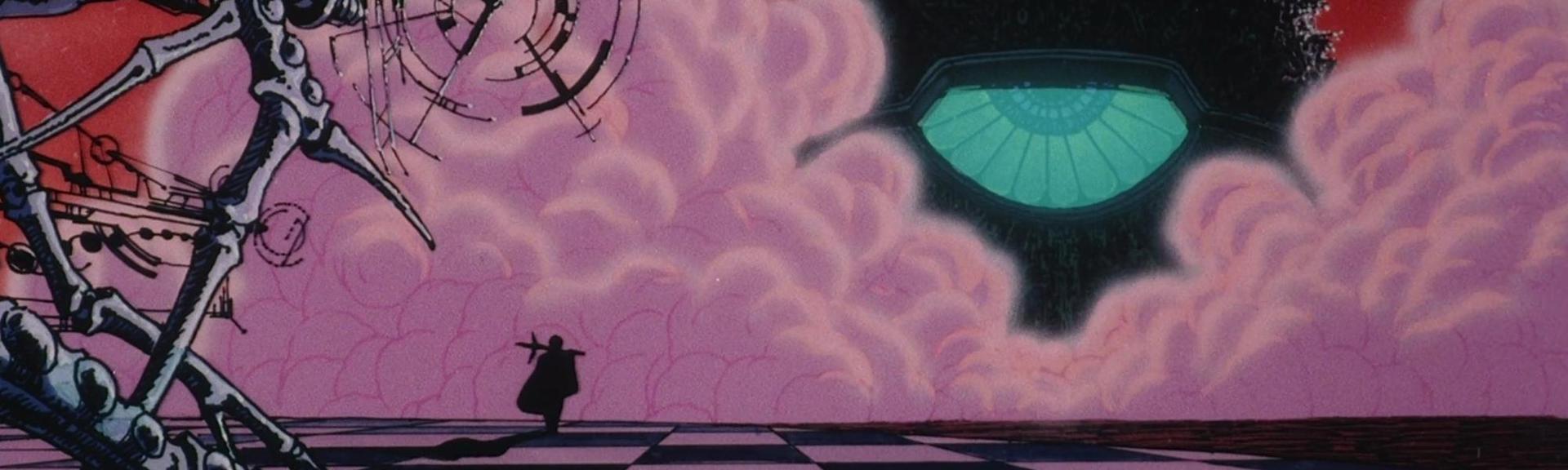
What makes Angel's Egg unlike anything else isn’t its post-apocalyptic setting or its angelic imagery—it’s the aching reverence it sustains for mystery itself. Not mystery as plot device, but as atmosphere, as theology, as breath. It doesn’t explain the desolation; it lets you inhabit its hollowness. You don’t learn why the world fell—you feel the vertigo of standing where meaning used to be, staring at symbols (the egg, the statues, the man’s quiet skepticism) without access to their grammar. It’s not despair—it’s sacred uncertainty, a slow, solemn pilgrimage through ruins where every shadow feels like a half-remembered prayer. The tragedy isn’t that hope dies—it’s that hope persists, stubborn and wordless, even when no god is listening.
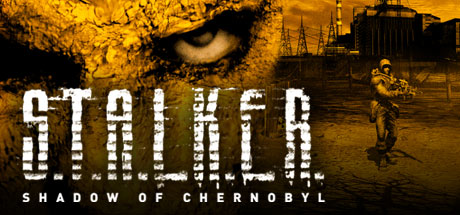
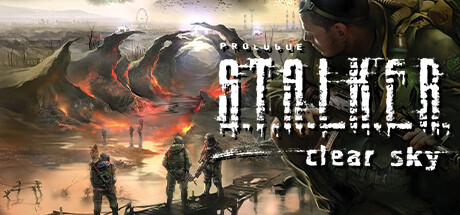
That same emotional gravity hums in S.T.A.L.K.E.R.: Shadow of Chernobyl, where the Zone isn’t just dangerous—it’s numinous. Its anomalies warp physics like divine whims; its ruins whisper of lost knowledge; its stalkers move like pilgrims through sacred, poisoned ground. The player review nails it: “you fear not only the radiation, anomalies and deadly creatures, but other S.T.A.L.K.E.R.s”—because threat here isn’t merely physical, it’s ontological. Like the girl in Angel's Egg, you collect, observe, protect fragile things (artifacts, memories, your own sanity) in a landscape that refuses to yield answers. The map isn’t just “big and beautiful”—it’s vastly silent, echoing with the same hollow grandeur as the anime’s crumbling cityscapes.
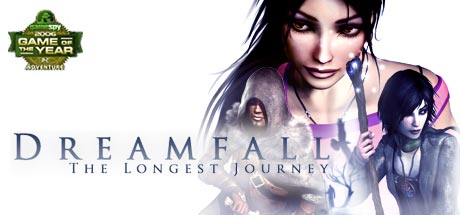
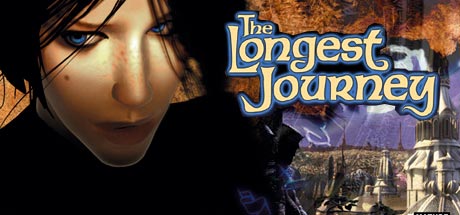
Then there’s Dreamfall: The Longest Journey, where the drama isn’t incidental—it is the journey. The player review says it plainly: “It’s less a long journey than a long drama. And somehow, the drama is compelling enough that you keep watching scene after scene.” That’s the resonance: both works treat narrative not as exposition, but as ritual. April Ryan doesn’t solve puzzles to advance—she listens, hesitates, carries grief like a second skin, walks through thresholds between worlds that feel less like game mechanics and more like metaphysical transitions. Her quiet persistence mirrors the girl’s daily water-collecting—not as routine, but as devotion. The dystopian layers aren’t backdrops; they’re psychic weather systems, pressing down with the same quiet pressure as the shadows in Angel's Egg.
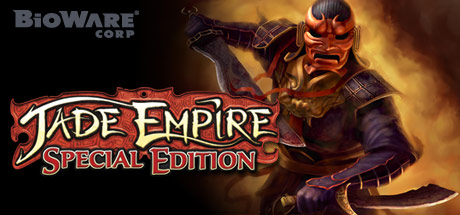
And Jade Empire™: Special Edition, though draped in martial artistry, pulses with the same philosophical gravity. Its path system—the open palm or closed fist—isn’t about morality points; it’s about embodied belief, about choosing how to stand in a world where gods are silent and ancestors speak only in riddles. The player review stumbles over technicalities (“I had to follow these instructions…”)—but that very friction echoes the anime’s resistance to easy consumption. Both demand presence over speed, contemplation over conquest. You don’t “win” Jade Empire—you settle into its rhythms, just as the girl settles into her vigil, her hands perpetually damp, her gaze unwavering.
This pairing isn’t for fans of lore dumps or power fantasies. It’s for the ones who pause mid-game to watch rain pool in a broken helmet, who rewatch a five-second shot of an egg catching light because something about that glint feels like truth. It’s for people who don’t need answers—they need the weight of the question, the hush before the hymn, the courage to hold something fragile while the sky stays dark.
🎮73 Games That Match the Vibe
















Match Dimensions Explained
❓Frequently Asked Questions
Why does S.T.A.L.K.E.R.: Shadow of Chernobyl match Angel's Egg so well despite being a shooter?
Because both trade exposition for haunting atmosphere and existential dread—like Angel's Egg’s silent, rain-slicked cityscapes and cryptic egg symbolism, the Zone in S.T.A.L.K.E.R. feels like a living ruin full of unexplained anomalies (the 'Forked Lightning' or 'Meat Grinder') and quiet, melancholic encounters with lone stalkers who whisper half-remembered myths. It’s not about shooting—it’s about wandering, wondering, and feeling small in a world that refuses to explain itself.
Is there an official anime or game adaptation of Angel's Egg?
No—there’s never been an official adaptation, but Dreamfall: The Longest Journey comes closest in spirit: its dual-world structure (Arcadia vs. Stark), slow-burn emotional weight, and scenes like Zoë staring out over the rain-lashed, neon-drenched cityscape of Casablanca evoke Angel’s Egg’s same hushed, painterly sorrow. Even the way April’s story unfolds—fragmented, symbolic, steeped in mythic silence—feels like a narrative cousin.
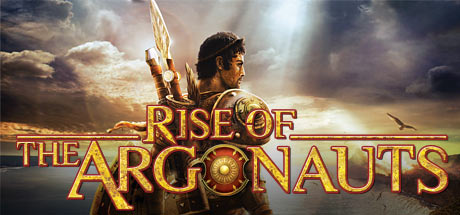
How is Jade Empire different from Rise of the Argonauts if both draw from mythology?
Rise leans into gritty, tragic Greek myth—Jason’s grief over Medea’s death, the visceral weight of his quest to resurrect her—while Jade Empire wraps Chinese folklore in intimate, character-driven choices: your master Li Rong’s betrayal, the moral tension between Open Palm compassion and Closed Fist ruthlessness, and that devastating final confrontation in the Spirit Realm. One’s a revenge epic; the other’s a philosophical wuxia poem.
What’s the best game like Angel’s Egg if I want that quiet, rain-soaked, emotionally heavy vibe?
Dreamfall: The Longest Journey—especially the Stark chapters where Zoë walks alone through fogged train stations and decaying apartment blocks, listening to muffled radio static and distant sirens. Its pacing, muted palette, and focus on internal longing (like Angel’s Egg’s girl guarding the egg without ever speaking) make it feel less like a game and more like stepping inside a watercolor memory. Even the player review nails it: 'It’s less a long journey than a long drama.'