
A Place Further Than the Universe
Mari Tamaki is in her second year of high school and wants to start something. It's then that she meets Shirase, a girl with few friends who's considered weirdo by the rest of the class and nicknamed "Antarctic" since it's all she ever talks about. Unlike her peers, Mari is moved by Shirase's dedication and decides that even though it's unlikely that high school girls will ever go to Antarctica, she's going to try to go with Shirase.
(Source: Anime News Network)
📺Anime Details
📝Editorial Analysis
The wind doesn’t howl in A Place Further Than the Universe—it hums. Not loud, not angry, but low and constant, like breath held too long before a leap. You feel it most when Shirase stands alone on the school rooftop at dusk, her thin jacket flapping, eyes fixed on a horizon no one else can see—not Japan’s, not even the Southern Ocean’s, but Antarctica’s: a white silence so vast it bends time. Mari watches her from the doorway, not speaking, just feeling the weight of that quiet devotion—and something cracks open inside her, warm and sudden as sunlight breaking through cloud cover after weeks of gray.

That’s the atmosphere: tender urgency. Not the frantic rush of a race against time, but the hushed, heart-swelling pressure of realizing, mid-breath, that this matters, that you matter, and that the thing you want—impossible, absurd, half-dreamed—is already real in someone else’s bones. It’s the chill of snow clinging to eyelashes, the ache in your thighs from hauling gear up a frozen slope, the way laughter echoes sharper in thin air, and how silence between friends isn’t empty—it’s full, thick with unspoken trust. This isn’t about conquering terrain. It’s about how far you’ll go with someone—not for glory, not for proof, but because their dream has become yours, and in carrying it together, you learn how to hold your own weight.
That emotional DNA flickers in Hollow Knight—not in its insect kingdoms or fallen gods, but in its melancholic exploration. The description calls it “an epic action adventure through a vast ruined kingdom,” and the player review praises its “lovely story” and “beautiful art style.” But what resonates is the hum: the wind through broken arches of Hallownest, the slow trudge down crumbling staircases where every step feels earned, every lantern lit a small defiance against erasure. Like Shirase’s Antarctic obsession, the Knight’s pilgrimage isn’t about victory—it’s about bearing witness, about moving through desolation until meaning accumulates in the quiet spaces between jumps and falls. You don’t conquer Hallownest—you linger in its sorrow, and in doing so, you remember how deeply you can care for something broken and distant.
Then there’s Tank Universal, whose description frames it as a sci-fi tank wargame inspired by Tron and Battlezone—but the player review cracks it wide open: “Play cool tank game with dad when you were 6… time goes on; loose access to game. Grew up dad passes away…” That’s the core—the emotional narrative dimension, buried beneath lasers and polygons. Like Mari watching Shirase on the roof, this isn’t about mechanics—it’s about memory made tactile: the cool sound effects, the colors, the irreplaceable warmth of shared presence now gone. The anime and the game both orbit the same gravity: love measured in small, sensory details—wind, light, sound—that outlive circumstance. Neither Shirase nor the player is chasing Antarctica or a virtual battlefield for conquest. They’re chasing the feeling of being seen, of having your longing mirrored, even if only once.
And Persona 5 Royal, with its Tokyo alleys and midnight trains, shares that tender urgency in its rhythm: the “seamless transition between daily life” and world-shaking stakes, the way relationships bloom in stolen minutes—coffee shops, rooftops, quiet train rides—before erupting into something vital. Its “stunning soundtrack” doesn’t just accompany action; it swells like breath catching, like Mari’s first step onto the ice—sudden, luminous, irrevocable. The anime and game both treat time as sacred currency: not to be optimized, but filled, with glances, silences, inside jokes, and the terrifying, beautiful risk of saying I’m here, and I choose you.
This pairing sings for the person who cries at bus stops—not from sadness, but from the sheer weight of connection realized too late or too soon; for the one who saves voice memos of friends laughing, who traces maps with their finger just to feel the distance shrink; for anyone who’s ever stood in cold air, heart pounding, not because they’re afraid—but because they finally believe, truly, that something real waits just beyond the next ridge.
🎮29 Games That Match the Vibe













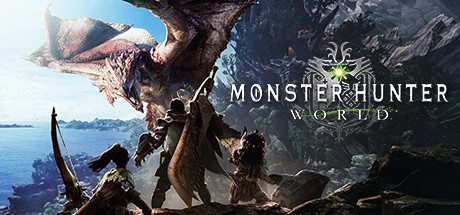






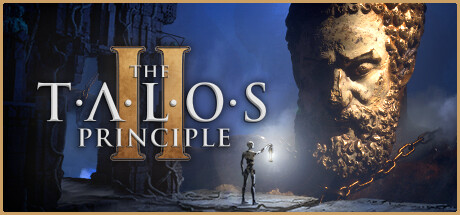
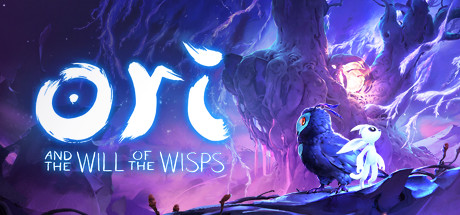
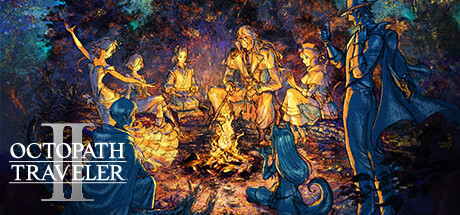

Match Dimensions Explained
❓Frequently Asked Questions
Why does Hollow Knight feel like A Place Further Than the Universe even though it’s about bugs and not teenage girls in Antarctica?
Because both hit that quiet, aching emotional core—like when the Knight sits alone in the Abyss or when Mari watches the aurora from the ice shelf. Hollow Knight’s melancholic exploration of loss, memory, and fragile hope (think Hornet’s quiet grief or the Pale King’s abandoned throne room) mirrors the show’s tender pacing and character-driven weight—not through plot, but through atmosphere and emotional resonance.
Is there a Persona 5 Royal anime adaptation I can watch if I love A Place Further Than the Universe?
No official anime adaptation exists—Persona 5 Royal is strictly a game (though there *is* the excellent *Persona 5: The Animation* series). But if you love the show’s blend of heartfelt friendship growth and quiet personal stakes, P5R delivers that through its daily life rhythm: building Confidants like Ann or Ryuji feels just as intimate and meaningful as Mari bonding with Shirase over shared dreams and doubts.
How does Dragon Age: Origins compare to Jade Empire™ for someone who loved the emotional pacing and mentor-student relationships in A Place Further Than the Universe?
Dragon Age: Origins leans harder into legacy and sacrifice—like when Alistair or Morrigan challenge your ideals—whereas Jade Empire centers on master-apprentice bonds (e.g., Master Li’s guidance and eventual betrayal) with more philosophical weight. Both have JRPG Narrative depth, but DA:O’s pause-and-plan combat and morally gray party arcs mirror the show’s slow-burn emotional consequences better than Jade Empire’s more stylized kung-fu storytelling.
What’s the best game like A Place Further Than the Universe if I want that same warm, hopeful-but-wistful mood after finishing the series?
Persona 5 Royal—it nails that vibe: the late-night train rides through Tokyo, bonding with Ryuji over convenience store snacks, or the way the soundtrack swells during a Confidant scene (like Futaba’s arc) just like the show’s quiet moments of connection. It’s not about grand spectacle, but the warmth of chosen family growing together, exactly how Mari, Shirase, Hinata, and Yuzuki do—just with more jazz and fewer parkas.