
Witch Hat Atelier
In a world where everyone takes wonders like magic spells and dragons for granted, Coco is a girl with a simple dream: she wants to be a witch. But everybody knows magicians are born, not made, and Coco was not born with a gift for magic. Resigned to her un-magical life, Coco is about to give up on her dream to become a witch … until the day she meets Qifrey, a mysterious, traveling magician. After secretly seeing Qifrey perform magic in a way she’s never seen before, Coco soon learns what everybody “knows” might not be the truth, and discovers that her magical dream may not be as far away as it may seem...
(Source: Kodansha USA)
Note: Tongari Boushi no Atelier episode 2 was streamed a week in advance on Crunchyroll, ABEMA, and Netflix, alongside episode 1. Streaming is one week ahead of the TV broadcast.
📺Anime Details
📝Editorial Analysis
The inkwell trembles in Coco’s small, calloused hand—not from fear, but from the unbearable weight of almost. She’s just copied Qifrey’s glyph for the third time, her charcoal smudging at the edges, the lines wobbling like breath held too long. Outside the workshop window, real witches glide on silent currents of air; inside, Coco traces the same imperfect curve again, whispering the incantation under her breath—not because she believes it will work, but because stopping would mean admitting the dream was never hers to hold. That quiet, stubborn ache—not enough, not born to it, but still drawing—is where Witch Hat Atelier lives.

It doesn’t feel like fantasy as spectacle. It feels like reverence made tactile: the grain of handmade paper, the scent of drying pigment, the hush before a spell’s first resonance—not thunder or fire, but the soft, dangerous shimmer of light bending just so across a drawn sigil. This is magic as craft, as ethics, as memory made manifest—and memory here isn’t nostalgia. It’s fragile, violable, erased. When Coco learns that spells can hollow out whole histories, that a single glyph can unwrite a person’s past, the dread isn’t monstrous—it’s domestic, intimate. You feel it in your throat when a friend’s laugh suddenly lacks its old warmth, or when a familiar street corner looks slightly off, and you wonder: Did I always see it this way? Or was something taken? The show makes you sit with the quiet horror of forgetting who taught you how to hold a pencil—and the fierce, tender joy of redrawing it, line by trembling line.
That emotional DNA—the melancholy of erased meaning, the reverence for quiet labor, the political weight of who controls memory—echoes sharply in Assassin's Creed™: Director's Cut Edition. Its description calls it a Political Thriller, Dark Fantasy, Melancholic Exploration, and the player review admits, “some of the models and textures are quite dated”—yet they don’t care. Why? Because the game’s soul isn’t in polish—it’s in wandering Acre’s sun-bleached alleys, tracing worn stone, sensing history layered beneath every footprint. Like Coco studying glyphs in silence, the player explores more than they conquer; they absorb the weight of erasure—of Templar archives scrubbing dissent, of cities rebuilt atop buried truths. Both ask: What remains when the official story is stripped away? Just dust, yes—but also, stubbornly, a hand-drawn map, a half-remembered chant, a ledge only you know how to reach.
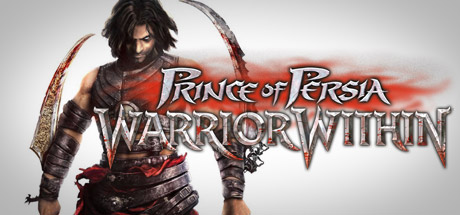
Then there’s Prince of Persia: Warrior Within™, tagged with Time & Memory, Dark Fantasy, Adult & Dark Seinen. Its description names Dahaka—an “immortal incarnation of Fate”—chasing the Prince relentlessly. The player review says, “Dahaka chase is still as goated as it was before…” That pursuit isn’t just action—it’s inescapable consequence, the past snapping at your heels not as metaphor, but as physical, breathing shadow. Coco faces her own Dahaka: not a monster, but the slow, chilling realization that her mother’s kindness may have been spelled, her childhood safety an illusion woven from forbidden magic. Both stories treat time and memory not as backdrops, but as terrain—uneven, treacherous, reshaped by those who hold power over the ink.
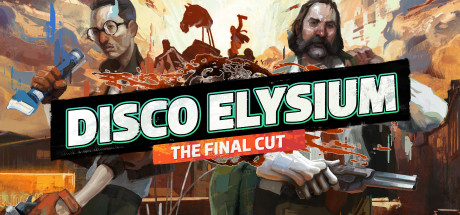
And Disco Elysium - The Final Cut, with its Political Thriller, Melancholic Exploration, Emotional Narrative, lands with surgical precision. Its description positions you as a detective “with a unique skill system” navigating “a whole city to carve your path across.” The player review quotes philosophy mid-sentence: “Capital has the ability to subsume all critiques into itself.” That’s the gut-punch of Witch Hat Atelier’s conspiracy—not villains cackling in towers, but institutions that normalize erasure, that call memory manipulation “necessary stability,” that frame Coco’s very desire to learn as dangerous instability. Both works make ideology feel textural: the peeling paint of Revachol’s buildings mirrors the flaking varnish on an old grimoire; every dialogue choice in Disco Elysium hums with the same ethical gravity as Coco choosing whether to copy Qifrey’s forbidden notes—or burn them.
This pairing isn’t for fans of magic-as-power-fantasy or intrigue-as-puzzle. It’s for the person who pauses mid-scroll to trace the watermark on a library book page, who feels a lump in their throat hearing a lullaby sung slightly off-key—because the version they remember had different words. It’s for those who carry old letters in their coat pockets not to reread, but to feel the creases, proof that something once mattered enough to fold and keep. They’ll recognize Coco’s ink-stained fingers, the Assassin’s lingering gaze at a forgotten shrine, the Prince’s ragged breath as Dahaka closes in—not as tropes, but as shared, aching grammar.
🎮38 Games That Match the Vibe

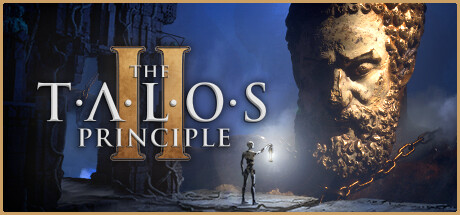






Match Dimensions Explained
❓Frequently Asked Questions
Why does Assassin's Creed: Director's Cut Edition keep showing up in 'Games Like Witch Hat Atelier' lists?
It’s not about parkour or assassins—it’s the melancholic exploration and layered political thriller vibe that resonates. Think of how Witch Hat Atelier lingers on quiet, atmospheric moments like Coco sketching under the willow tree or the weight of ancient magic systems—Assassin’s Creed mirrors that with its hushed, rain-slicked alleys of Jerusalem and the slow unraveling of Templar ideology. The dim ‘Melancholic Exploration’ tag (scored 84) is the real bridge—not the combat, but the way both worlds make history feel lived-in and heavy.
Is there a Witch Hat Atelier video game adaptation?
No—there’s no official Witch Hat Atelier game yet, and none of the titles on this list are adaptations. All matches (like BioShock or Disco Elysium) are *tonal* parallels only: BioShock shares that ‘Adult & Dark Seinen’ dimension (82 score) through its morally fractured worldbuilding—think Rapture’s decaying idealism echoing the quiet dread beneath Witch Hat’s whimsy, like when Tetia’s past unravels in Chapter 37. It’s mood-matching, not licensing.
How does Prince of Persia: Warrior Within compare to Beyond Good and Evil for Witch Hat Atelier fans?
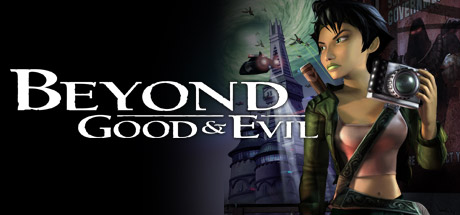
Warrior Within leans into ‘Time & Memory’ and ‘Dark Fantasy’ (78 score)—great if you love Witch Hat’s time-bent lore and haunting motifs, like the Dahaka’s relentless chase mirroring how memory stalks characters such as Algo. Beyond Good and Evil hits ‘Emotional Narrative’ and ‘Melancholic Exploration’ (77 score) more directly—Jade’s quiet grief and the muted blues of Hillys feel like stepping into a Witch Hat watercolor spread, especially scenes like the orphanage at dusk. Pick Warrior Within for mythic weight; BG&E for gentle sorrow.
What’s the best ‘Witch Hat Atelier-like’ game if I want something deeply emotional but not action-heavy?
Disco Elysium – The Final Cut is your answer. Its ‘Emotional Narrative’ and ‘Melancholic Exploration’ dimensions (77 score) land hard—imagine playing through a scene like Harry’s internal monologue while staring at a cracked mirror in Martinaise, where every skill check feels like unpacking a character’s trauma, much like Coco confronting her own power in the Moonlight Chapel arc. No combat timers, no stamina bars—just layered dialogue, rain-soaked atmosphere, and the same reverence for quiet, human-scale revelation.