
Sonny Boy
It’s an ordinary summer vacation...except for the fact that Nagara’s high school has mysteriously drifted into another dimension. As the students begin to develop strange new powers, will they work together to survive the alien environment and find a way home, or will their newly formed factions and rivalries turn on each other?
(Source: Funimation)
Note: The first episode received an advance release on YouTube on June 19, 2021. The regular TV broadcast started on July 16, 2021.
📺Anime Details
📝Editorial Analysis
The air tastes like static—dry, metallic, humming just beneath hearing—as Nagara stares at his own reflection in a cracked school window, and the glass doesn’t show him. It shows nothing. Not even distortion. Just absence. That silence isn’t empty. It’s listening.
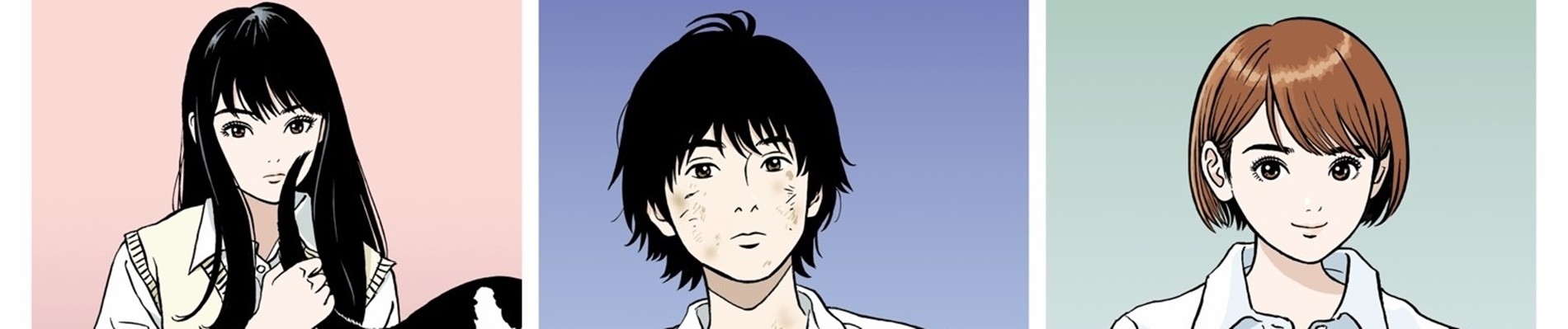
That’s Sonny Boy: not a story about escape, but about the slow, disorienting realization that the ground beneath you has stopped obeying gravity—and worse, that your friends are starting to remember things that never happened, or forget names they’ve known since childhood. The dimension isn’t hostile. It’s indifferent, folding time like origami, skipping scenes without warning, letting dialogue loop mid-sentence while the camera holds on a flickering fluorescent light. There’s no villain, no countdown, no map—just teenagers drifting through corridors that rearrange themselves when unobserved, their powers blooming not as tools but as symptoms: one boy stops time for three seconds every time he blinks; another can erase sound—but only from his own memory. This isn’t isekai wish-fulfillment. It’s ontological vertigo: the horror of realizing your sense of self is less a fixed point and more a temporary consensus.
What makes Sonny Boy’s atmosphere singular isn’t its surrealism—it’s how deeply it trusts ambiguity. It refuses catharsis. A character vanishes mid-conversation, and the next scene shows someone else holding their lunchbox, saying nothing. No explanation. No flashback. Just the weight of the box, warm from the sun, and the way the light hits the condensation on the plastic. You don’t feel scared—you feel unmoored, then strangely tender toward the fragility of shared meaning. It asks: What remains when language fails? When memory fractures? When “home” becomes a grammatical error in the sentence of your life? That ache isn’t dramatic—it’s philosophical, quiet, and devastatingly human.
Which is why BioShock Infinite resonates so sharply—not because of its sky-cities or vigors, but because of how it weaponizes Time & Memory as emotional architecture. Its description calls Booker “indebted to the wrong people,” but the player review nails the core: “I know that some people are still bitter about the Bioshock Infinite we could have gotten.” That phrase—we could have gotten—is pure Sonny Boy DNA. Both works fracture narrative not for spectacle, but to expose how identity collapses under the pressure of contradictory truths. Elizabeth doesn’t just open tears—she unravels causality until “choice” feels like a polite fiction. Like Nagara watching his reflection vanish, Booker stares into mirrors that reflect versions of himself he can’t reconcile—and neither story offers absolution, only the raw, aching clarity of seeing yourself from too many angles at once.
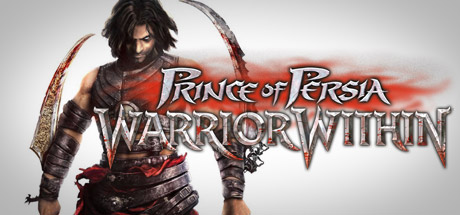
Then there’s Prince of Persia: Warrior Within, where the Dahaka isn’t chasing the Prince—it’s correcting him. The description says he’s “hunted by Dahaka, an immortal incarnation of Fate,” and the player review calls the chase “still as goated as it was before.” That word—goated—is key. It’s not about difficulty. It’s about the relentless, personal inevitability of consequence. In Sonny Boy, no one is punished—but consequences accrue silently: a lie told in Episode 3 echoes as a misheard name in Episode 7; a betrayal isn’t shouted, it’s buried in the rhythm of footsteps fading down a hallway that wasn’t there ten seconds ago. Like the Dahaka, time here doesn’t flow—it converges, tightening around choices until even silence becomes accusation.
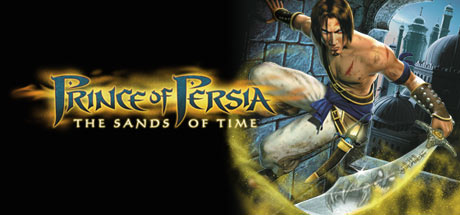
And Prince of Persia: The Sands of Time, with its dagger that rewinds moments, shares something quieter but deeper: the exhaustion of tactical remembering. Its player review praises “tactical platforming that is satisfying due to the locked directions”—a system where movement is constrained, deliberate, almost ritualistic. That’s Sonny Boy’s pacing: no frantic cuts, no exposition dumps—just long takes, breathing room, the hum of air conditioners in empty classrooms, the weight of a pause before someone speaks. Every decision feels like stepping onto a ledge with no railing—not because danger looms, but because the floor itself might dissolve into metaphor.
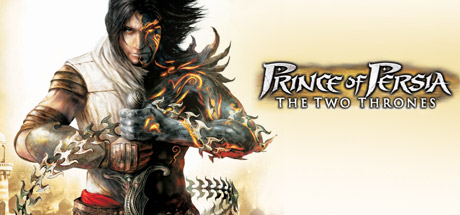
These pairings aren’t for fans of lore-dumps or power-scaling. They’re for the person who replays Warrior Within after a decade not for nostalgia, but because the Dahaka’s breath still sounds like grief. For the one who locks The Two Thrones at 60fps not for smoothness, but to feel the grind of time as texture. For the one who watches Nagara stare into that blank window—not waiting for answers, but finally understanding that the question is the homecoming. They love stories where the most terrifying thing isn’t the unknown—it’s the quiet, irreversible moment you realize you’ve already changed, and no rewind, no tear, no faction vote can bring back the version of yourself who still believed in solid ground.
🎮54 Games That Match the Vibe




















Match Dimensions Explained
❓Frequently Asked Questions
Why does Sonny Boy feel so similar to Prince of Persia: The Sands of Time?
It’s that shared 'Time & Memory' dimension — both hinge on rewinding moments to fix mistakes, like when Sonny Boy’s characters retrace steps after a failed dialogue choice, just like the Prince frantically hitting R1 to undo a fatal fall or mistimed dagger parry. The melancholic, reflective tone and morally grey adult storytelling (e.g., Kaileena’s tragic arc vs. Sonny Boy’s ambiguous betrayals) also line up tightly — no wonder both landed at 82 on the match list.
Is there an anime adaptation of BioShock Infinite like there is for Sonny Boy?
No — BioShock Infinite has never been adapted into an anime, unlike Sonny Boy which got its own acclaimed TV series. That said, fans often say the Columbia sky-city sequences (especially the Hall of Heroes or Comstock House flashbacks) *feel* like they were storyboarded by the same team behind Sonny Boy’s surreal, memory-fractured scenes — hence why it’s in the top match list with an 83 score and shares those 'Adult & Dark Seinen' and 'Time & Memory' dimensions.
How does Prince of Persia: Warrior Within compare to Sonny Boy in terms of tone and pacing?
Warrior Within leans harder into visceral dread — think Dahaka’s relentless, time-bending chases through crumbling ruins, mirroring Sonny Boy’s claustrophobic train sequences where reality glitches mid-conversation. Both use 'Time & Memory' not just as mechanics but as psychological pressure: the Prince’s guilt literally manifests as a monster, while Sonny Boy’s characters wrestle with erased identities and unreliable recollections — that’s why it scores 82 and fits the same 'Adult & Dark Seinen' vibe.
What’s the best game like Sonny Boy if I want that slow-burn, emotionally heavy train-ride vibe?
Go straight to Prince of Persia: The Two Thrones — especially the early Babylon siege sequences where the Prince walks through ash-choked streets haunted by his own split personality (the Dark Prince). That oppressive, introspective pacing — long silences, layered voiceovers, environments that decay as memory unravels — hits the same melancholic exploration and 'Adult & Dark Seinen' notes as Sonny Boy’s most haunting episodes. It’s a perfect 82-match for that exact mood.