
MUSHI-SHI The Next Passage
They existed long before anyone can remember. They are simple and strange in nature, not resembling any other plant or animal in this world. In ancient times, people revered these bizarre creatures and called them "Mushi."
People once again began to believe in the existence of these "Mushi" when they began affecting their lives in inexplicable ways.
The one who connects the world of "Mushi" to the world of humans—they were called the "Mushi-shi."
All life exists not to hinder others in this world.
They are simply there to live as they were meant to.
(Source: Aniplex of America)
📺Anime Details
📝Editorial Analysis
A single candle flickers in a paper lantern, suspended above a rain-slicked riverbank at dusk. Ginko kneels, not in prayer, but in quiet observation—his hand hovering just above the water’s surface where faint, silver motes drift like plankton caught in slow current. No music swells. No threat looms. Just breath, mist, and the soft shush of reeds bending under wind that carries no name. That moment—unhurried, unexplained, thick with presence—is where MUSHI-SHI The Next Passage lives: not in spectacle, but in the weight of stillness holding its breath.
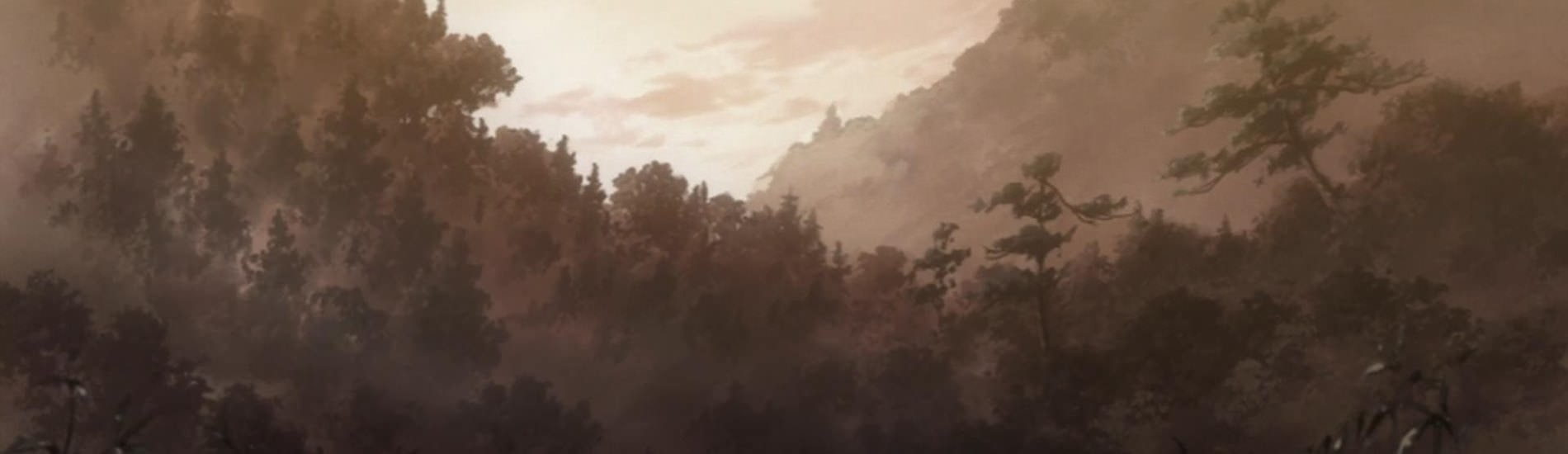
What makes it ache so deeply isn’t fantasy—it’s attentiveness. This is an anime that treats perception as sacred labor. Every episode unfolds like a field note written by someone who has learned to see between things: between life and decay, memory and forgetting, human intention and ecological drift. It doesn’t ask “What is the Mushi?” so much as “What does it do to the silence around us?” You feel time stretch—not because scenes are long, but because they refuse to rush past what matters: the tremor in a child’s voice before she speaks of the light-beetles nesting behind her eyes; the way dew clings to spider silk after a night of unseen passage. It’s melancholic, yes—but not despairing. It’s healing, yes—but not redemptive. It simply holds space, like moss on stone, for what cannot be solved, only witnessed. That’s the emotional DNA: reverence without dogma, wonder without conquest, solitude without loneliness.
Prince of Persia shares that same hushed gravity—not in its acrobatics or sand magic, but in how it frames healing & slow life as core mechanics. Its description calls it “an all-new epic journey” built by Ubisoft Montreal, yet player reviews quietly underline something older: this is a reboot where the prince walks through ruins rather than conquering them, where time bends not for power, but for reflection. Like Ginko tracing the path of a Mushi through a village’s shared dream, the prince moves through spaces heavy with ancestral echo—each corridor, each crumbling archway breathing with the same melancholic exploration that defines MUSHI-SHI The Next Passage. It’s adult, yes—but not in violence or cynicism. In patience. In the understanding that some doors open only when you stop running.
Celeste, though pixel-bright and mechanically fierce, resonates in its emotional architecture. Its description positions Madeline’s climb as a confrontation with “inner demons”—but crucially, not as battle, not as purge. As survival. Player reviews skip puzzle ratings entirely, instead circling back to feeling: “I don’t need to review this game…”—as if words fail where raw recognition begins. That’s the link: both Celeste and MUSHI-SHI The Next Passage treat psychological weight not as pathology to fix, but as weather to move within. When Madeline pauses mid-jump, trembling on a narrow ledge, wind whipping her hair, it’s not weakness—it’s the same suspended breath Ginko holds over that river. Both understand that healing isn’t linear, and that dark seinen isn’t about blood or betrayal—it’s about carrying your history without breaking.
The Tomb Raider trilogy—Legend, Anniversary, Underworld—might seem distant at first glance, but their shared dimension is telling: melancholic exploration, repeated across all three. Descriptions emphasize Lara “travel[ing] the globe to remote, exotic locales,” “retrac[ing]” origins, and exploring “exotic locations… designed with incredible attention.” Player reviews don’t praise combat—they praise discovery: “best Tomb Raider game,” “I would recommend not ju…” (the sentence trailing off, unfinished, as if awe outstrips syntax). That’s the thread: Lara doesn’t loot tombs—she listens to them. She reads glyphs like Ginko reads frost patterns on glass. Her journeys aren’t about claiming artifacts, but about aligning herself with rhythms older than language—just as Ginko never commands Mushi, only interprets their passage. All three games, like MUSHI-SHI The Next Passage, locate meaning not in victory, but in alignment: with place, with time, with the quiet hum beneath everything.
This pairing sings for the person who watches sunsets after the colors fade—who replays a quiet line of dialogue three times, not to catch nuance, but to feel its texture on the tongue. For the one who plays games not to win, but to linger in a rain-soaked courtyard, or pause on a mountain ledge just to hear the wind shift—and knows, deep in the bones, that some truths only arrive when you stop waiting for them.
🎮27 Games That Match the Vibe
















Match Dimensions Explained
❓Frequently Asked Questions
Why does Prince of Persia keep showing up in MUSHI-SHI The Next Passage game recommendations?
Because both lean hard into 'Melancholic Exploration' and 'Adult & Dark Seinen' vibes — think quiet, rain-slicked ruins, a lone protagonist reflecting on loss (like the Prince’s grief over his father or Mushi-shi’s Ginko wandering misty mountains), and healing-as-mechanic rather than combat. The Prince’s rewind ability even echoes Ginko’s gentle, deliberate interventions — not flashy, but deeply consequential.
Is there a MUSHI-SHI video game adaptation?
No — there’s never been an official MUSHI-SHI game, which is why fans turn to tonal matches like Celeste or Tomb Raider: Anniversary. Celeste nails that fragile, introspective mood with Madeline’s anxiety-fueled climb up Celeste Mountain — every quiet moment between jumps feels like a scene from MUSHI-SHI, especially when she talks to her shadow-self like Ginko converses with unseen spirits.
How does Celeste compare to Tomb Raider: Legend for someone who loves MUSHI-SHI’s calm, thoughtful pacing?
Celeste leans deeper into stillness and internal resonance — Madeline’s dialogue with Badeline atop the mountain mirrors Ginko’s quiet talks with villagers about sorrow and acceptance. Tomb Raider: Legend has more action-driven pacing and set-piece chases, though its moody, rain-drenched Nepal and Thailand levels (and Lara’s haunted flashbacks) still hit that 'Melancholic Exploration' sweet spot — just with more acrobatics and less silence.
What’s the best game like MUSHI-SHI The Next Passage if I want something slow, healing, and emotionally heavy?
Go straight to Prince of Persia (2024) — it’s the only match scoring 83 and explicitly tagged 'Healing & Slow Life' *plus* 'Melancholic Exploration'. Its desert temples unfold at a meditative pace, the Prince heals wounds by rewinding time (a literal mechanic of care), and scenes like him kneeling beside a dying companion under a bruised twilight sky feel ripped from MUSHI-SHI’s most tender episodes.