
Kino's Journey
Based on a hit light novel series by Keiichi Sigsawa, the philosophical Kino's Journey employs the time-honored motif of the road trip as a vehicle for self-discovery and universal truth. Deeply meditative and cooler than zero, the series follows the existential adventures of the apt marksman Kino along with talking motorcycle Hermes as they travel the world and learn much about themselves in the process. Imaginative, thought-provoking, and sometimes disturbing, Kino's journey is documented in an episodic style with an emphasis on atmosphere rather than action or plot, though still prevalent.
📺Anime Details
📝Editorial Analysis
The wind doesn’t whistle—it hums, low and steady, like a breath held too long. Kino sits motionless on the cracked asphalt of an abandoned highway, Hermes idling beside her, engine vibrating just enough to feel in her ribs. No music swells. No dialogue follows. Just the hum, the dust motes catching amber light, and the quiet weight of a nation she’s just left—one where citizens willingly surrendered memory to avoid grief. She doesn’t sigh. Doesn’t look back. She kicks the stand up, and rides—not toward anything, but away from what she’s witnessed, carrying it inside like unspent ammunition.
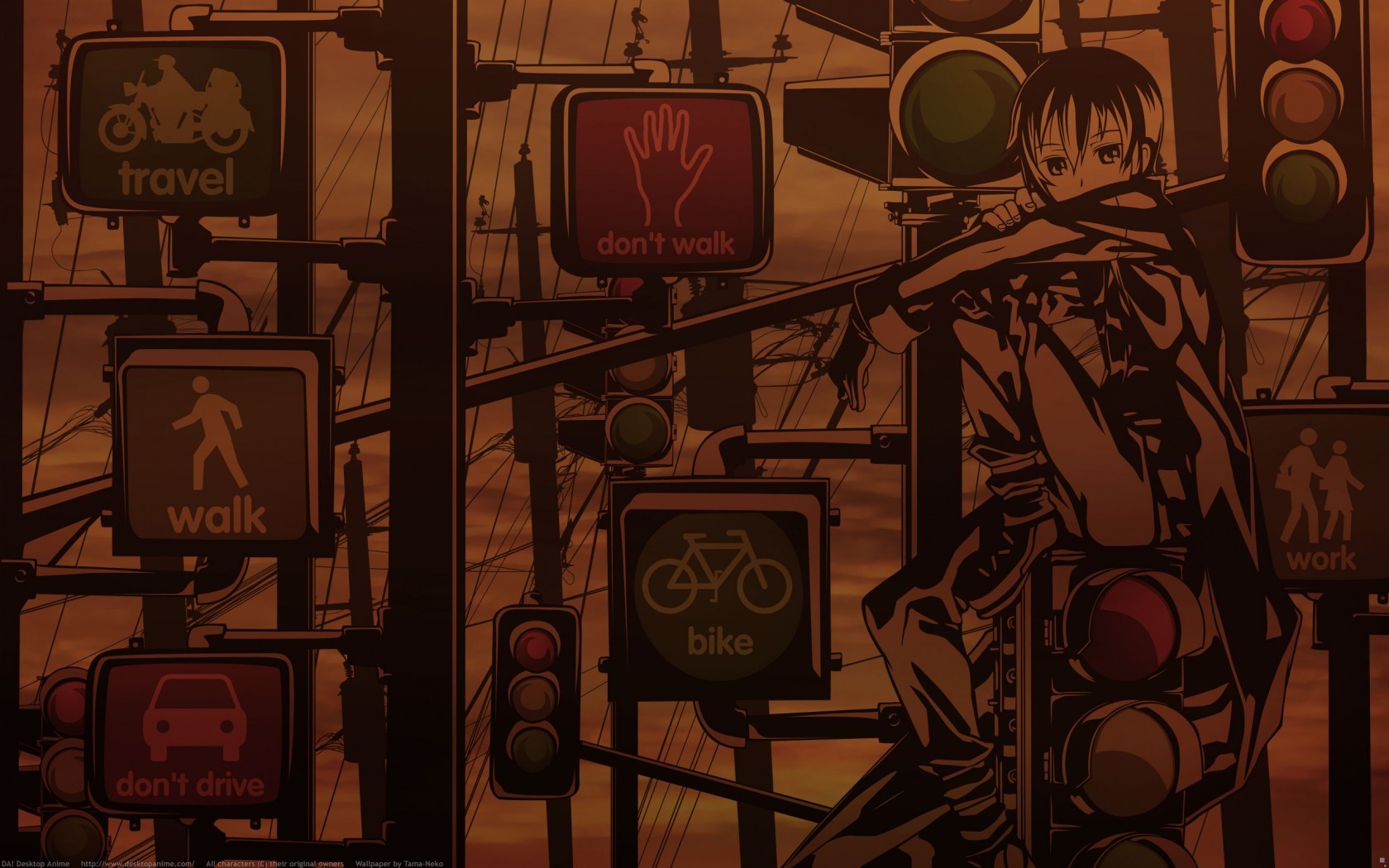
That silence isn’t emptiness. It’s presence: the kind that settles when meaning isn’t handed to you, but lingers in the space between what’s said and what’s buried. Kino's Journey doesn’t trade in catharsis or closure. It trades in resonance—the slow, cold bloom of understanding after seeing a society choose comfort over truth, or a child recite laws they don’t comprehend, or a festival where laughter is mandatory and enforced. Its atmosphere is melancholic exploration distilled: not sadness as defeat, but as gravity—a force that pulls thought downward, into stillness, into reckoning. You don’t watch it to escape. You watch it to remember how heavy kindness can be when it’s rare. How quiet dignity feels when it’s the only thing left standing.
That same gravity lives in Hollow Knight, whose description names “an epic action adventure through a vast ruined kingdom of insects and heroes”—but the player review doesn’t mention combat or lore. It says: “-Beautiful art style. -Great OST. -Lovely story.” That restraint mirrors Kino’s own: no exposition dump, no narrator explaining why the ruins weep black rain or why the Nailmasters carve their grief into stone. You absorb meaning through decay, through echoes in empty halls, through the way light falls across a broken statue’s face. Both withhold answers not to obscure, but to honor the weight of the question.
Then there’s Celeste, described as helping Madeline “survive her inner demons on her journey to the top of Celeste Mountain”—a climb framed not as triumph, but as endurance. The player review cuts deep with its understatement: “Not a puzzle game, no rating given. In some ways, I feel like I don’t need to review this game…” That hesitation—the sense that words fail because the experience lives in the body, in muscle memory and breath control—is pure Kino. Neither Madeline nor Kino shouts her pain. They move through it, step by deliberate step, trusting rhythm over resolution. The mountain, like the road, isn’t conquered—it’s witnessed, and in witnessing, transformed.
Even Tomb Raider: Legend, with its globe-trotting artifact hunt, carries that same hushed reverence for place. Its description positions Lara “traveling the globe to remote, exotic locales,” but the player review lands softly: “It is a nice game not great but one will enjoy the game.” Not “thrilling” or “cinematic”—just enjoyable, in the way Kino enjoys a cup of tea in a stranger’s kitchen before moving on: no fanfare, no climax, just presence, respect, and the subtle ache of transience.
These aren’t games about saving worlds. They’re about walking into worlds—and letting them change your posture, your pace, your silence. Like Kino, they trust the viewer/player to hold ambiguity without flinching. To sit with the hum.
This pairing speaks to someone who reads Rilke and replays the train sequence in Shadow of the Colossus just to feel the wind. Someone who pauses mid-gameplay not to check a map, but to watch rain gather on a virtual windowpane. Someone who doesn’t need villains to be evil—just convinced. Who finds profundity in a motorcycle’s idle, in a moth’s flight against a lantern, in the exact shade of grey before dawn breaks over a dead city. They don’t seek stories that tell them how to feel. They seek ones that make them remember how to feel at all.
🎮39 Games That Match the Vibe


























Match Dimensions Explained
❓Frequently Asked Questions
Why is Hollow Knight listed as similar to Kino's Journey when it's so much darker and combat-heavy?
Great question—it’s not about matching tone beat-for-beat, but sharing that core 'melancholic exploration' dimension: both invite you to wander a decaying, beautifully rendered world (Hollow Knight’s Hallownest vs. Kino’s fragmented nations), uncover quiet tragedies through environmental storytelling (like the Quiet Mound or the Abyss), and sit with emotional weight without exposition—just like Kino observing a village’s silent ritual before moving on.
Is there a Kino's Journey anime or game adaptation I can actually play right now?
No official Kino’s Journey game exists—but Tank Universal is the closest *spiritual* match in practice: its sci-fi virtual world feels eerily detached and contemplative, and players describe moments like drifting alone across neon-lit grids with AI allies echoing Kino’s solo journeys, especially when paired with that bittersweet player review about childhood, memory, and loss—very Kino-core.
How does Celeste compare to Hollow Knight for Kino's Journey vibes?
Celeste leans harder into internal, personal melancholy—Madeline’s anxiety and self-doubt while climbing Celeste Mountain mirror Kino’s quiet introspection far more directly than Hollow Knight’s mythic, external decay. But Hollow Knight wins on world-as-character: its ruined bug kingdoms and cryptic lore fragments (like the Seer’s chamber or the Abyss) feel more like Kino’s episodic, nation-hopping structure than Celeste’s tightly focused ascent.
What’s the best game like Kino’s Journey if I want that calm, reflective, slightly sad-but-peaceful mood?
Tomb Raider: Legend is surprisingly strong here—Lara’s solo treks through misty Himalayan temples or abandoned Mediterranean ruins (like the Tihocan tomb) lean into ‘melancholic exploration’ with deliberate pacing, atmospheric silence between puzzles, and a grounded, adult sense of longing—not action-first. It’s less about combat and more about the weight of history and solitude, just like Kino pausing at a roadside shrine before dawn.