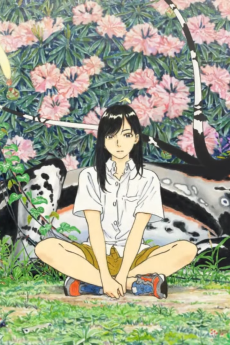
PUPARIA
Independent Short by Shingo Tamagawa.
📝Editorial Analysis
A lone fox-woman stands at the edge of a cracked concrete bridge, her bare feet dusted with pollen from dandelions blooming through fissures. She doesn’t speak. She doesn’t gesture. She simply watches a paper airplane—folded from a torn page of a child’s arithmetic workbook—drift downward into fog so thick it swallows sound. The wind carries no birdsong, only the low, resonant hum of a distant power line vibrating at denpa frequency—just shy of hearing, just heavy enough to settle behind your molars.

That silence isn’t empty. It’s charged. PUPARIA doesn’t use dialogue to build its world—it uses weight: the slow sag of a rusted swing set, the way light fractures through warped glass in an abandoned schoolhouse, the deliberate pause before a moth lands on a wrist and stays there, trembling, for twelve full seconds. This is psychological fantasy not as spectacle, but as interior weather—a landscape where time dilates, memory bleeds into architecture, and anthropomorphism feels less like costume and more like quiet biological truth. You don’t watch the protagonist—you inhabit her sensory threshold. Every frame asks you to notice what isn’t said, what isn’t shown, what isn’t allowed to resolve. It’s melancholic not because it’s sad, but because it refuses catharsis—leaving you suspended in the hush between breaths, between identities, between what was and what might yet molt.
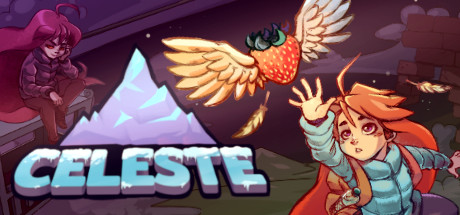
That same suspension lives in Celeste, where Madeline climbs Celeste Mountain not just as physical ascent, but as embodied hesitation—each jump a gamble against gravity and self-doubt. The description calls it “surviving inner demons,” but the player review cuts deeper: “I feel like I don’t need to review this game, since I would be nowhere near the first to talk about…” That’s the resonance—PUPARIA and Celeste both operate in a space where the struggle is so universally felt, so physically intimate, that articulation feels redundant. You don’t explain why your hands shake on a narrow ledge; you just hold them there, pixel-perfect, until the tremor passes—or doesn’t.
Then there’s the Tomb Raider trilogy—Legend, Anniversary, and Underworld—all scoring identical 73s on Melancholic Exploration and Adult & Dark Seinen. Their descriptions all orbit the same core: Lara chasing artifacts that “unleash unwelcome figures from [her] mysterious past,” retracing “genre-defining adventure[s]” through “exotic locations… designed with incredible attention.” Not conquest. Not triumph. Reclamation. And the reviews confirm it—not praise for combat or polish, but for emotional fidelity: “In my mind this is the best Tomb Raider game”, “Of course I am! It goes without saying…” That fervent, almost devotional certainty mirrors how PUPARIA’s viewers describe its impact—not as entertainment, but as recognition. Both ask you to move through ruins not for loot, but because something inside you recognizes the shape of the absence.
Even Sacred Gold, buried under jank and instability—“full of bugs… not very stable on modern systems”—holds the thread. Its description frames Ancaria as a kingdom fallen under “a shadow of evil,” demanding champions who journey “into the perilous world.” That phrase—perilous world—lands with the same quiet gravity as PUPARIA’s silent bridges and overgrown classrooms. Neither offers safety. Neither promises clarity. They simply present terrain that feels consequential, where every step risks erosion—not of life bars, but of coherence.
This is for the person who replays the elevator scene in Silent Hill 2 just to sit with the hum of fluorescent lights. For the one who saves before entering the attic in Papers, Please, not out of fear of failure—but because they need to feel the weight of that door handle again. For the viewer who watches PUPARIA and doesn’t reach for subtitles, but for their own pulse in their throat. These aren’t stories about resolution. They’re about dwelling. About letting silence gather like dust on a windowsill—and finding, in that accumulation, something unmistakably alive.
🎮24 Games That Match the Vibe








Match Dimensions Explained
❓Frequently Asked Questions
Why does PUPARIA keep showing up alongside Celeste and the Tomb Raider games in 'similar to' lists?
Because all of them—Celeste, Tomb Raider: Legend, Anniversary, and Underworld—share that rare 'Melancholic Exploration' + 'Adult & Dark Seinen' vibe: think Madeline’s quiet panic attacks mid-climb, or Lara staring silently at her mother’s journal in a rain-soaked temple. It’s not just about platforming—it’s how those mechanics serve emotional weight, like Celeste’s dash-and-wall-jump mirroring self-sabotage, or Anniversary’s claustrophobic tomb puzzles echoing repressed memory.
Is there a PUPARIA anime or manga adaptation?
No official anime or manga exists—but the 'Adult & Dark Seinen' dimension shared with Tomb Raider: Underworld and Sacred Gold explains why fans keep hoping for one. Underworld’s moody, myth-drenched cutscenes (like Lara confronting Helheim’s ruins alone) and Sacred Gold’s grim, lore-heavy worldbuilding (orc warlords whispering prophecies in crumbling shrines) feel *built* for that tone—so it’s no surprise people Google 'PUPARIA anime' expecting something equally atmospheric.
How is Celeste different from Tomb Raider: Anniversary when it comes to handling trauma themes?
Celeste makes trauma visceral and immediate—Madeline literally fights a shadow-self version of herself on Mt. Celeste, with every failed jump echoing real anxiety spirals. Anniversary, meanwhile, layers trauma through archaeology: Lara deciphers fragmented inscriptions about her mother’s death while navigating collapsing tombs—more symbolic, less bodily. Both score 73 and hit 'Melancholic Exploration', but Celeste’s tight controls make your hands shake; Anniversary makes your mind linger on faded glyphs.
What’s the best PUPARIA-like game if I want something deeply atmospheric but not punishingly hard?
Tomb Raider: Underworld—it’s got the same 'Melancholic Exploration' soul as PUPARIA (think Lara wading through misty Norse fjords, flashlight flickering over ancient runes), but its fluid traversal and forgiving ledge-grab system avoid Celeste’s precision demands. Player reviews even call it 'a no-brainer recommend', and unlike Sacred Gold—which crashes mid-battle on modern PCs—Underworld runs smoothly while keeping that haunting, adult-seinen weight.