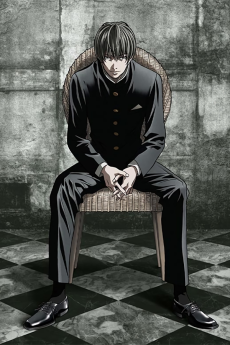
Blue Literature Series
The series consists of adaptations of six modern classics of Japanese literature: Osamu Dazai's No Longer Human (Ningen Shikkaku) & Run Melos! (Hashire Melos!), Natsume Soseki's Kokoro, Ryunosuke Akutagawa's Hell Screen (Jigoku Hen) & The Spider's Thread (Kumo no Ito), and Ango Sakaguchi's In the Forest, Under Cherries in Full Bloom (Sakura no Mori no Mankai no Shita).
No Longer Human (Ningen Shikkaku) - A high school student becomes lost and alienated. Despondent and aimless, he falls into a cycle of self abuse, depression and drugs that taints his life for years. Told in three chapters, each chapter deals with a different point in his life and the final chapter leaves him standing alone - an empty and hollow charicature of his former self.
In the Forest, Under Cherries in Full Bloom (Sakura no Mori no Mankai no Shita) - A love story between a 12th-century woman and a mountain bandit who abducts her.
Kokoro - A 1914 tale of a young man's life journey during the Meiji era. The work deals with the transition from the Japanese Meiji society to the modern era, by exploring the friendship between a young man and an older man he calls "Sensei". It continues the theme of isolation developed in Soseki's previous works, here in the context of interwoven strands of egoism and guilt, as opposed to shame.
Run Melos! (Hashire Melos!) - An updated retelling of a classic Greek tale of the story of Damon and Pythias. The most prominent theme of "Run Melos!" is unwavering friendship. Despite facing hardships, the protagonist Melos does his best to save his friend's life, and in the end his efforts are rewarded.
The Spider's Thread (Kumo no Ito) - The Buddha Shakyamuni chances to notice a cold-hearted criminal suffering in Hell. But this criminal did perform one single act of kindness in not stepping on a spider in a forest. Moved by this selfless act, Shakyamuni takes the silvery thread of a spider in Paradise and lowers it down into Hell, but it falls upon the criminal to seize the opportunity and pull himself out - if he can.
Hell Screen (Jigoku Hen) - A famous artist is commissioned by a great lord to create a series of paintings depicting scenes of the 'Buddhist Hell'. The artist is unable to paint scenes that he has not seen himself, prompting him to torture and torment the Lord's staff to create his imagined images of hell. His creative efforts taint the household, as the story descends into madness and destruction.
(Source: AniDB)
📺Anime Details
📝Editorial Analysis
The silence after Yozo’s final act in No Longer Human—not the fall, not the water, but the hollow echo of his notebook closing—is what lingers. Not melodrama, not music swelling: just the dry rustle of paper, the weight of a sentence left unfinished, and the slow, unblinking gaze of a man who has already vanished from himself long before his body follows.
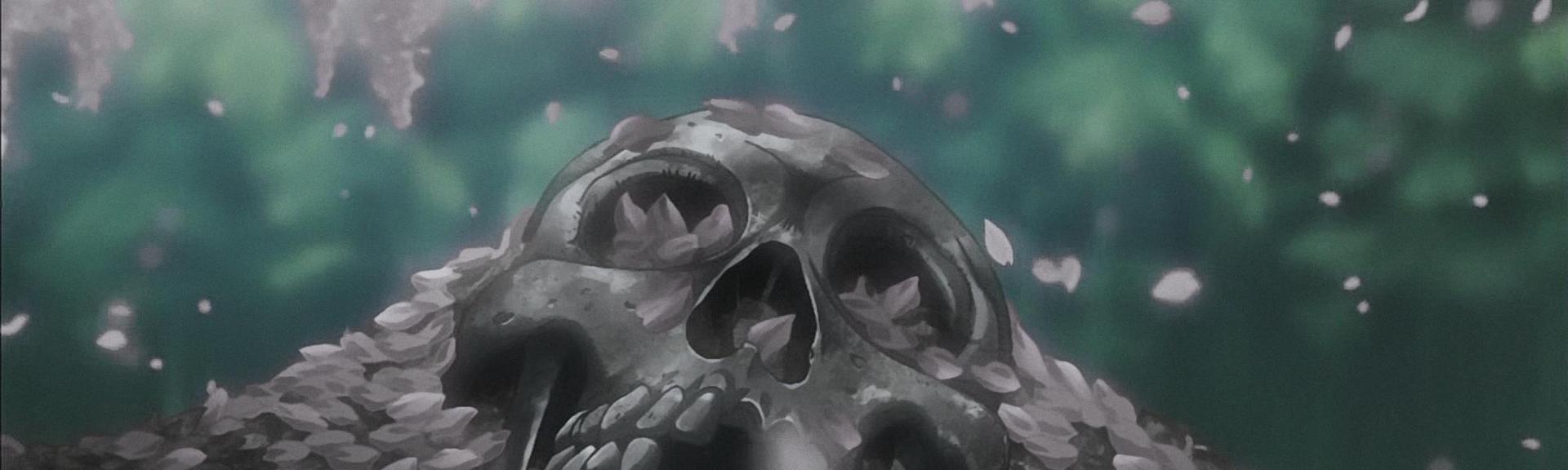
That silence is the atmosphere—not despair as spectacle, but exhaustion as philosophy. Blue Literature Series doesn’t dramatize tragedy; it anatomizes it. Each episode breathes with the quiet gravity of lived consequence: the suffocating etiquette in Kokoro, the painter’s descent into moral vertigo in Hell Screen, the unbearable lightness of cherry blossoms blooming over a suicide pact in In the Forest, Under Cherries in Full Bloom. There’s no catharsis, only residue—ink on rice paper, ash on tatami, the tremor in a hand holding a pen instead of a sword. It makes you feel unmoored, not because the world is chaotic, but because meaning itself feels like a borrowed coat—ill-fitting, threadbare, worn out of obligation rather than belief. You don’t watch it to escape. You watch it to recognize the shape of your own quiet resignation.
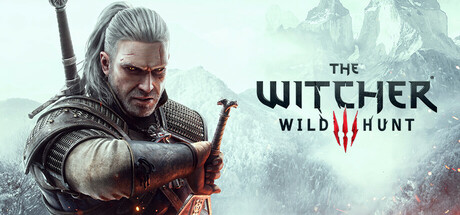
Three games resonate—not by plot, but by that same emotional architecture. The Witcher 3: Wild Hunt lands with its score of 69 in “Emotional Narrative, Adult & Dark Seinen” for good reason: Geralt’s search for Ciri unfolds across a continent scarred by war and grief, where every village hides a wound dressed as routine. The player review—“DLC announced 11 years after release, my favourite game keeps getting better…”—hints at something deeper: this isn’t nostalgia. It’s the ache of returning to a world that remembers your choices, where consequences accrue like dust on bookshelves. Like Blue Literature Series, The Witcher 3 refuses redemption arcs. It offers weight: the burden of care in a world that rewards indifference, the exhaustion of choosing again, even when all options taste like ash.
Then there’s Tank Universal—a jarring match on paper, yet its player review cracks open the connection: “Play cool tank game with dad when you were 6. Love the cool sound effects, and the colors. time goes on; loose access to game. Grew up dad passes away…” That line isn’t about tanks. It’s about memory as artifact—how joy and loss fossilize together in sensory fragments: color, sound, absence. Just as Run Melos! frames loyalty as a desperate, almost absurd sprint against time and betrayal, Tank Universal’s emotional resonance lives in the gap between childhood immersion and adult retrospection—precisely the space Blue Literature Series occupies when adapting The Spider’s Thread: salvation offered, then revoked—not by gods, but by the self’s own gravity.
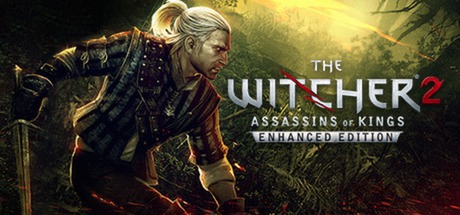
And The Witcher 2: Assassins of Kings Enhanced Edition, praised for feeling “more thoughtfully designed than the next entry,” mirrors Hell Screen’s central horror: art as complicity. In Akutagawa’s tale, the painter achieves transcendence only by witnessing real suffering—and the game, too, forces you into rooms where political calculus bleeds into personal ruin. Its player review doesn’t praise combat or lore, but design intentionality: “thoughtfully designed.” That’s the shared pulse—moments where aesthetics serve anguish, where beauty is never neutral, and every frame carries the quiet dread of knowing you are part of the system you’re observing.
This pairing isn’t for fans of “dark stories.” It’s for people who’ve stared at a train platform at 3 a.m., wondering why the schedule still runs when nothing feels scheduled anymore. For readers who underline passages not to remember them, but to confirm they’re not alone in the syntax of sorrow. For players who replay Jade Empire’s “closed fist” path not for power—but to sit with the cost of certainty. These works speak to those who carry literature like a stone in their pocket: cold, dense, familiar—not to be thrown, but to hold while waiting for the world to make sense again. And it never does. But in that shared, unsentimental honesty—that is where the light, however faint, catches the edge of the blade, the ink, the tank turret, the cherry petal, the notebook page.
🎮19 Games That Match the Vibe

Match Dimensions Explained
❓Frequently Asked Questions
Why is The Witcher 3 ranked alongside Blue Literature Series despite having monster hunting?
Because it nails the same emotional weight and morally grey adult storytelling — like when Geralt chooses between Triss and Yennefer in the 'Blood and Wine' DLC, or faces Ciri’s trauma head-on in a quiet, devastating campfire scene. The 'Emotional Narrative' and 'Adult & Dark Seinen' dimensions match Blue Literature’s tone perfectly, not just the surface-level fantasy setting.
Is there a Blue Literature Series anime or visual novel adaptation?
No — Blue Literature Series isn’t an existing IP; it’s a thematic label fans use for games like The Witcher 3, The Witcher 2, and Jade Empire that share that brooding, character-driven, mature-seinen vibe. Think of it like how people say 'games like Disco Elysium' — it’s a mood-based category, not a franchise with adaptations.
How does Jade Empire compare to The Witcher 3 for philosophical depth and personal stakes?
Jade Empire leans harder into Eastern philosophy and identity — your martial arts path (Open Palm vs. Closed Fist) reshapes dialogue, relationships, and even the final confrontation with Master Li, who literally embodies corrupted idealism. The Witcher 3 digs deeper into consequence and legacy (e.g., deciding Ciri’s fate in the epilogue), but Jade Empire matches it beat-for-beat on emotional intimacy and moral ambiguity — both scored 65–69 in 'Emotional Narrative' and 'Adult & Dark Seinen'.
What’s the best game like Blue Literature Series if I want melancholy, father-son themes and tactile nostalgia?
Tank Universal — seriously. That player review says it all: 'Play cool tank game with dad when you were 6... dad passes away...' It’s not about tanks — it’s about memory, loss, and sensory echoes (those Tron-inspired colors, the bass-heavy sound design). It’s the only match that explicitly ties its sci-fi world to real-world emotional resonance in that specific, aching way.