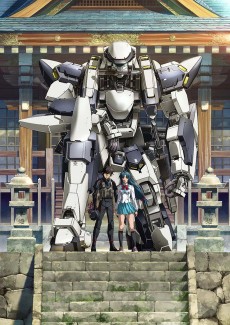
Full Metal Panic! Invisible Victory
Nine months have passed since teen soldier Sousuke Sagara first became Kaname Chidori's covert protector. In that time, Mithril has been remarkably successful at thwarting Amalgam's efforts, but this has only made Amalgam more determined. Leonard Testarossa's visits with Tessa and Kaname are just preludes to all-out attacks that begin with global communications disruptions. Kaname's status as a Whispered makes her one of Amalgam's main targets, which means that any semblance of a peaceful life at Jindai Municipal High School is now over for her.
(Source: Anime News Network)
📺Anime Details
📝Editorial Analysis
The flicker of a dying satellite feed on a cracked laptop screen—Kaname’s breath shallow, fingers trembling not from cold but from the weight of being known. Not loved, not understood—but known, as data. As threat. As Whispered. That moment isn’t spectacle. It’s silence before artillery fire: no mecha roar, no heroic stance—just the hum of a failing generator, the distant wail of a city-wide blackout, and the unbearable intimacy of being hunted not for what you’ve done, but for what your brain holds.

Full Metal Panic! Invisible Victory doesn’t trade in catharsis. It trades in fracture: between duty and desire, between surveillance and sanctuary, between the boy who disassembles rifles in his sleep and the girl who memorizes poetry to keep her mind from unraveling under Amalgam’s gaze. Its atmosphere is claustrophobic even in open fields—every alleyway holds an ambush vector, every quiet classroom hides a listening device, every glance between Kaname and Sousuke carries the static of compromised trust. This isn’t military sci-fi as power fantasy. It’s military sci-fi as exhaustion—the kind that settles behind your eyes after nine months of pretending normalcy while your body remembers how to reload under mortar fire. You don’t feel heroic. You feel braced.
That tension echoes unmistakably in Tribes: Ascend, where the “Action Spectacle” isn’t about winning—it’s about surviving velocity. The game’s description calls it “weapon DLC… and new featured content,” but the player review nails its soul: “Man, I used to love this game. Just mindless fun.” That word—mindless—is the key. Not thoughtless, but unburdened by narrative weight. Like Sousuke’s hyper-optimized combat reflexes, Tribes rewards instinct over introspection: ski-jumping across canyons, locking-on mid-air, trusting muscle memory when logic fails. It’s the anime’s combat stripped of consequence—pure kinetic release, the same adrenaline rush that lets Kaname scream into a pillow instead of breaking down mid-mission.
Then there’s Supreme Commander, whose description frames war as “The Infinite War”—a conflict with “no room for compromise.” Its player review lingers on scale: “The scale of the battles…” That’s Invisible Victory’s geopolitical dread made architectural. Mithril doesn’t fight armies—it fights infrastructure decay, signal ghosts, and the slow bleed of institutional betrayal. When Kaname walks through Tokyo’s blacked-out streets, she’s not seeing ruins—she’s seeing battlefield topology. Supreme Commander’s RTS canvas mirrors that: not squads, but systems—power grids collapsing, radar nets blinking out, supply lines severed like neural pathways. Both demand you think in layers: tactical, strategic, existential.
And NieR:Automata™, with its haunting refrain—“We’re trapped in a never-ending spiral of life and death”—lands like a gut-punch because it shares the anime’s central wound: identity as vulnerability. Kaname isn’t just targeted—she’s interrogated by her own biology. The game’s androids ask if feeling pain makes them real; Kaname asks if remembering classified schematics makes her human. Neither gets an answer—just more missions, more lies, more quiet moments where the line between weapon and witness dissolves. The review’s raw, fragmented honesty—“If a being can feel pain, fear, or loneliness…”—is the emotional DNA Sousuke swallows every time he chooses mission over confession.
This pairing isn’t for fans of clean victories or triumphant mecha clashes. It’s for the ones who pause the anime at 3:47 a.m. to stare at their own reflection in a dark phone screen—wondering what parts of themselves are Whispered, what truths they’re carrying like live ordnance. It’s for players who boot up Supreme Commander not to conquer, but to map the collapse; who play NieR:Automata™ not for lore dumps, but to sit with 2B’s silent tears after a boss fight; who still have the Tribes: Ascend launcher bookmarked, not for nostalgia, but because sometimes you need to fly so fast your thoughts can’t catch up. These aren’t stories about saving the world. They’re about holding yourself together long enough to remember what you are worth—when every system, human or machine, is designed to erase that question entirely.
🎮14 Games That Match the Vibe








Match Dimensions Explained
❓Frequently Asked Questions
Why does Lost Planet: Extreme Condition feel like a spiritual cousin to Full Metal Panic! Invisible Victory?
Both lean hard into military sci-fi tension with grounded (but oversized) mecha—think Mithril’s Type-92 tanks clashing with Lost Planet’s VTOLs and Akrid-mounted snow rigs. The frozen wastelands and desperate human survival against overwhelming, biomechanical threats mirror FMP’s blend of tactical realism and existential stakes, especially in scenes like the Snow Pirate ambushes that echo Mithril’s covert ops in hostile terrain.
Is there a Full Metal Panic! game adaptation on PC with tactical squad mechanics like Invisible Victory?
No official FMP game exists—but Supreme Commander nails that vibe: it’s all about large-scale, real-time command of mecha-like units (Tanks, Experimental Walkers, and orbital strikes) across sprawling battlefields, mirroring how FMP’s Mithril coordinates layered intel, air support, and ground squads. Its 'Infinite War' lore even echoes FMP’s geopolitical friction between rigid factions.
How does NieR:Automata compare to Tribes: Ascend for fans of Full Metal Panic!'s action-spectacle moments?
NieR:Automata delivers cinematic, high-speed melee-and-gunplay set pieces—like 2B’s blade combos mid-air or the neon-drenched Tokyo ruins—that match FMP’s kinetic intensity (e.g., the helicopter chase in Episode 3), while Tribes: Ascend is pure arena-based, momentum-driven chaos: skiing across maps, rocket-jumping, and capturing flags at breakneck speed—less story, more adrenaline rush, just like FMP’s over-the-top but technically grounded firefights.
What’s the best game like Full Metal Panic! Invisible Victory if I want tense, small-unit military tactics with personality?
Team Fortress 2—it’s got the squad-based, class-driven warfare (think Medic + Heavy combo echoing Sato’s sniper/spotter duos), absurd-but-strategic map control, and razor-sharp character voices that give every firefight charm and weight. Plus, its chaotic, hat-fueled battles still capture FMP’s balance of grit and levity—like when Kurz cracks jokes mid-grenade volley.