
Mobile Suit Zeta Gundam
The year is Universal Century 0087. Seven years have passed since the end of the One Year War. In its zeal to stamp out any remaining opposition, the Earth Federation has organized the Titans, an elite fighting force. However, the Titans soon get out of hand, committing atrocities on par with the worst the Principality of Zeon had to offer during the war. In response, dissatisified citizens, former Zeon soldiers, and even members of the Earth Federal Forces form a resistance group known as the Anti-Earth Union Group, or AEUG. As the next war is brewing, a small AEUG group arrives at Side 7 to investigate the new Gundam Mk. II...
(Source: Anime News Network)
📺Anime Details
📝Editorial Analysis
The cockpit of the RX-178 Gundam Mk-II shudders—not from impact, but from silence. Kamille Bidan’s breath hitches as the hatch seals. Outside the viewport, the colony cylinder Londenion hangs suspended in black velvet, its inner surface glowing with artificial dawn. Below, civilians move like ants across curved streets; above, the Titans’ warship Elle looms, a jagged scar against the stars. No music swells. No heroic monologue cuts through. Just the low hum of life support—and the crushing weight of knowing this fragile peace is already rotting from within.
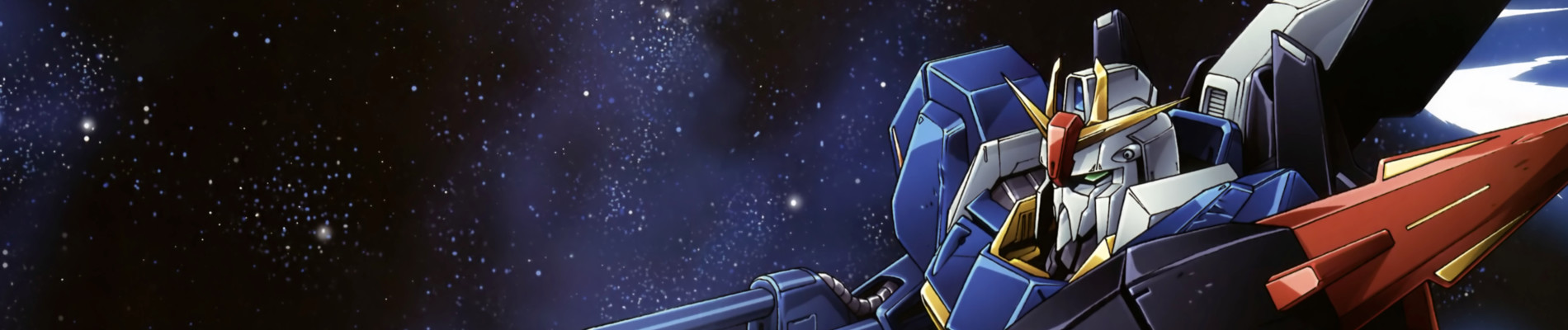
That silence isn’t emptiness. It’s dread, thick and metallic, like blood on the tongue. Mobile Suit Zeta Gundam doesn’t trade in catharsis or triumph—it trades in erosion. The Universal Century doesn’t heal after war; it calcifies. Institutions harden into tyranny. Loyalties splinter not along ideology, but trauma. Every alliance feels temporary, every betrayal inevitable—not because characters are evil, but because survival demands compromise that hurts. You don’t root for victory here. You brace for the next fracture: Quattro Bajeena’s quiet exhaustion when he pulls off his mask, Fa Yuiry’s voice cracking mid-briefing as she tries to sound authoritative, the way Char’s presence isn’t a threat—it’s a mirror, reflecting how easily idealism curdles into vengeance. This isn’t war as spectacle. It’s war as slow suffocation—where the real enemy isn’t the Titans or Axis, but the inevitability of becoming what you swore to destroy.
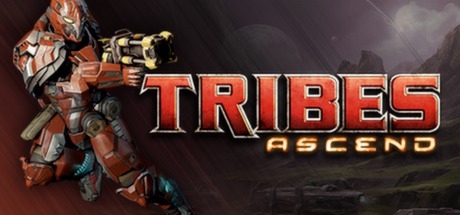
That emotional gravity resonates in games where scale isn’t about power fantasy, but consequence. Tribes: Ascend, for all its “mindless fun” reputation, mirrors Zeta’s spatial disorientation—the way players dart across vast, empty ice fields or orbital maps, tiny figures against planetary curvature, constantly reorienting themselves under fire. Its “Action Spectacle” isn’t flashy combos—it’s the vertigo of falling up toward a sky full of hostile dropships, just like Kamille’s first sortie over Side 7, where gravity isn’t a law but a variable. A player’s review nails it: “Man, I used to love this game.” That wistful, almost mournful nostalgia? That’s Zeta’s tone—joy remembered through the haze of loss.
Then there’s Supreme Commander, where “The Infinite War” isn’t metaphor—it’s architecture. Three factions locked in millennia of attrition, each convinced their doctrine is the only path forward. No heroes emerge. No treaties hold. Just endless, grinding escalation—tanks rolling over craters left by orbital strikes, ACUs birthing mechs that look less like tools and more like symptoms. A reviewer observes: “The scale of the battles is staggering… even today.” That scale isn’t awe—it’s oppression. Like watching the Titans’ assault on Green Noa unfold across multiple screens in real time, where strategy collapses into sheer, overwhelming mass. You don’t command armies—you manage entropy.
And NieR:Automata™, though tonally distant, shares Zeta’s most devastating question: What does it mean to inherit a war you didn’t start? 2B, 9S, and A2 fight machines built by humans who vanished centuries ago—echoes of Zeon remnants, Federation defectors, and Titans all repeating cycles they barely understand. The description calls it a “machine-driven dystopia”; Zeta’s UC is a human-driven one, equally hollowed out. A player’s review quotes: “We’re trapped in a never-ending spiral of life and death.” That line could be Kamille staring at his reflection in the Mk-II’s cracked canopy—same exhaustion, same quiet horror at realizing your body, your choices, your very grief, are now weapons in someone else’s old war.
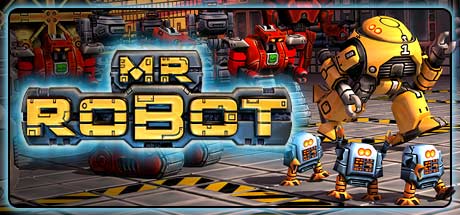
This pairing isn’t for fans of clean resolutions or power fantasies. It’s for the ones who pause mid-battle in Lost Planet™: Extreme Condition, watching snow swirl around a fallen Akrid carcass—not because it’s cool, but because the wind sounds exactly like the static hiss before a comms blackout on the Argama. It’s for players who replay Mr. Robot’s opening sequence—not for the Mega Man-esque platforming, but because Asimov’s lonely walk down the Eidolon’s silent corridor feels like Fa’s first night aboard the ship, when she stares at her own trembling hands and wonders if she’s strong enough to lie convincingly tomorrow. These are stories for people who recognize dread not as fear of death, but as the slow, cold certainty that no choice you make will ever be truly free—only less costly than the last.
🎮39 Games That Match the Vibe






Match Dimensions Explained
❓Frequently Asked Questions
Why does Tribes: Ascend keep coming up in 'Games Like Mobile Suit Zeta Gundam' lists?
Because its fast-paced, team-based vehicular and jetpack-enabled combat mirrors the high-stakes mobile suit dogfights in Zeta—especially the Zeon Remnants vs. AEUG skirmishes over space colonies or jungle bases. The game’s emphasis on momentum, map control, and coordinated assaults (like capturing relay stations) feels like piloting a Rick Dom in a large-scale tactical engagement, not just raw firepower.
Is there a Zeta Gundam mobile game adaptation with real mecha combat?
No official Zeta Gundam mobile game exists with authentic mobile suit combat—but Mr. Robot nails the vibe of being a lone mechanoid aboard a massive colony ship, facing system-wide malfunctions and hostile AI, much like Kamille’s early struggles aboard the Argama. Its light Mega Man Battle Network-style exploration and turn-based-ish combat evoke that same isolated, tech-heavy tension without needing a Gundam license.
How does Lost Planet: Extreme Condition compare to NieR:Automata for Zeta Gundam fans?
Lost Planet leans hard into gritty, grounded survival—think fighting Akrid hordes on frozen wastelands in powered armor, similar to the brutal realism of Zeta’s Gryps Conflict trench warfare scenes. NieR:Automata, meanwhile, delivers Zeta’s emotional weight through androids 2B and 9S grappling with identity and war’s futility—much like Kamille’s psychological unraveling after Mirai’s death or Quattro’s moral reckoning.
What’s the best 'Zeta Gundam vibe' game if I want slow-burn strategy and massive fleet-scale battles?
Supreme Commander is your pick—it captures the grand, operatic scale of Zeta’s naval engagements (like the Battle of Gryps), where Titans clash across continents and orbital strikes reshape battlefields. The game’s massive units, strategic zoom, and emphasis on resource logistics over twitch reflexes mirror how Zeta treats war as a sprawling, ideological machine—not just heroics.