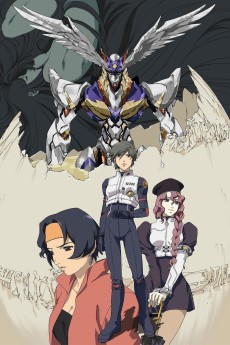
RahXephon
In the year 2012 Japan was invaded by the Mu. Human-like beings from another dimension with blue blood.
In the year 2015 Tokyo is attacked by invaders, who are repelled by a humanoid weapon called a Dolem. During the chaos, Ayato Kamina meets Reika Mishima, a classmate.
During that same day, he is attacked by government officials but a woman named Haruka comes to his rescue, informing him that she was sent to get him by the Organization TERRA, and that Tokyo had been sealed in a time rift where time flows one third as fast as the outside world.
He flees from Haruka onto a train where he sees Reika once more. Arriving at the Room of Rah, he follows her to a tremendous egg where the Dolem RahXephon is hatched from, and upon her singing his mother appears atop the Dolem that had stopped the TERRA Invasion. In the battle Ayato's mother is injured, and Ayato flees Tokyo Jupiter with Haruka upon seeing his mother's blue blood.
📺Anime Details
📝Editorial Analysis
The rain in Shinjuku doesn’t fall—it settles, thick and slow, like breath held too long. Ayato stands beneath the fractured dome of Tokyo’s sealed city, watching Reika’s hand vanish into static as the Chrono-Barrier flickers. Her voice fractures mid-sentence—not into silence, but into overlapping echoes of herself at twelve, seventeen, twenty-two—each syllable layered with a different timbre, a different grief. That moment isn’t about spectacle. It’s about recognition: the horrifying intimacy of hearing your own memory speak back to you in someone else’s voice, rearranged by forces that don’t ask permission.
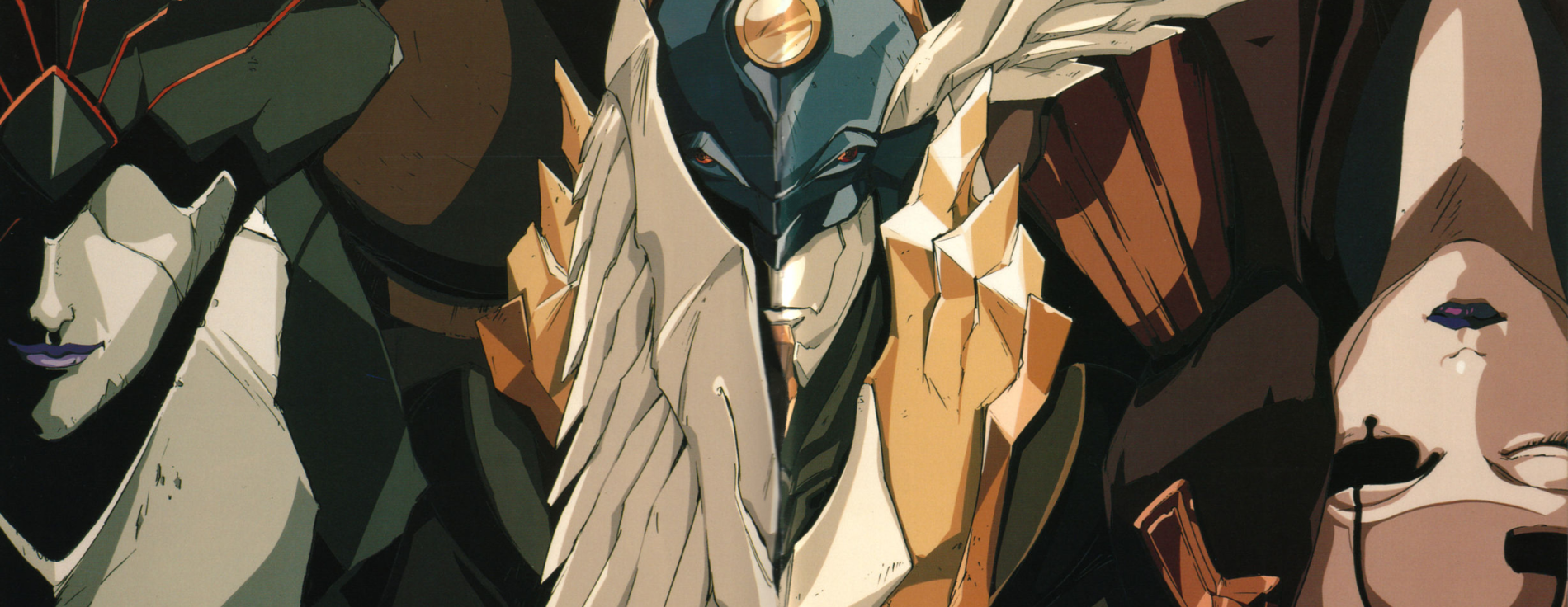
RahXephon doesn’t trade in battles won or villains unmasked. It trades in resonance—the low-frequency hum of time folding inward, of myth reassembling itself from half-remembered lullabies and blue-blooded litanies. You don’t watch it—you reverberate. Its atmosphere is quiet dread wrapped in chamber-music melancholy: a cello line holding a note just past comfort, the weight of a piano key depressed but not released. It makes you feel unmoored, not by spectacle, but by how familiar its disorientation feels—like waking from a dream where your childhood home has shifted rooms overnight, and no one else notices the walls are breathing. This isn’t post-apocalyptic as rubble and ruin; it’s post-apocalyptic as grammar collapse—where “before” and “after” bleed because memory isn’t stored, it’s tuned, like a radio dial drifting between stations broadcasting the same tragedy in different keys.
That emotional DNA pulses strongest in games where time isn’t a resource to manage—but a wound that won’t scab over. BioShock Infinite lands with the same gut-punch precision: Booker DeWitt doesn’t just chase Elizabeth across realities—he stumbles through versions of himself he’s tried to erase, each corridor a hallway of mirrored guilt. The player review nails it: “I know that some people are still bitter about the Bioshock Infinite we could have gotten.” That ache—the longing for a version of the story (and self) that didn’t fracture—is pure RahXephon. Ayato doesn’t fight Mu soldiers to win; he fights to remember who he was before the Organization TERRA edited his name, his parents’ faces, the color of his own blood. Both works treat identity as palimpsest—scraped clean, rewritten, then scraped again—and the horror isn’t the violence, but the silence between erasures.
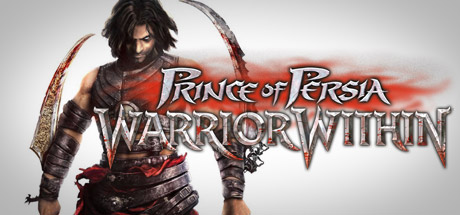
Then there’s the Prince of Persia trilogy—especially Warrior Within, where the Dahaka isn’t a boss, but consequence made flesh, hunting the Prince not for failure, but for survival. The player review says it outright: “Dahaka chase is still as goated as it was before…” That relentless, rhythmic pursuit—footsteps echoing just behind, always synced to your panic—mirrors Ayato’s flight from Haruka’s revelations, from Reika’s uncanny familiarity, from the very architecture of Tokyo’s sealed dome, which bends light and logic like a warped lens. And The Two Thrones, where the Prince returns to Babylon only to find his kingdom already infected by his own past choices—echoes RahXephon’s core paradox: you can’t rebuild what you’ve been designed to destroy. The sands aren’t just a mechanic—they’re a metaphor for memory’s granular, irreversible erosion. Even The Sands of Time, with its rewind mechanic, isn’t about control—it’s about the exhaustion of undoing, of watching the same fatal misstep replay in your peripheral vision until it becomes muscle memory.
Team Fortress 2, though tonally distant, shares something quieter but just as vital: the weight of role. Not class-as-archetype, but class-as-assigned identity. The Soldier doesn’t choose his delusions—he inhabits them, weaponized and absurd. That same surreal, almost bureaucratic gravity lives in RahXephon’s military bureaucracy—the way TERRA officers recite doctrine while their eyes glaze over, like actors mouthing lines they no longer believe. The player review calls the community “gay, racist, sexist, gay, artistic, gay, furries, and love men”—a chaotic, contradictory, alive mess. That’s the texture RahXephon refuses to sanitize: ideology isn’t monolithic. It’s a collage of uniforms, propaganda jingles, and whispered lullabies—all playing at once in the same broken speaker.
This is for the person who replays a game not for mastery, but to sit again in the silence after the final cutscene—when the music swells, then cuts, and all that’s left is the echo of their own breath syncing with the protagonist’s. For the one who watches Ayato stare at his reflection in a rain-slicked dome and feels that—not sadness, not awe, but recognition: the chilling, beautiful certainty that memory is never yours alone. It’s borrowed. It’s tuned. It’s waiting, quietly, for you to sing back.
🎮23 Games That Match the Vibe





Match Dimensions Explained
❓Frequently Asked Questions
Why is Prince of Persia: The Sands of Time always mentioned with RahXephon?
Both lean hard into time-manipulation as emotional and narrative machinery—not just a gimmick. In Sands of Time, the Prince rewinds seconds after a misstep (like slipping off a ledge or botching a dagger throw), mirroring RahXephon’s ‘Tuning’ sequences where reality fractures and resets around Ayato. That shared vibe of fragile memory, guilt-driven temporal control, and melancholic romance (Kaileena/Ayato + Haruka) is why fans keep linking them—especially given their shared Adult & Dark Seinen dimension and 81 Metacritic score.
Is there a RahXephon video game adaptation?
No—there’s never been an official RahXephon game. But if you’re craving that same blend of psychological weight, mecha-as-extensions-of-the-self, and time-bent tragedy, BioShock Infinite nails the tone: Booker’s fractured memories, Elizabeth’s reality-warping powers, and the gut-punch reveal in Comstock House hit with the same emotional precision as Ayato’s breakdowns in the Tokyo Tower finale. It’s not an adaptation—but it *feels* like one.
How does Prince of Persia: Warrior Within compare to RahXephon in terms of tone and themes?
Warrior Within is RahXephon’s grittier, more nihilistic cousin—both revolve around a brooding young man hunted by an inescapable force tied to his own past (Dahaka vs. the Dolems/‘Tuning’). The Dahaka chase sequences—with their claustrophobic corridors, time-looping echoes, and Prince’s growing desperation—mirror Ayato’s spirals in the underground bunker scenes. And just like RahXephon, Warrior Within wears its Adult & Dark Seinen label proudly: morally gray choices, body horror undertones, and zero easy answers.
What’s the best game like RahXephon if I want that lonely, rain-soaked, late-night introspection vibe?
BioShock Infinite—hands down. Think of Booker walking alone through the decaying, rain-lashed streets of Columbia at night, listening to distant hymns crackle over broken PA systems, while Elizabeth quietly observes everything you do. That quiet dread, layered regret, and sense of being watched by forces beyond comprehension? It’s pure RahXephon energy—especially when the timeline fractures and you realize how much of your identity was built on erasure. Plus, it shares the same Time & Memory + Adult & Dark Seinen dimensions and 81 score.