
Mobile Suit Gundam GQuuuuuuX
Amate Yuzuriha is a high-school student living peacefully in a space colony floating in outer space.
When she meets a war refugee named Nyaan, Amate is drawn into the illegal mobile suit dueling sport known as Clan Battle.
Under the entry name "Machu," she throws herself into fierce battle day after day, piloting the GQuuuuuuX. Then an unidentified Gundam mobile suit pursued by both the space force and the police appears before her, along with its pilot, a boy named Shuji.
Now their world is about to enter a new era.
(Source: Official Site)
Note: Prior to broadcasting, "Mobile Suit Gundam GQuuuuuuX -Beginning-" — a theatrical pre-screening of the first 3 and 8th episodes edited together— debuted in Japan on January 17, 2025 and in North America on February 28, 2025.
📺Anime Details
📝Editorial Analysis
The flicker of neon off a cracked visor—Amate’s breath shallow, knuckles white on the GQuuuuuuX’s controls as the colony’s artificial gravity hums just too low beneath her boots. Outside the cockpit, starlight bleeds into the bruised violet of deep-space twilight; inside, the suit’s HUD pulses with Clan Battle countdowns, Nyaan’s voice crackling over comms like static wrapped in warmth. That moment—not the explosion, not the duel’s climax, but the stillness before: the weight of a civilian life dissolving into something sharper, faster, realer.

This isn’t just mecha-as-spectacle. It’s the quiet dread of a space colony that looks peaceful until you notice how many surveillance drones hover just outside classroom windows. It’s the way “Clan Battle” feels less like sport and more like ritual—a sanctioned pressure valve for a society holding its breath under layers of unspoken control. You don’t feel heroic here. You feel exposed: a high-school girl piloting a machine built for war, her identity split between Amate Yuzuriha and “Machu,” her ethics fraying at the edges of every illegal match. The conspiracy isn’t some distant cabal—it’s baked into the colony’s infrastructure, the police’s hesitation, the way Shuji’s Gundam arrives not with fanfare but with the ragged silence of someone who’s been running too long. It makes you question safety itself—not as absence of danger, but as a carefully maintained illusion.
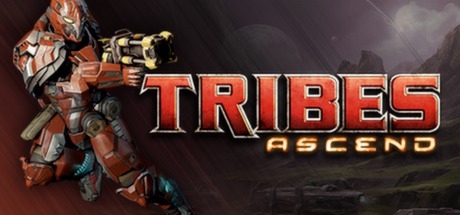
That same electric unease lives in Tribes: Ascend—not in its DLC packaging or weapon loadouts, but in the player review’s sigh: “Man, I used to love this game. Just mindless fun. All be it, it could have been expanded…” That wistful, almost guilty nostalgia? It mirrors Amate’s early Clan Battles: exhilarating, kinetic, yet laced with the quiet knowledge that this “fun” exists because the system lets it—until it doesn’t. The game’s military sci-fi framing isn’t about grand strategy; it’s about movement as survival, velocity as defiance—just like Amate pushing GQuuuuuuX past its limits in zero-G corridors where one misjudged drift means slamming into a bulkhead.
Then there’s BioShock™, where the player review calls it “one of the most revolutionary games ever!”—but what sticks isn’t the revolution’s scale, it’s the dismantling: the slow, chilling realization that your choices, your weapons, even your moral compass, were curated by forces you never saw coming. Like Amate learning that Nyaan’s refugee status isn’t incidental—it’s evidence. Like the unidentified Gundam’s arrival shattering the colony’s narrative of stability. Both works weaponize setting: Rapture’s art deco decay and the space colony’s sterile corridors aren’t backdrops—they’re architectures of control, designed to make dissent feel impossible—until someone moves wrong, speaks too loud, or pilots a suit they weren’t meant to touch.
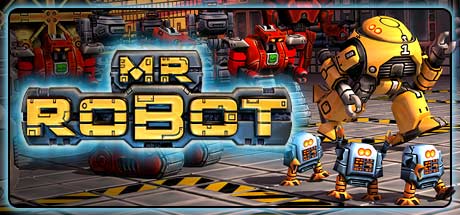
And Mr. Robot—not the show, but the game where Asimov, a service mechanoid aboard the colony ship Eidolon, wakes to find the ship’s brain malfunctioning. The player review notes its “retro” feel and “light Mega Man Battle Network type exploration”—but that’s precisely the resonance: the intimacy of small-scale crisis aboard a vast, failing system. Amate doesn’t command fleets; she fights in repurposed maintenance shafts, jury-rigs comms with scavenged parts, feels the GQuuuuuuX’s servos groan like tired bones. Her rebellion isn’t galactic—it’s tactile, immediate, human-scale. So is Asimov’s: no world-ending stakes, just one broken ship, one quiet mechanoid, and the terrifying weight of being the only thing still listening.
This pairing isn’t for fans of clean victories or heroic monologues. It’s for the person who watches Amate wipe grease from her cheek after a match and thinks, Yeah—I know that exhaustion. For the player who reloads a BioShock™ checkpoint not to win, but to rehear that audio diary, to catch the tremor in the voice they missed last time. For the one who pauses mid-jump in Tribes: Ascend, not to admire the view, but to feel the pull of gravity—and wonder, just for a second, if it’s real, or just another layer of the lie. They’re drawn to stories where the future isn’t built in boardrooms, but in stolen cockpits, glitching ship logs, and the stubborn, human refusal to stop asking why—even when the answer might unmake everything.
🎮36 Games That Match the Vibe











Match Dimensions Explained
❓Frequently Asked Questions
Why does Tribes: Ascend keep showing up in Gundam GQuuuuuuX matches when it's not a mecha game?
Great question—it’s because both lean hard into fast-paced, team-based military sci-fi combat with jetpacks, terrain-based tactics, and large-scale objective play (like capturing beacons or bases), which mirrors GQuuuuuuX’s emphasis on mobile suit mobility and squad coordination. Even though Tribes doesn’t have piloted mecha, its 'skiing' movement, vehicle-like momentum physics, and faction warfare vibe strongly echo the kinetic flow of GQuuuuuuX’s battlefield sequences—especially scenes where characters like Retsu and Mika coordinate flanking maneuvers across open desert maps.
Is there a Gundam GQuuuuuuX anime or manga adaptation I should check out before playing similar games?
Nope—GQuuuuuuX is *only* a game (a wild, self-aware parody RPG released in 2023), and there’s no official anime or manga. That said, if you love its tone—absurd humor, retro-futuristic mecha, and fourth-wall-breaking chaos—Space Quest™ Collection is your best match: it’s packed with comedic sci-fi satire, glitchy cyberpunk cityscapes, and intentionally janky ‘mech-adjacent’ robots like the sentient toaster unit ‘Crispy-9’, all delivered with that same wink-at-the-camera energy.
How does Mr. Robot compare to BioShock for someone who loves GQuuuuuuX’s blend of mecha and dystopian storytelling?
Mr. Robot leans into intimate, claustrophobic mecha-as-tool storytelling—think Asimov the service mechanoid solving puzzles aboard the malfunctioning colony ship Eidolon, with light Mega Man Battle Network–style exploration and turn-based skirmishes against rogue maintenance bots. BioShock, meanwhile, trades mecha for plasmid-powered human augmentation but nails the same oppressive, ideologically fractured dystopia (Rapture’s underwater decay mirrors GQuuuuuuX’s decaying Neo-Tokyo-esque zones) and delivers heavier political thriller weight—so if you want *mecha + melancholy*, go Mr. Robot; if you want *sci-fi dread + narrative punch*, BioShock’s your pick.
What’s the best game like Gundam GQuuuuuuX if I just want chaotic, stress-free fun with zero lore pressure?
Tribes: Ascend is your jam—pure adrenaline without cutscenes or exposition. Just jump in, grab a jetpack, ski down hills at Mach 3, and frag teammates while yelling into voice chat (just like GQuuuuuuX’s over-the-top battle cries from Retsu’s ‘SQUISH!’ moments). The player review nails it: ‘mindless fun’ with weapon DLC from ten expansions means endless loadout chaos—no backstory needed, no factions to memorize, just gravity-defying mayhem that feels like GQuuuuuuX’s most unhinged multiplayer moments distilled into one package.