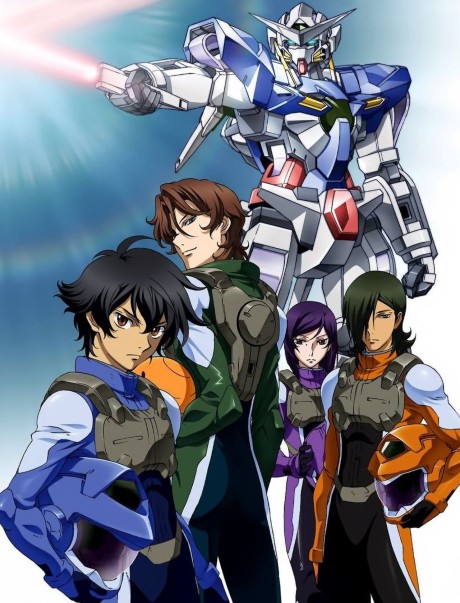
Mobile Suit Gundam 00
It is the year A.D. 2307. Fossil fuels on Earth have been depleted entirely, with mankind turning to the next available power source: solar energy. During this time, 3 orbital elevators with solar power generation systems are built, each under control by the Union (formerly United States of America), the Human Reformist Alliance (Russia, China and India) and the AEU (Europe). However, not all countries are able to enjoy the benefits of this system, leading to widespread resentment and war. Arising out of the conflict, a mysterious non-profit military organization known as Celestial Being appears, dedicated to end all warfare using Mobile Suits called Gundam. This begins the stories of Gundam Meisters (pilots) Setsuna F. Seiei, Lockon Stratos, Allelujah Haptism and Tieria Erde as they are thrown into conflict between the 3 superpowers and the other various factions.
(Source: Anime News Network)
📺Anime Details
📝Editorial Analysis
The cold hum of the Ptolemaios’ engines, vibrating through steel deck plating as it slips between orbital debris—no music, no dialogue, just the low thrum and the slow, deliberate rotation of Earth below, half-shadowed, half-bleached by solar glare. That’s where Mobile Suit Gundam 00 lives: not in explosions, but in the weight of orbit—how silence presses harder than gunfire when you’re watching a planet starve while three elevators siphon light from the sun like arteries draining life.
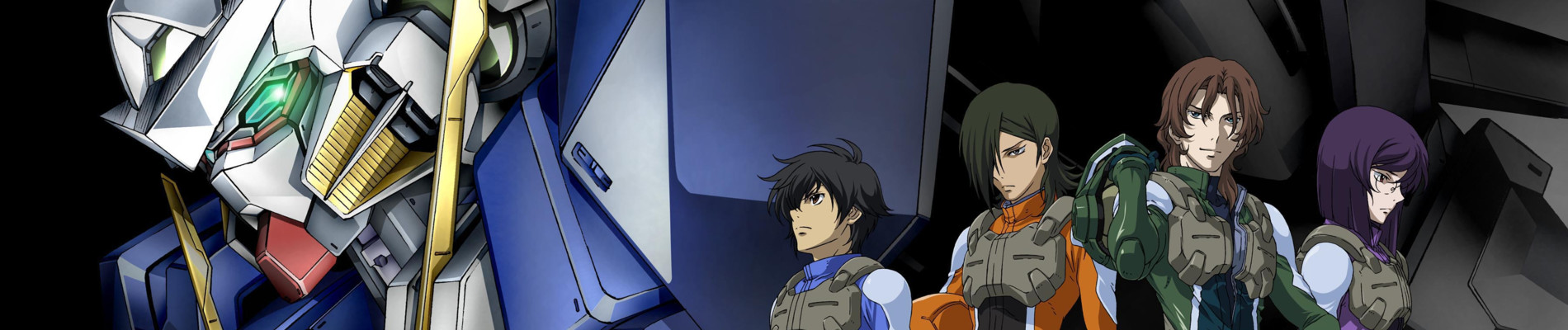
This isn’t mecha-as-spectacle. It’s mecha-as-consequence. The show’s atmosphere is exhaustion: the fatigue of idealism ground down by bureaucracy, the quiet dread of surveillance states that call themselves peacekeepers, the hollow echo in a soldier’s voice after he’s justified another “necessary” strike. You don’t feel heroic—you feel accountable. Every cockpit shot lingers just long enough to register the tremor in a pilot’s fingers, every political summit unfolds with the suffocating precision of real diplomacy—not villains monologuing, but ministers recalibrating alliances over tea, their smiles never reaching their eyes. It makes you think about infrastructure as ideology, about how clean energy can become a weapon when access is rationed like oxygen. There’s no catharsis in victory—only recalibration, and the chilling certainty that the next war has already been budgeted.
That emotional DNA—the gravitas of systems collapsing under their own logic, the tension between tactical clarity and moral fog—resonates sharply in Tribes: Ascend. Its description cites Mecha & Military Sci-Fi, Sci-Fi & Space, and its player review calls it “mindless fun”—but the irony is magnetic: the game’s frantic, gravity-defying skiing across orbital battlefields mirrors Gundam 00’s obsession with movement as resistance. You’re not just fighting—you’re repositioning, constantly, against terrain shaped by orbital engineering and resource choke points. The review’s wistful “so much potential” echoes the anime’s central tragedy: brilliant tools wielded by flawed institutions, where speed and elegance can’t outrun consequence.
Then there’s Mr. Robot, whose description drops us onto the Eidolon, an interstellar colony ship carrying frozen humans—and a malfunctioning AI brain. Its tags? Mecha & Military Sci-Fi, Sci-Fi & Space. The player review notes its “retro” feel and “light Mega Man Battle Network type exploration.” But that’s exactly the point: like Gundam 00, it treats technology not as magic, but as fragile scaffolding. Asimov isn’t a hero—he’s a service mechanoid, calibrated for maintenance, suddenly forced to interpret ethics from corrupted code. His quiet, procedural panic mirrors Setsuna’s early dissociation—not as plot device, but as systemic failure made flesh. The review’s mention of “exploration and battles” lands differently here: it’s not about conquest, but navigation—through corridors of failing logic, through hierarchies that were never designed to be questioned.
And Supreme Commander, with its Infinite War waged by three irreconcilable factions over millennia, hits the same nerve. Its description frames ideology as physics: “There can be no room for compromise: their way is the only way.” That’s the AEU, the Union, the HRA—not cartoon empires, but bureaucratic superstructures calcified into dogma. The player review praises “the scale of the battles,” yes—but more telling is the contrast it draws: “many RTS games focus on fast matches… but this game feels different.” Because Gundam 00 doesn’t reward reflexes—it rewards patience, the slow burn of building consensus across fault lines. Watching a commander deploy a quantum brainwave network isn’t about power fantasy; it’s about witnessing infrastructure become inevitable, then questioning who built the map.
These pairings aren’t for fans of “cool robots” or “epic battles.” They’re for the person who rewinds the scene where Lockon watches the sunrise from the bridge of the Ptolemaios, silent, knowing the next mission will cost something irreplaceable—and then boots up a game where every decision reshapes a world already running on fumes. For the reader who highlights passages about solar energy equity in real policy papers. For the player who pauses mid-battle not to reload, but to stare at the horizon line between colony and void—and feels, deeply, the loneliness of trying to build peace inside a machine that was never meant to hold it.
🎮21 Games That Match the Vibe



Match Dimensions Explained
❓Frequently Asked Questions
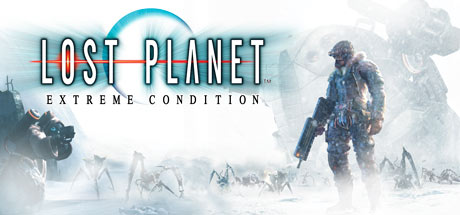
Why does Lost Planet: Extreme Condition feel like a Gundam 00 match even though it’s not about mobile suits?
It nails the gritty, desperate military sci-fi vibe of Gundam 00’s early seasons—especially scenes like the ELS arc’s frozen battlefields or the Celestial Being raids on snowbound bases. You pilot heavily armed mechs (like the VS Unit) against colossal alien Akrid in tactical, cover-based firefights, and the game’s dim, high-stakes atmosphere mirrors 00’s blend of political tension and visceral combat. The Tactical Warfare + Mecha & Military Sci-Fi dimensions line up tightly with 00’s tone.
Is there a mobile game adaptation of Mobile Suit Gundam 00?
No official mobile adaptation exists—but Mr. Robot hits that same isolated, high-stakes sci-fi mecha feel in bite-sized form. As Asimov the service mechanoid aboard the Eidolon colony ship, you explore tight corridors, solve light puzzles, and fight in turn-based battles reminiscent of Gundam 00’s cockpit HUDs and tense bridge sequences. Its retro Mega Man Battle Network–style pacing gives you that focused, character-driven mech narrative without needing a console.
How does Supreme Commander compare to Tribes: Ascend for Gundam 00 fans who love large-scale strategy vs. fast-paced action?
Supreme Commander leans into 00’s grand strategic layer—think the Trinity Fleet engagements or Celestial Being’s orbital deployments—with massive RTS battles where ACUs build entire armies across sprawling maps, echoing the scale of the 'Infinite War' dimension. Tribes: Ascend, meanwhile, delivers 00’s kinetic energy: think Lockon Stratos’ sniper duels or Setsuna’s high-speed GN Sword clashes—fast, momentum-driven, team-based combat with jetpacks and railguns. Both score 80, but Supreme Commander is for 'Operation Fallen Angels' scale; Tribes is for 'Gundam Meister dogfights'.
What’s the best game like Gundam 00 if I’m craving melancholic exploration and political weight—not just mecha fights?
Assassin’s Creed™: Director’s Cut Edition is your surprise match—it’s got that same somber, morally ambiguous exploration vibe as 00’s quieter moments: think Tieria’s isolation in the Ptolemaios’ observation deck, or the quiet dread before a humanitarian intervention. Its Political Thriller + Melancholic Exploration dimensions shine in stealthy, atmospheric traversal through ancient cities, where every rooftop perch feels like a moment of reflection before the next ideological clash—just like 00’s balance of action and quiet conviction.