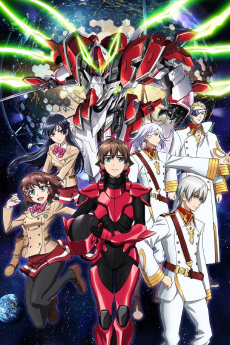
Valvrave the Liberator
📺Anime Details
📝Editorial Analysis
The air in the classroom smells like dust and ozone—sharp, metallic, wrong—just before the floor drops away. Haruto Tokishima’s hand trembles not from fear but dislocation: one second he’s a bored student slumped over his desk, the next he’s strapped into the cockpit of Valvrave the Liberator, his veins burning with something ancient and hungry, his heartbeat syncing to the machine’s pulse like a second heart learning its rhythm for the first time. That split-second vertigo—between school uniform and blood-red armor, between human and something else—is where Valvrave the Liberator lives: not in war’s grand strategy, but in the shock of identity unraveling mid-air.
This isn’t just mecha-as-weapon; it’s mecha-as-symptom. The show pulses with a raw, adolescent fever-dream logic—where love letters get written between artillery barrages, where cafeteria gossip bleeds into assassination protocols, where “vampire” isn’t gothic metaphor but physiological consequence: bodies rewriting themselves under pressure, loyalty fracturing along generational fault lines. It makes you feel unmoored, then fiercely anchored—not to nation or ideology, but to the trembling hand of the person beside you in the cockpit, the shared breath before a jump-cut to zero-G combat. You don’t watch it to understand geopolitics. You watch it to remember what it feels like when your own body betrays you—and how fast you’ll choose violence, or tenderness, to reclaim control.
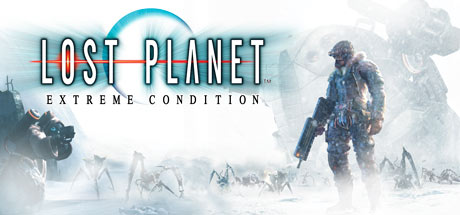
That same unmoored intensity echoes in Lost Planet™: Extreme Condition, where survival isn’t abstract—it’s teeth-deep cold, Akrid swarming from blizzard-white voids, your mech’s thermal gauge bleeding red as you scramble across ice that cracks like bone. The description nails it: “Driven to the brink of extinction on ice-covered wastelands.” That’s Valvrave’s emotional terrain too—not polished frontlines, but desperate, improvised resistance, where every shot risks freezing your own joints or draining your life force. And the player review? “Bought this version just to say I’m super disappointed that Capcom still hasn’t fixed Colonies Edition…” — that frustration, that unfinished urgency, mirrors Valvrave’s own narrative fractures: promises broken mid-sentence, alliances forged then dissolved in a single transmission blackout, systems failing not with drama but with the quiet, grinding whine of overheating hydraulics.
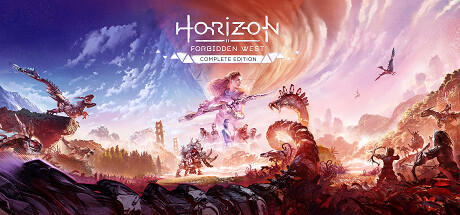
Then there’s Horizon Zero Dawn™ Complete Edition, tagged with Mecha & Military Sci-Fi, Sci-Fi & Space—a pairing that seems jarring until you sit with Aloy tracing rusted circuitry inside a Thunderjaw’s skull, realizing these machines aren’t invaders, but inheritors. Like Valvrave’s pilots, she doesn’t pilot tech—she reconciles with it, her body and will bending toward something older, colder, and far more sentient than human command. The anime’s vampire twist isn’t horror—it’s legacy, same as Horizon’s Focus revealing buried code beneath living metal. Both ask: what if your weapon is also your ancestor? What if your blood carries the firmware?
Even Mr. Robot, described as “Asimov is a lowly service mechanoid aboard the interstellar colony ship Eidolon… when the Eidolon’s computer brain malfunctions,” taps that same nerve: the quiet horror of systems collapsing from within, the eerie intimacy of being both tool and witness. The player review calls it “retro… with light Mega Man Battle Network type exploration”—that tactile, almost claustrophobic navigation through corridors humming with dormant intelligence? That’s Haruto walking the silent, blood-smeared halls of Module 7 after the coup, every flickering light a reminder that the building itself is alive, watching, judging.
Who loves this? Not just mecha fans—but people who still flinch at the sound of a school bell because it echoes the countdown before launch. People who replay a boss fight not to win, but to feel the panic in their throat when the screen glitches, just like Haruto’s vision does when the Valvrave’s core surges. People who keep old notebooks full of half-sketched mecha designs next to love poems they never sent. This is for those who know the weight of a backpack full of textbooks—and the heavier weight of a secret no one else can see pulsing under your skin.
🎮16 Games That Match the Vibe


Match Dimensions Explained
❓Frequently Asked Questions
Why does Lost Planet: Extreme Condition feel so much like Valvrave's 'Akira vs. L-elf' fight scenes?
Because both lean hard into visceral, high-stakes mecha combat on hostile terrain—Lost Planet’s snow-covered wastelands and Akrid battles mirror Valvrave’s raw, grounded duels where pilots push their machines to the brink. The way you grapple, chain-gun while sliding across ice, or desperately dodge a towering Akrid’s tail swipe? That’s the same adrenaline-fueled, physics-aware intensity as L-elf’s zero-G saber clashes in the Liberator’s cockpit.
Is there a Mr. Robot game adaptation of Valvrave the Liberator?
No—Mr. Robot is its own thing: a retro-styled sci-fi action-platformer where you play Asimov, a service mechanoid aboard the colony ship Eidolon, battling glitches and rogue AI. It shares Valvrave’s mecha-and-military-sci-fi vibe (hence the 84 score in those dims), but it’s not an adaptation—it’s more like if Valvrave’s ‘Kamitsuki’ arc got remixed into a Mega Man Battle Network–style exploration game with tight platforming and light story-driven combat.
How does Tribes: Ascend compare to Horizon Zero Dawn for Valvrave fans who love fast-paced mech action?
Tribes: Ascend delivers pure speed-focused, team-based aerial mecha combat—think jetpacks, ski-sliding across snowy maps, and sniper-dueling from cliffs—while Horizon Zero Dawn leans into tactical, stealthy hunter-vs-mech-beast pacing with Aloy’s Focus and intricate machine weaknesses. If you loved Valvrave’s ‘Ragnarok’ deployment sequence and want nonstop momentum, go Tribes; if you’re here for the emotional weight and world-building behind the mechs (like Valvrave’s ‘L-elf’s sacrifice’ scene), Horizon’s your jam.
What’s the best game like Valvrave the Liberator if I’m craving that ‘desperate last stand on frozen ground’ vibe?
Lost Planet: Extreme Condition—hands down. You’re literally fighting for survival on ice-covered wastelands against hulking Akrid, just like Valvrave’s climactic battles on the frozen Earth surface. The desperation hits when your thermal energy drains mid-fight, forcing you to sprint, grapple, and reload under fire—exactly the kind of tense, resource-starved drama that makes Valvrave’s ‘Episode 13’ so unforgettable.