
Cosmic Princess Kaguya!
A tale of otherworldly beauty and celestial secrets unfolds in this new take on Japan’s oldest folktale.
Inspired by The Tale of the Bamboo Cutter, the film reimagines Japan’s oldest folktale with a modern touch by integrating music, fantasy, and contemporary animation.
Set in the virtual realm of Tsukuyomi, the story unfolds as a live performance marrying original music with Yamashita’s signature style of polished visuals, emotive pacing, and dynamic 3D camerawork to boldly transform this classic tale for a new generation.
(Source: Netflix, edited)
📺Anime Details
📝Editorial Analysis
The first time Kaguya steps onto the stage in Tsukuyomi—her silver hair catching light that doesn’t come from any lamp, her voice rising not as a recording but as real-time resonance through a virtual sky stitched with constellations and bamboo motifs—you don’t hear music. You feel it: a low thrum in your molars, a lift behind your ribs, like gravity just softened for one breath. Her mic isn’t held; it floats, tethered by filaments of soft gold code, and when she sings the chorus of “Lunar Bloom,” the entire arena’s architecture dissolves into origami cranes made of starlight—each fold synced to a syllable, each wingbeat timed to a heartbeat you didn’t know was holding still.

That’s not spectacle. That’s recognition. Cosmic Princess Kaguya! doesn’t build its world with exposition or lore dumps—it builds it with emotional choreography. The virtual realm of Tsukuyomi isn’t a backdrop; it’s a nervous system humming with memory, longing, and the quiet ache of being both alien and utterly human. You feel the weight of the time skip not as a plot device but as a physical lag in Kaguya’s smile—just a half-second hesitation before she laughs with her friends, as if her body remembers a decade she hasn’t lived yet. The yuri thread isn’t framed in confession scenes or grand declarations; it lives in shared glances that linger too long in rendered rain, in synchronized dance moves where two avatars’ fingers almost brush—not quite touching, but charged with the voltage of what could be. This is urban fantasy not as escapism, but as translation: turning ancient sorrow (the bamboo cutter’s grief, the moon’s cold call) into something you can hum along to, something that vibrates in your chest while scrolling past ads on your phone.
Which is why BioShock Infinite hits with such startling kinship—not because of floating cities or guns, but because of how both works treat time and memory as textures you can run your hands over. Its description calls out “Time & Memory” as core dimensions, and the player review admits, “I know that some people are still bitter about the Bioshock Infinite we could have gotten…”—that same wistful, almost apologetic tone echoes Kaguya’s own quiet grief for a past she never lived, a future she’s already left behind. Both make you question whether choice is real or just another layer of performance—and whether love, in a fractured timeline or a curated VTuber feed, is less true for being mediated.
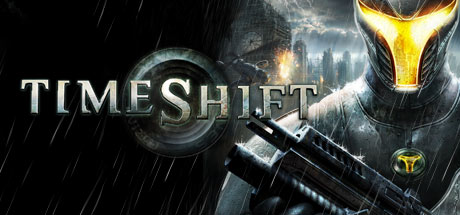
Then there’s TimeShift™, whose description names “a disturbing alternate reality” born from reckless time travel—exactly the kind of destabilizing beauty Kaguya embodies. She’s not just in Tsukuyomi; she is its instability—a celestial being coded into a platform built for idols, her very presence warping the rules of cause and effect. The player review calls it “a little 4 hour game is a blast, but it takes a little work to get it into a playable state”—and that’s Kaguya too: dazzling, demanding, requiring you to adjust your perception, to lean in and tune yourself to her frequency before the harmony resolves.
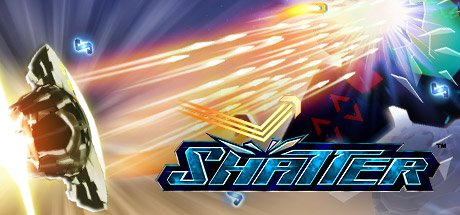
And Shatter, with its description linking “Music & Idol” and “Sci-Fi & Space”, lands with uncanny precision. It’s not about narrative—it’s about rhythm as physics, sound as force, bricks shattering on beat. Like Kaguya’s performances, where every note cracks open a new layer of Tsukuyomi’s code, where her voice isn’t just heard but propels the world forward. The player review says, “Like most great games, the concept is simple but mastering it is difficult. Also like most great games, it's fun even when you don't have it mastered…”—that’s the anime’s generosity: you don’t need to decode every mythic reference or VTuber metaphor to feel the joy in her spin-kick mid-chorus, the way her skirt flares like a supernova bloom.
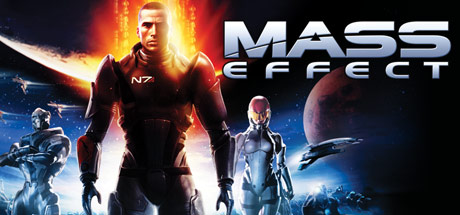
This pairing isn’t for fans of “idol shows” or “sci-fi shooters.” It’s for the person who rewatches the same three minutes of an anime just to catch how light bends off a character’s tear before it falls—or the one who plays Mass Effect (2007) not for the galaxy-hopping, but for how Shepard’s quiet pause before choosing a dialogue option feels heavier than any explosion. It’s for those who keep playlists titled “Songs That Feel Like Falling Into a Memory You’ve Never Had” and who know, deep in their marrow, that the most radical act of resistance in a digital age isn’t hacking servers—it’s singing true while your avatar flickers.
🎮20 Games That Match the Vibe




Match Dimensions Explained
❓Frequently Asked Questions
Why is BioShock Infinite on the 'Games Like Cosmic Princess Kaguya!' list when it's so violent and serious?
Great question—it’s because both hinge on *time, memory, and fractured identity* as emotional engines: Elizabeth’s tears in BioShock Infinite echo Kaguya’s time-looping isolation and cosmic sorrow, especially in scenes where she manipulates reality to protect Booker—much like Kaguya reshapes timelines to shield loved ones. The shared 'Time & Memory' dimension (and strong 'Sci-Fi & Space' overlap) makes their emotional stakes feel kin, even if the tone differs.
Is there an anime or manga adaptation of Cosmic Princess Kaguya that ties into these games?
No official anime or manga adaptation exists—but fans often draw parallels between Kaguya’s themes and *Mass Effect (2007)*’s romance system, where Shepard’s quiet, earned intimacy with Liara mirrors Kaguya’s tender, slow-burn shoujo moments (especially in the Normandy’s quiet cutscenes). That ‘Romance & Shoujo’ dimension is why Mass Effect (2007) made the list—not for lore, but for *how* it makes vulnerability feel cosmic and sacred.
How does TimeShift™ compare to BioShock Infinite for time-manipulation storytelling?
Both use time as both weapon and wound—but TimeShift™ leans into *physical consequence*: Dr. Krone’s time-jumps literally fracture his body and warp environments (like the collapsing lab sequence), while BioShock Infinite uses time more *philosophically*, with Elizabeth’s powers revealing branching realities tied to choice and guilt. They share the 'Time & Memory' dimension and 85 Metacritic score, but TimeShift™ is tighter, grittier, and more tactile in its time mechanics.
What’s the best game on this list if I want something dreamy, musical, and space-themed—but not heavy or violent?
Go straight to *Shatter*—it’s the perfect mood match. Its neon-lit, synth-scored space arena feels like floating through a glittering comet trail, and the rhythmic brick-breaking pulses like a heartbeat synced to J-pop idol energy. It nails the 'Music & Idol' + 'Sci-Fi & Space' dimensions without a single line of dialogue or combat stress—just pure, joyful, cosmic flow.