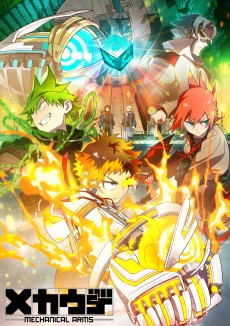
Mecha Ude: Mechanical Arms
New anime project for MECHA-UDE, as a full-fledged anime series.
Long ago, alien lifeforms came to Earth, fusing with people on the planet. Due to their appearance, they were dubbed "Mecha-ude," as when fused, they bore a striking resemblance to mechanized limbs.
Through an involuntary partnership, average middle schooler Hikaru Amatsuga works alongside the Mecha-ude Arma, who is an extremely rare and special existence. To protect Arma, the resistance group ARMS assigns the dual Mecha-ude user Aki Murasame to follow him wherever he goes. However, she is also looking for a mysterious Snake-Type Mecha-ude wielder, who has put many of her comrades in a critical state.
Behind the scenes, an organization known as the Kagami Group is searching for the mythical "Trigger Arm," a Mecha-ude said to grant unlimited power. When Aki's life is threatened by this group, Hikaru must team up with Arma to find the courage to fight back and, along the way, learn that his life will never be ordinary again.
(Source: MAL Rewrite)
📺Anime Details
📝Editorial Analysis
The hum of a motorcycle engine tearing through rain-slicked city streets—tires skidding, neon bleeding across wet asphalt—then the sudden, gut-punch crunch as Hikaru Amatsuga’s left arm transforms, not with fanfare, but with violent, involuntary lurching metal: hydraulics shrieking, plates locking, fingers reconfiguring into a railgun barrel mid-air. He doesn’t choose it. He stumbles into the shot, breath ragged, school uniform torn at the shoulder, eyes wide—not with triumph, but with dread that tastes like copper and ozone. That’s the first real beat of Mecha Ude: Mechanical Arms: not power fantasy, but bodily violation made visible, wrapped in the fluorescent glare of a Tokyo that never sleeps—and never forgives.

What makes this anime vibrate differently isn’t its mecha or aliens—it’s the weight of the involuntary. The Mecha-ude aren’t pilots; they’re fusions. Arma isn’t a weapon Hikaru wields—he’s a presence inside him, breathing in his ribs, speaking in static-laced whispers only Hikaru hears. The school setting isn’t comic relief—it’s suffocating contrast: chalk dust and algebra problems one moment, then the cold press of a gun barrel against his palm the next, issued by ARMS operatives who treat him less like a soldier and more like a containment risk. This isn’t about control—it’s about cohabitation under duress. You feel the claustrophobia of a body no longer fully your own, the exhaustion of lying to teachers while your arm pulses with alien biolight beneath your sleeve. It’s loneliness, not isolation—Hikaru is surrounded, watched, used—but fundamentally unwitnessed in what the fusion does to him, day after day.
That same frayed nerve runs straight into Tribes: Ascend. Its player review says: “Man, I used to love this game. Just mindless fun. All be it, it could have been expanded or had much added to it, sadly it had so much potential that…” — that sigh of unrealized scale, that ache for something larger than the skirmish you’re stuck in? That’s Hikaru’s heartbeat during every ARMS briefing. The game’s “Mecha & Military Sci-Fi” dimension mirrors the anime’s grounded tech—no godlike AIs, just armored infantry moving fast, hard, and imperfectly, their gear prone to overheating, misfiring, failing mid-leap. Like Hikaru’s arm, Tribes’ jetpacks don’t obey cleanly—they demand constant correction, constant restraint. Both make you feel the strain of systems pushing past their limits—not heroically, but wearily.
Then there’s Dystopia, where the description nails it: “a cyberpunk game with tense combat situations in a high-tech world spanned by computer networks.” And the player’s lament—“Not a bad mod, too bad the online is dead…”—echoes the anime’s buried tension: a resistance group (ARMS) operating in shadows, fighting not for victory, but survival in plain sight. No grand speeches, just encrypted comms, flickering terminals, and the quiet dread of being tracked—not by aliens, but by your own government. The “Cyberpunk & Dystopia” dim isn’t aesthetic here—it’s atmospheric pressure. Like Hikaru walking past surveillance drones disguised as streetlights, knowing Arma’s energy signature could ping at any second. Both exist in worlds where infrastructure is both shield and snare, where every interface hums with quiet betrayal.
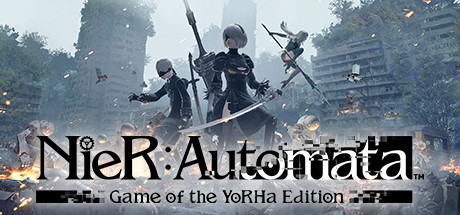
And NieR:Automata™, though its score is lower, lands with devastating precision: “We’re trapped in a never-ending spiral of life and death”. That line isn’t poetry—it’s diagnosis. Hikaru isn’t fighting aliens to save humanity. He’s protecting Arma from humanity. The anime’s core conflict isn’t good vs. evil—it’s recognition vs. erasure. When the description calls NieR a story of androids battling machines in a machine-driven dystopia, it mirrors how Mecha Ude: Mechanical Arms frames its aliens—not as invaders, but as forces reshaping biology itself, turning human limbs into weapons, identities into liabilities. The player review’s question—“If a being can feel pain, fear, or loneliness, does it matter if it’s artificial?”—is the exact tremor beneath every scene where Hikaru hesitates before letting Arma take over, wondering whose terror he’s really feeling.
This pairing isn’t for fans of clean power-ups or triumphant robo-battles. It’s for the ones who pause mid-fight scene to stare at the protagonist’s trembling hands—not from adrenaline, but from exhaustion. For players who replay the same Dystopia map not to win, but to listen to the distant sirens in the audio design. For readers who underline lines about fused flesh and ask, quietly: whose will is this, really? They’re the ones who’ll watch Hikaru adjust his school blazer over a mechanical joint, then boot up Tribes: Ascend, not to dominate—but to feel the weight of the gear, the grit in the gears, the beautiful, broken hum of something alive inside the machine.
🎮12 Games That Match the Vibe
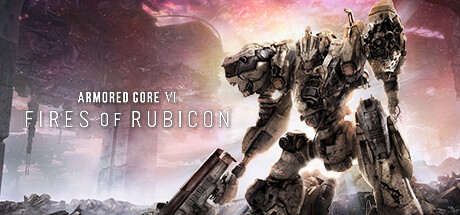
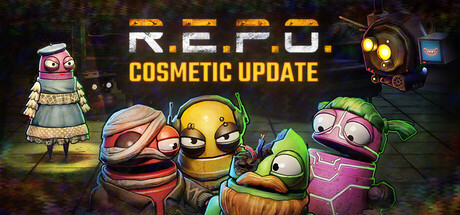
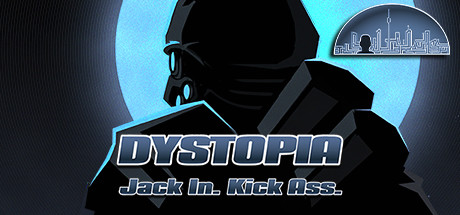

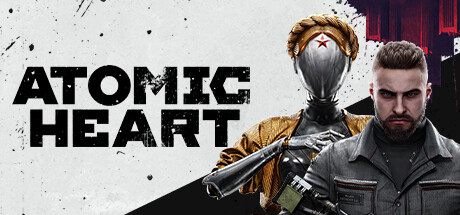

Match Dimensions Explained
❓Frequently Asked Questions
Why does Tribes: Ascend keep coming up in Mecha Ude comparisons when it’s mostly about skiing and shooting?
Great question—it’s the *mecha-adjacent military sci-fi vibe* that hooks people: think jetpacks, armored exo-suits (like the 'Marauder' class), and base-defense maps straight out of a mech warzone. Reviewers even call it 'mindless fun' with untapped potential for deeper mech integration—plus its 84-score and shared 'Mecha & Military Sci-Fi' dimension with Mecha Ude make it a legit stylistic cousin, even if you’re sliding down hills instead of piloting arms.
Is there a Dystopia movie or anime adaptation?
Nope—Dystopia is strictly a standalone cyberpunk mod (originally for Half-Life 2), and despite its rich lore about Punk mercenaries vs. Corporate security forces in a networked dystopia, there’s zero official film or anime. The player review sums it up: 'Not a bad mod, too bad the online is dead...'—so it lives on as a gritty, atmospheric PC experience, not an adapted storyworld.
How does NieR:Automata compare to Space Quest Collection for someone who loves absurd humor but also wants mecha action?
They’re total opposites in tone but share that 'Mecha & Military Sci-Fi + Cyberpunk & Dystopia' DNA. NieR:Automata delivers intense, emotional mecha combat with androids 2B and 9S fighting machines in ruined cities—deep, melancholic, and philosophical ('We’re trapped in a never-ending spiral...'). Space Quest, meanwhile, is pure chaotic satire: you can 'pretty much do anything', like sabotaging a spaceship with a rubber chicken while wearing a toaster helmet—zero gravity, all nonsense. So if you want *mecha with heart*, go NieR; if you want *mecha with a punchline*, Space Quest’s your jam.
What’s the best game like Mecha Ude if I’m in the mood for something bleak, atmospheric, and full of existential robot angst?
NieR:Automata™ is your absolute go-to—its 61-score doesn’t tell the full story, but the themes hit hard: androids 2B, 9S, and A2 grappling with identity, loss, and meaning in a machine-overrun dystopia. That haunting review quote—'If a being can feel pain, fear, or loneliness, does it matter if it’s artificial?'—captures the exact vibe. It’s the only match on the list where the *dystopia isn’t just backdrop—it’s the main character.*