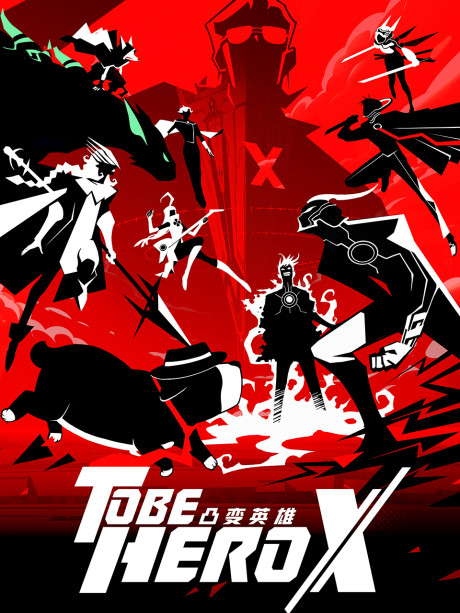
To Be Hero X
This is a world where heroes are created by people's trust, and the hero who gains the most trust is known as X. In this world, people's trust can be quantified through data, and these values are reflected on everyone's wrist. As long as one gains enough trust points, an ordinary person can possess superpowers and become a superhero who saves the world. However, the constantly changing trust values make the path of a hero full of uncertainties...
(Source: Official To Be Hero X home page)
📺Anime Details
📝Editorial Analysis
The flicker of a wrist-display—cold blue numbers spiking, then collapsing—right as a civilian stumbles mid-stride, limbs locking into impossible angles, veins pulsing with borrowed light. No scream. Just the quiet shink of a tendon snapping under sudden, unearned power. That’s the first breath of To Be Hero X: not triumph, but vertigo. Not a cape unfurling, but a body betraying itself because someone, somewhere, scrolled past a newsfeed and tapped “trust.”
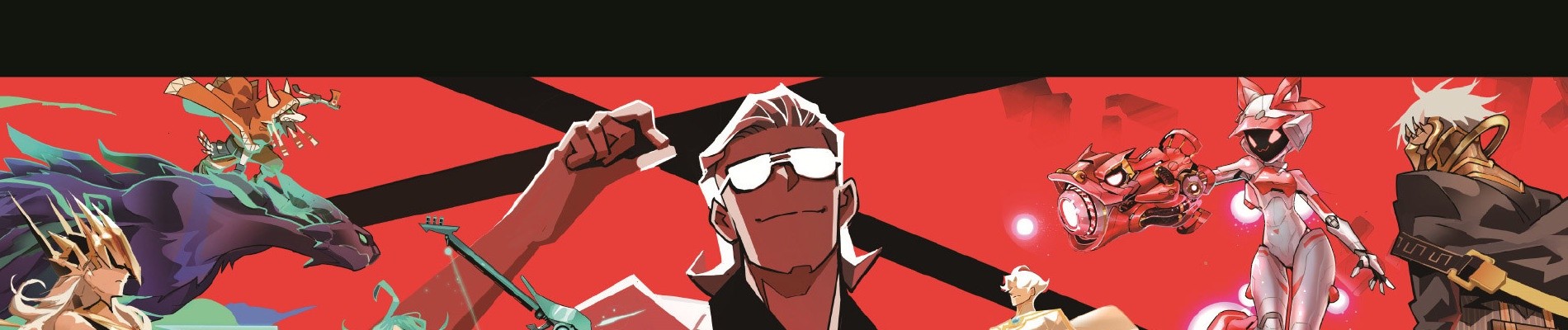
This isn’t dystopia as rubble or ruin—it’s dystopia as interface. The air hums with ambient data: trust scores glinting on glass facades, subway ads recalculating hero rankings in real time, children comparing wrist-glow like birthday candles. What makes To Be Hero X ache is its relentless intimacy with fragility—how easily belief becomes currency, how quickly validation curdles into obligation, how a single viral doubt can erase superhuman capability mid-leap. It doesn’t ask what if we had powers? It asks what if our worth were live-streamed, quantified, and revoked without warning? You don’t feel heroic watching it. You feel exposed. You catch yourself checking your own phone—not for messages, but for phantom numbers.
That same raw nerve vibrates in BioShock™, where Rapture’s gleaming art deco lies atop a rotting ideology: objectivism weaponized into genetic plasmids, where every power upgrade demands moral erosion, every choice echoes with audio diaries whispering “Would you kindly?” The player review nails it—“one of the most revolutionary games ever!”—not for its guns, but for how it makes agency feel like a trap disguised as freedom. Like To Be Hero X, it treats power as contingent, not earned—but granted, then revoked, then weaponized against you by the very system that promised salvation.
Then there’s Deus Ex: Game of the Year Edition, where 2052’s collapse isn’t backdrop—it’s architecture. The description’s chilling precision—“an ages old conspiracy bent on world dom[ination]”—mirrors To Be Hero X’s unseen architects: not mustache-twirling villains, but data brokers, media syndicates, and civic algorithms that treat public faith like quarterly earnings. The player review’s offhand brilliance—“gives you all options with one hit of the esc key”—isn’t just about UI elegance. It’s about illusion of control: you toggle between hacking, stealth, or combat, yet every path feeds back into the same oligarchic loop. Just like wrist-scores in To Be Hero X, your choices are tracked, weighted, and folded into the next trust algorithm—no matter how “free” they feel.
Even Unreal Tournament: Game of the Year Edition, at first glance pure spectacle, shares this DNA—not in narrative, but in physical dissonance. Its 1999-era chaos—“frag-or-be-fragged”, bodies rocket-jumping through neon-lit arenas—echoes To Be Hero X’s core tension: when superhuman movement isn’t graceful, but jarring, unstable, a glitch in human physics made visible. The player review’s wistful “Excellent classic game to remind you of the good’ole days…” lands differently here: it’s nostalgia for a time when power felt mechanical, not metaphysical—when breaking your own jump trajectory was a feature, not a tragedy. In To Be Hero X, every hero’s landing is slightly off-kilter. Every flight path wobbles. That’s not animation lag—it’s ontology.
This pairing isn’t for fans of clean origin stories or triumphant finales. It’s for the ones who pause mid-battle scene—not to admire the choreography, but to watch the sweat bead on a hero’s temple as their wrist-display dips below critical threshold. It’s for players who reload a save not to avoid death, but to rehearse doubt: What if I’d trusted less? What if I’d refused the upgrade? What if the system wasn’t broken—just working exactly as designed? They’re the ones who keep the volume low, not to hear dialogue better—but to catch the hum of servers in the background, the faint static beneath every cheer, the silence right before the numbers change. They don’t want heroes. They want witnesses. And both To Be Hero X and these games hand them a wrist-display, a plasma rifle, a hacked terminal—and say, Look closer. The miracle is also the mechanism. The trust is also the test.
🎮46 Games That Match the Vibe
















Match Dimensions Explained
❓Frequently Asked Questions
Why does To Be Hero X feel so much like BioShock when I'm exploring Rapture's flooded halls?
Because both lean hard into dystopian world-building with oppressive atmosphere and body horror—like BioShock’s Little Sisters harvesting ADAM while you navigate crumbling Art Deco corridors, or To Be Hero X’s grotesque biomechanical enemies in decaying urban zones. The political thriller layer also clicks: BioShock’s Andrew Ryan monologues mirror To Be Hero X’s morally ambiguous factions debating control vs. freedom.
Is there a To Be Hero X anime or movie adaptation in the works?
No official anime or film adaptation exists yet—unlike Deus Ex, which inspired multiple comic series and nearly got a Hollywood film (stalled after years of development). Fans keep hoping, especially since To Be Hero X’s cyberpunk & dystopia vibe and political thriller tension (think Deus Ex: Game of the Year Edition’s Illuminati conspiracy) feels *made* for serialized adaptation.
How is To Be Hero X different from Deus Ex: Invisible War in terms of player choice and tone?
To Be Hero X leans more into visceral action spectacle and body horror—like Tribes: Ascend’s high-speed jetpack combat or Unreal Tournament’s arena chaos—whereas Invisible War simplifies Deus Ex’s branching dialogue and stealth systems. Reviewers noted Invisible War ‘nothing compared to its predecessor,’ but To Be Hero X embraces that same cyberpunk & dystopia grit while adding faster pacing and more overt occult visuals, closer to BioShock’s unsettling aesthetic.
What’s the best game like To Be Hero X if I want that tense, paranoid political thriller vibe at 3 a.m.?
Deus Ex: Game of the Year Edition—hands down. It drops you into 2052’s fractured world with immediate agency (hit ESC and you’ve got all your augmentations, logs, and faction intel), just like To Be Hero X’s late-night surveillance missions and shadowy council meetings. Both share that ‘who’s really pulling the strings?’ dread, backed by real-world parallels and scores hovering around 80–84 in cyberpunk & dystopia depth.