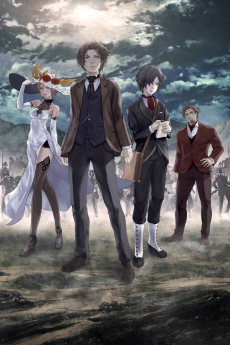
The Empire of Corpses
📺Anime Details
📝Editorial Analysis
The smell of rust and formaldehyde hangs thick in the air as John Watson steps into the London morgue—steam hissing from brass pipes overhead, a corpse’s hand twitching not from decay but command, its fingers curling around a brass key embedded in its palm. No music swells. No dramatic pause. Just the wet shick of a scalpel parting skin—and the quiet, horrifying realization that this isn’t resurrection. It’s reassignment. That moment isn’t horror for shock’s sake; it’s the first crack in certainty—the moment you feel your own agency thinning like fog over Thames mist.
What makes The Empire of Corpses ache so deeply isn’t its steampunk gears or zombie hordes—it’s the weight of intention. Every corpse is a vessel stripped of will but loaded with purpose: colonial ambition, scientific hubris, imperial logic made flesh and reanimated. You don’t fear the dead here—you fear how cleanly they obey. How elegantly their silence mirrors our own complicity. This is psychological tension forged in historical steel: not “what if the dead rose?” but “what if we chose to make them tools—and called it progress?” It leaves you hollowed out, not by gore, but by the stillness after revelation—the kind that settles in your ribs like cold lead.
That same hollowness pulses through BioShock™, where Rapture’s drowned Art Deco halls echo with recordings of men who built utopia on eugenics and objectivism—then watched it rot from the inside out. The game’s description calls it a shooter “loaded with weapons and tactics never seen,” but what lingers isn’t the plasmid fire—it’s Andrew Ryan’s voice collapsing under the weight of his own axiom: “A man chooses. A slave obeys.” Just like Watson staring at a corpse whose jaw has been wired shut to prevent speech, BioShock forces you to confront systems that pretend to liberate while engineering obedience. A player review calls it “one of the most revolutionary games ever!”—not for mechanics, but because it made ideology visceral, just as The Empire of Corpses makes colonial science tactile: brass, blood, and the unbearable lightness of surrendered conscience.
Then there’s Assassin's Creed™: Director's Cut Edition, where Altaïr walks Damascus not as a hero but as a blade calibrated by dogma. Its description frames it as “the next-gen game… that redefines the action genre”—but what sticks is the political thriller dimension buried in every rooftop leap: power isn’t seized; it’s inherited, ritualized, and recycled. Like Watson decoding Victorian autopsy reports only to find coded orders beneath the pathology notes, Altaïr deciphers mission briefings that conceal deeper hierarchies. A player admits the models are “quite dated,” yet shrugs—because the texture isn’t visual, it’s moral: the grit of sand under boot, the murmur of crowds chanting slogans they don’t understand. Both works treat history not as backdrop but as architecture—one built on corpses, the other on graves disguised as temples.
And REMNANT II®, tagged with Cyberpunk & Dystopia and Tactical Warfare, shares something quieter but sharper: the exhaustion of fighting a war whose rules were written before you were born. Its world is broken not by apocalypse but by accumulation—failed experiments, abandoned protocols, bodies repurposed until they forget their original function. Like Watson’s relentless trek across frozen Siberia, each fight in REMNANT II feels less like victory and more like delay—a tactical pause in an inevitable unraveling. There’s no grand finale waiting, just the next corrupted biome, the next hollowed-out comrade. That weariness—the kind that lives behind the eyes, not in the muscles—is the shared breath between these worlds.
This pairing isn’t for fans of zombies or steampunk as aesthetic. It’s for the reader who reads Marx alongside Mary Shelley, who pauses mid-battle in Assassin’s Creed to watch a merchant haggle over bread prices—not for lore, but because the economy of survival feels more urgent than any boss fight. It’s for players who replay BioShock’s final choice not to win, but to remember how quietly tyranny wears the face of reason. They’re drawn to stories where every gear turns against the soul—not because it’s dark, but because it’s honest. Where the real horror isn’t the corpse walking—but the living hand that wound its clockwork heart.
🎮52 Games That Match the Vibe



















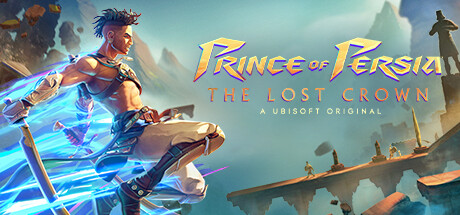

Match Dimensions Explained
❓Frequently Asked Questions
Why does The Empire of Corpses feel so much like BioShock even though it's not a shooter?
Because both lean hard into 'Political Thriller' and 'Adult & Dark Seinen' vibes—BioShock’s Rapture with its decaying ideology and audio logs mirrors Corpses’ morally bankrupt scientific elite and fragmented journal entries. You’ll recognize the same oppressive dread in BioShock’s Fort Frolic as in Corpses’ frozen Tokyo labs, especially when confronting twisted bio-engineered figures like Andrew Ryan’s splicers or Corpses’ reanimated 'Corpses'.
Is there an anime or manga adaptation of The Empire of Corpses that’s worth watching?
No official anime or manga adaptation exists—but if you loved the novel’s 'Dark Fantasy' + 'Tactical Warfare' tone, Kingdom Come: Deliverance II nails that grounded, morally grey historical grit with its peasant-turned-knight Henry navigating feudal power struggles, betrayal, and corpse-laden battlefields. It’s not sci-fi, but the same weighty political maneuvering and visceral combat make it the closest *spiritual* adaptation you’ll get.
How does Assassin's Creed compare to The Empire of Corpses in terms of stealth and espionage?
Both weaponize stealth as political sabotage—not just sneaking past guards, but infiltrating secret societies (Assassin's Creed’s Templars vs. Corpses’ Frankensteinian cabals). You’ll feel that same tense rooftop pacing in Assassin’s Creed’s Damascus, dodging patrols while eavesdropping on conspirators, just like Corpses’ protagonist tracking necromantic agents through fog-choked 19th-century London alleys using coded dispatches and hidden archives.
What’s the best game like The Empire of Corpses if I want melancholic exploration and eerie quiet instead of combat?
Go straight to Prince of Persia—it’s the only match with 'Melancholic Exploration' and 'Romance & Shoujo' dimensions, offering long, silent walks through crumbling Persian ruins, haunting flashbacks, and emotionally raw character moments (like the Prince’s grief-stricken journey across deserts and palaces). While Corpses is colder and more clinical, Prince of Persia delivers that same poetic stillness and sorrowful beauty—just swap reanimated corpses for sand-swept memories.