
Mobile Suit Gundam: The Origin - Advent of the Red Comet
What was the tragedy that decided the fates of Char Aznable, the man later nicknamed the "Red Comet" as an ace pilot of the Zeon forces, and his sister Sayla Mass?
The two siblings' journeys, brought on by the sudden death of their father Zeon Zum Deikun who was a leader of the Spacenoids, are depicted in the four episodes of "Chronicle of Char and Sayla."
The Zabi family who seize control of Side 3 and lead the Principality of Zeon, the early days of many renowned Zeon ace pilots who later fight in the One Year War, the secrets of mobile suit development, conflicts with the Earth Federation Forces, and the road leading to the outbreak of war—all will be revealed.
(Source: Official Website)
📺Anime Details
📝Editorial Analysis
The silence after the gunshot. Not the boom—the hollow, suffocating stillness that follows Zeon Zum Deikun’s assassination in Side 3’s dimly lit chamber, as Char and Sayla stand frozen not in shock but in the first, raw fracture of understanding: their father didn’t fall to accident or illness—he was erased, cleanly, politically, by the Zabi family who would soon declare war in his name. That silence isn’t empty. It’s thick with the weight of inheritance—of ideology stripped bare, of childhood dissolved into calculation, of a future already drafted in blood before either sibling can even grasp what loyalty means.
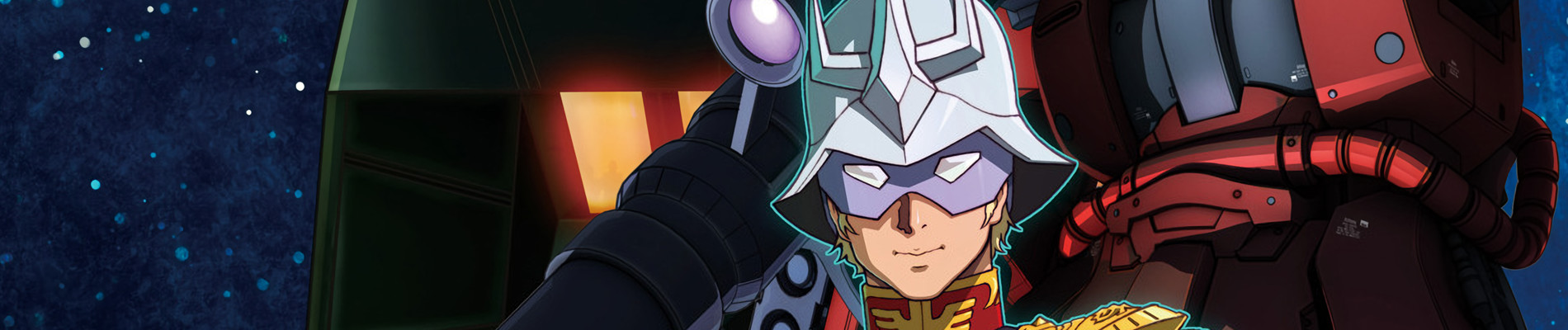
That’s the atmosphere of Mobile Suit Gundam: The Origin - Advent of the Red Comet: not spectacle, but gravity. It’s the slow burn of institutional betrayal, where every uniform button gleams with quiet menace and every orbital view of Side 3 feels less like a colony and more like a gilded cage tightening. This isn’t war as adrenaline—it’s war as consequence, as lineage curdled, as identity forged in the absence of truth. You don’t cheer for pilots—you witness them becoming instruments. You feel the coldness of ambition, the ache of displaced innocence, the weight of names—Deikun, Zabi, Aznable—carried like armor and shackles at once.
Which is why Tribes: Ascend resonates—not through narrative, but through motion under pressure. Its player review calls it “mindless fun,” but that’s surface noise; beneath lies a game built on momentum, precision, and consequence-laden movement across vast, hostile terrain—just like Char’s early flights in prototype Zaku IIs, where speed isn’t freedom, it’s evasion, survival, the only language left when words have been weaponized. The scale matters: open skies, long sightlines, the constant awareness of flank and fall. You don’t just shoot—you commit, and one miscalculation echoes. That same tension between control and collapse hums in every frame of Advent of the Red Comet’s CGI—aesthetic that trades flash for stark, deliberate geometry, where even a turning head carries the weight of a decision yet unmade.
Then there’s Mr. Robot, whose description places Asimov—a service mechanoid aboard the interstellar colony ship Eidolon—at the center of a malfunctioning AI brain and frozen human cargo. The player review notes its “retro” feel and “light Mega Man Battle Network type exploration.” But look closer: here’s another story about systems failing from within, about caretakers forced into rebellion not by rage, but by duty stripped of instruction. Like Char and Sayla, Asimov isn’t choosing sides—he’s navigating a broken architecture he was never meant to question. The loneliness of that role—the quiet dread of realizing your purpose has been overwritten—is the same hollowness you feel watching Sayla, years later, rehearsing her cover name in a mirror, voice steady, eyes wide with the exhaustion of performance. Both works treat identity as something assigned, then contested—not through grand speeches, but through small, repeated acts of resistance against an invisible design.
And Supreme Commander, with its thousand-year Infinite War and three irreconcilable factions declaring absolute truth, mirrors the anime’s political DNA down to the syllable. Its player review praises “the scale of the battles”—but more crucially, the ideological density: no faction is evil, no cause pure. Just competing absolutes grinding forward, each convinced their way is the only way. That’s the Zabi regime’s rhetoric, Deikun’s idealism, and Char’s simmering disillusionment—all coexisting in the same poisoned air. When the review says “there can be no room for compromise,” it’s not just lore—it’s the emotional logic of Advent of the Red Comet, where empathy is a tactical liability and mercy, a luxury the stars won’t allow.
This pairing speaks to the viewer who watches a funeral scene and hears the silence louder than the music—who plays a game not to win, but to feel the cost of the map, the weight of the roster, the echo in the loading screen. It’s for the ones who remember Char’s face the first time he sees his father’s portrait removed from the wall—not anger, not tears, but a slow, terrible stillness. They’ll recognize that same stillness in Asimov’s pause before overriding a protocol… in the breath before a Tribes jump jet ignites… in the moment a Supreme Commander commander orders a nuke not for victory, but because the system demands it. These aren’t stories about heroes. They’re about people learning, too late, that legacy isn’t inherited—it’s intercepted.
🎮6 Games That Match the Vibe
Match Dimensions Explained
❓Frequently Asked Questions
Why does Lost Planet: Extreme Condition keep coming up in Gundam: The Origin - Advent of the Red Comet recommendations?
Because both lean hard into desperate, large-scale military sci-fi with mecha-vs-alien (or mecha-vs-mecha) combat on hostile, atmospheric battlefields—think Char’s ambush at Loum reimagined as a snowbound Akrid assault near E.D.N. III’s frozen canyons. The tactical weight of piloting your VS (like the VS-1 'Grizzly') mirrors how The Origin emphasizes precise, high-stakes mobile suit duels with environmental stakes.
Is there a Gundam: The Origin mobile game or anime adaptation with gameplay similar to Mr. Robot?
No—but Mr. Robot (the game, not the show) scratches a surprisingly specific itch: it’s a retro-styled, story-driven mech adventure where you play Asimov, a service mechanoid aboard the colony ship Eidolon, solving puzzles and fighting in tight, Mega Man Battle Network–style battles. If you loved The Origin’s quiet, character-focused moments—like Sayla’s early scenes aboard the Pegasus—this delivers that same grounded, almost melancholic sci-fi intimacy, just without Zeon insignias.
Supreme Commander vs. Tribes: Ascend—which one feels more like piloting the Red Comet in a massive fleet battle?
Supreme Commander—hands down. While Tribes: Ascend is all about fast, fluid skiing-and-sniping in open arenas (fun, but no Char Aznable flair), Supreme Commander lets you command legions *and* personally pilot massive experimental units like the Cybran Monkeylord—imagine directing a full-scale Operation British-style assault from orbit, then dropping in as a solo ace to finish off the enemy commander. That scale, strategy, and spectacle is what fans of The Origin’s epic space engagements truly crave.
What’s the best game like Gundam: The Origin if I want that intense, brooding ‘Red Comet’ vibe—lonely, stylish, and tactically sharp?
Lost Planet™: Extreme Condition nails it. Playing as Wayne, you’re isolated on a frozen wasteland, piloting a battered VS unit against overwhelming odds—much like Char’s solitary, almost mythic presence in The Origin. The combat is deliberate, the stakes feel personal and physical (you’ll feel every hit when an Akrid swipes your cockpit), and the visual tone—bleak skies, flickering HUDs, scorched metal—is straight out of a Char vs. Amuro flashback scene.