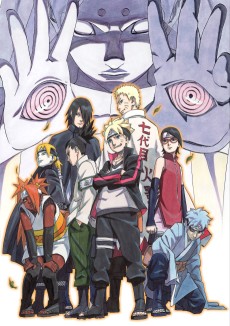
Boruto: Naruto the Movie
Boruto is the son of Naruto who completely rejects his father. Behind this, he has feelings of wanting to surpass Naruto, who is respected as a hero. He ends up meeting his father's friend Sasuke, and requests to become... his apprentice!? The curtain rises on the story of the new generation written by Masashi Kishimoto!
(Source: Anime News Network)
📺Anime Details
📝Editorial Analysis
The first time Boruto kicks the training post—hard enough that splinters fly and his knuckles split—you feel it in your own palms. Not the pain, but the frustration, raw and unfiltered, vibrating off the screen like heat haze off asphalt. He’s twelve, standing alone in Konoha’s dappled afternoon light, breath ragged, eyes locked on the Hokage Monument where his father’s face is carved into the mountain. That monument isn’t just stone—it’s a verdict. A promise he didn’t ask for. A legacy he can’t escape, even as he tries to punch through it.
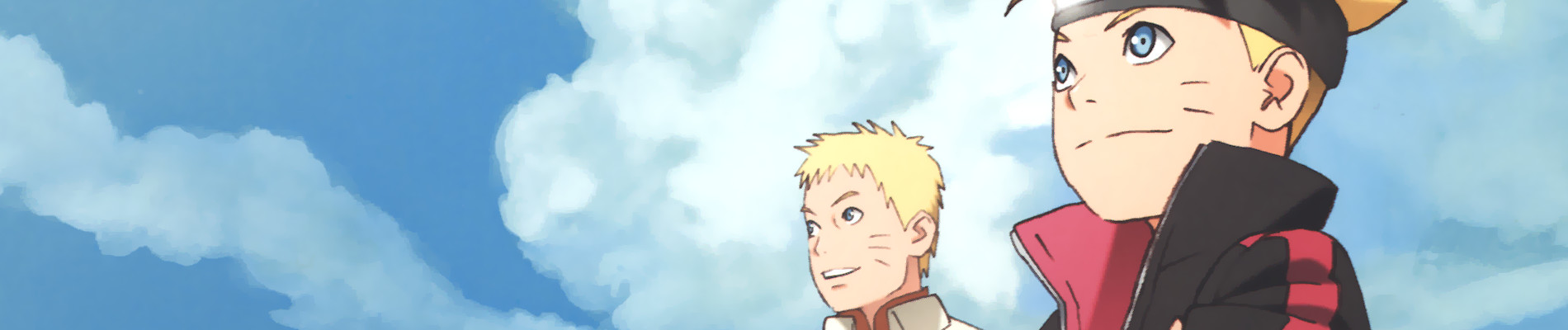
What makes Boruto: Naruto the Movie ache so deeply isn’t its kaiju or aliens—it’s the quiet, suffocating weight of expectation worn by a child who’s already been written into history before he’s learned how to tie his sandals properly. This isn’t shōnen about rising from nothing; it’s about rising from under someone else’s shadow, and doing it while everyone—including your own father—still sees you as an extension of them. The comedy lands because it’s brittle, nervous laughter. The action feels urgent not because the stakes are galactic, but because every punch Boruto throws is also a question: If I’m not him, then who am I? It’s lonely. It’s tender. It’s fiercely protective of its own vulnerability—even when it masks that with sarcasm or a smirk.
That same emotional DNA pulses in Quake III Arena, where warriors are “summoned to battle for the amusement of an ancient alien race.” There’s no origin story, no exposition—just bodies hurled into arenas built by forces that don’t care about names or lineage. Like Boruto stepping into Sasuke’s orbit—not as a son of the Hokage, but as a kid who chose a different teacher—the game strips identity down to motion, reflex, consequence. And the player review nails it: “There are still internet mp game servers out there…” That stubborn, flickering continuity—players showing up, decades later, to test themselves in the same stark, unforgiving geometry—is kin to Boruto returning, again and again, to that training post. Neither asks for permission to exist. They just do.
Then there’s DOOM + DOOM II, where the player review recalls building a 486 computer with their dad—a tactile, generational act of shared labor and wonder. That memory isn’t about graphics or lore. It’s about presence: two people side-by-side, wires humming, sound card crackling, co-creating something volatile and alive. Boruto doesn’t want to inherit Naruto’s title—he wants to stand next to him, not beneath him. The movie’s climax isn’t victory over an alien god—it’s Boruto catching his father mid-fall, arms straining, body trembling, holding him up for the first time. That moment echoes the DOOM review’s warmth: not conquest, but connection forged in shared intensity, across time, across hardware, across generations.
And STAR WARS™ Jedi Knight - Jedi Academy™, where you “take on the role of a new student eager to learn the ways”—not of a chosen one, not of destiny’s heir, but of someone starting. The description doesn’t say “destined to save the galaxy.” It says student. Like Boruto, kneeling before Sasuke not for power, but for precision. For discipline. For something earned, not inherited. The player review hints at it too: “a Padawan… thrust into a Galaxy-spanning adventure to hel…”—that trailing “hel” feels like unfinished breath, like Boruto’s voice cracking mid-sentence when he finally says, “I want to be your apprentice.” Both are stories about learning how to hold a weapon—and yourself—without breaking.
This pairing sings loudest for the viewer who keeps rewatching the scene where Boruto watches Naruto sleep—really watches him—not with anger, but with exhausted, aching curiosity. For the player who still boots up Quake III not for nostalgia, but because the rhythm of movement in that arena feels like breathing again. For anyone who’s ever stood in front of a monument—real or imagined—and whispered, I’m here too. Not instead of. Not after. But here.
🎮22 Games That Match the Vibe



Match Dimensions Explained
❓Frequently Asked Questions
Why does Quake III Arena feel so similar to the Chunin Exams fight scenes in Boruto: Naruto the Movie?
Because both rely on high-speed, arena-based 1v1 combat where movement, timing, and spatial awareness trump raw power—just like Boruto vs. Momoshiki’s lightning-fast exchanges. Quake III Arena’s strafe-jumping, rocket-jump combos, and instant-hit weapons (like the railgun) mirror that same kinetic, no-holds-barred spectacle you see in the movie’s climax.
Is there a Boruto: Naruto the Movie game adaptation?
No—there’s never been an official game adaptation of *Boruto: Naruto the Movie*. But if you love its tone and pacing, games like *STAR WARS™ Jedi Knight - Jedi Academy™* hit that same emotional beat: playing as a young, determined student (your custom Padawan) thrust into galaxy-shaking stakes, learning powerful abilities mid-crisis—just like Boruto mastering the Karma seal under pressure.
How does Blade Kitten compare to Unreal Tournament 3 for fast-paced sci-fi action?
Blade Kitten is tighter, more agile, and story-driven—think Kit Ballard dashing across Hollow Wish’s neon-lit rooftops with grappling hooks and energy whips—while UT3 leans into chaotic, large-map team battles with Titans and vehicle spawns. If you want Boruto-style solo hero momentum with personality and precision, go Blade Kitten; if you crave massive, unpredictable multiplayer mayhem like the Nine-Tails’ rampage scaled up, UT3 delivers (despite its dated visuals).
What’s the best game like Boruto: Naruto the Movie if I’m craving that ‘underdog student rising up’ vibe?
STAR WARS™ Jedi Knight - Jedi Academy™ is your perfect match—you build your own Padawan from scratch, choose lightsaber stances and Force powers, and grow into a decisive hero during a collapsing galaxy. It nails the emotional arc: early missions feel scrappy and uncertain (like Boruto’s first real battle), then escalate into confident, cinematic confrontations—exactly how the movie makes you *feel* when he finally lands that Rasengan-enhanced punch.