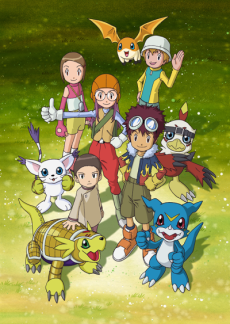
Digimon: Digital Monsters 02
📺Anime Details
📝Editorial Analysis
The rain in Odaiba never feels like weather—it feels like static. Not the kind that crackles on a TV screen, but the low, humming hum of a server rack overheating in a basement full of forgotten code. You see it in the opening shot of Digimon: Digital Monsters 02: Ken Ichijoji standing alone on the wet concrete of a bridge at night, his glasses reflecting fractured city lights and the faint, pulsing blue glow of a Digivice—not the warm gold of the original DigiDestined, but something colder, sharper, calculated. His Digimon isn’t beside him yet. It’s in the system, waiting. And you feel the weight—not of childhood adventure, but of consequence already accrued.
That’s what makes Digimon: Digital Monsters 02 vibrate differently: it doesn’t ask if the world is real—it asks whose memory built it. This isn’t nostalgia dressed as prophecy; it’s trauma wearing a school uniform. The Digital World isn’t just a parallel realm—it’s a mirror with latency, warped by human choices, AI agency, and the quiet horror of realizing your own digital footprint could become someone else’s weapon. The kaiju-scale battles aren’t spectacle for spectacle’s sake—they’re proxy wars fought in the cracks between worlds, where every evolution carries the residue of guilt, betrayal, or erased identity. You don’t just grow up here—you reconcile. With time you lost, trust you broke, and versions of yourself you tried to delete.
Which is why BioShock Infinite, with its dimensions of Time & Memory and Cyberpunk & Dystopia, lands with such eerie precision. Its description calls Booker DeWitt “indebted to the wrong people, with his life on the line”—a phrase that echoes Ken’s arc not as villainy, but as debt: debt to control, to perfection, to the illusion that erasing data erases pain. The player review admits “some people are still bitter about the Bioshock Infinite we could have gotten”—and that tension, that gap between intended self and actual history, is the very air Digimon: Digital Monsters 02 breathes. When Ken stares into a corrupted Digivice, he’s not holding a tool—he’s holding a ledger.
Then there’s TimeShift™, whose description drops Dr. Aiden Krone into “a disturbing alternate reality” after a reckless Time Jump across the space-time continuum. That phrase—disturbing alternate reality—isn’t sci-fi window dressing here. It’s the emotional architecture of Ken’s Dark Spire, the twisted Tokyo where Digimon evolve not from bond, but from forced compliance; where the Digital World isn’t discovered—it’s overwritten. The player review calls it “a blast, but it takes a little work to get it into a playable state”—a perfect metaphor for Ken’s arc: brilliant, unstable, requiring constant patching just to function. Both demand you navigate systems you helped break, while remembering who you were before the jump.
And the Prince of Persia trilogy—each scoring 84, each anchored in Time & Memory and Action Spectacle—doesn’t just share mechanics; it shares rhythm. The Sands of Time’s dagger isn’t a weapon—it’s a correction tool, just like Ken’s Digivice rewind. Warrior Within’s Dahaka isn’t chasing the Prince—it’s chasing consequence, an immortal embodiment of what happens when time isn’t respected. The player review says “Dahaka chase is still as goated as it was before”—and yes, because it feels inevitable, like Ken’s descent into the Digimon Emperor persona: not evil born, but unspooled, moment by irreversible moment. The Two Thrones’ Prince returns home only to find “his homeland ravaged by war”—a mirror of Tai and Matt returning to a Tokyo under siege not by monsters, but by algorithms they once trusted.
This pairing isn’t for fans of “kids with pets in another world.” It’s for the ones who remember staring at their own reflection in a laptop screen at midnight, wondering if the version of themselves typing that message was the real one—or just the most recent cache. It’s for players who replay Warrior Within not for the swordplay, but to feel that chase again—the one where the monster isn’t behind you, but inside the timeline you made. It’s for viewers who watch Ken remove his glasses—not to wipe tears, but to reset focus, recalibrating his vision between two worlds that refuse to stay separate. They love the weight of choice, the ache of memory, and the quiet, electric dread that comes right before the system reboots—and you realize, heart pounding, that you are part of the code.
🎮56 Games That Match the Vibe









Match Dimensions Explained
❓Frequently Asked Questions
Why does Prince of Persia: The Sands of Time feel like the closest match to Digimon: Digital Monsters 02’s time-bending urgency?
Because both hinge on *real-time consequence*: in Sands of Time, you rewind seconds mid-combat or platforming—just like Tai and Kari frantically rewinding digital time glitches during the DigiDestined’s battle against MaloMyotismon’s collapsing DigiWorld. That same tactile, high-stakes time manipulation shows up in Warrior Within too (Dahaka’s chase sequences force split-second rewinds), but Sands of Time nails the youthful, reactive energy of Digimon 02’s ‘Digital Hazard’ moments.
Is there a Digimon: Digital Monsters 02 anime adaptation with game tie-ins?
No—there’s no official anime-to-game adaptation for Digimon 02 beyond the original GBA title. But if you’re craving that same blend of time-warping stakes and emotional urgency, Prince of Persia: The Two Thrones delivers it hard: the Prince’s split personality mechanic mirrors Ken’s internal conflict with the Dark Digimon, and Kaileena’s tragic arc echoes Hikari’s near-corruption by the Dark Spore—both grounded in time-twisted consequences, not just flashy powers.
How does TimeShift™ compare to Digimon 02’s ‘time freeze’ battle scenes?
TimeShift™ is basically Digimon 02’s ‘freeze-frame’ Digi-Modify moments cranked to 11—Dr. Krone doesn’t just pause time; he *slices* it, freezing enemies mid-leap while he repositions, then resumes like hitting ‘Rewind’ on a corrupted memory file. It’s way more cyberpunk and less character-driven than Digimon 02, but that visceral, tactical stop-and-shoot rhythm? Pure Takato’s ‘Gallantmon Crimson Mode’ activation vibe—mechanically tight, visually jarring, and deeply satisfying when pulled off.
What’s the best game like Digimon 02 if I want that mix of nostalgic hope and creeping dread?
BioShock Infinite—seriously. Booker’s guilt-ridden journey through Columbia’s fractured timelines mirrors the emotional whiplash of Digimon 02’s second half: one minute you’re cheering on Davis’s goofy charm and Veemon’s evolution, the next you’re staring down the abyss of the Digimon Emperor’s trauma and the Digital World’s decay. Elizabeth’s ability to open tears in reality feels like watching the DigiWorld glitch under Apocalymon’s influence—hope and horror sharing the same pixelated breath.