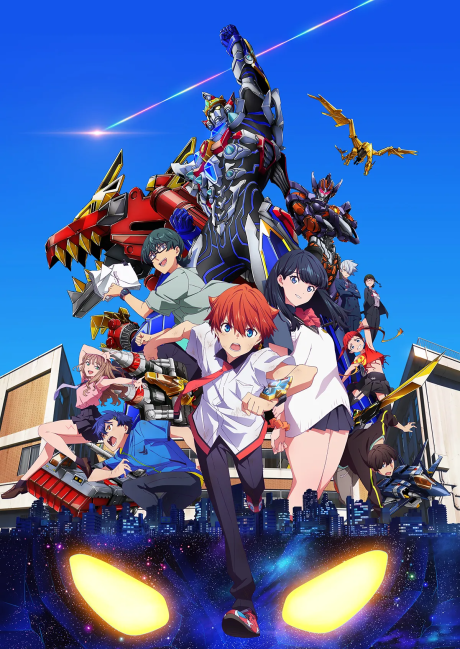
Gridman Universe
Theatrical follow-up to SSSS.GRIDMAN and SSSS.DYNAZENON.
A year has passed since the events of SSSS.GRIDMAN. The world is at peace and no one except for Rikka and Utsumi remembers the kaiju, Gridman, or Akane Shinjou. This includes Yuuta, who despite serving as Gridman's host, has no memory of the most important moments of his life. So when a new Kaiju appears, he leaps at the chance to prove to himself that he too can be the hero by merging with Gridman once more.
(Source: Anime News Network)
📺Anime Details
📝Editorial Analysis
The flicker of a CRT monitor in Rikka’s dim apartment—green static bleeding at the edges, the low hum of a forgotten tower PC, the faint scent of dust and old plastic. Yuuta stares at his reflection in the black screen, fingers hovering over the keyboard, waiting for something to happen. Not a kaiju. Not Gridman. Just proof that he was ever real inside that light. A year later, and his own hands feel like borrowed things.
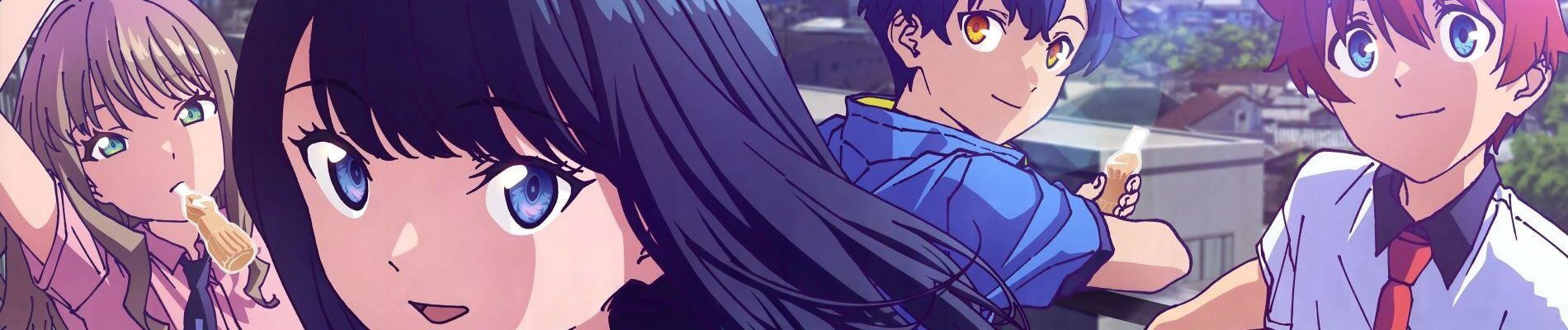
That’s the ache Gridman Universe lives inside: not the roar of mecha combat or the flash of henshin, but the quiet horror of amnesia as erasure. It’s not just memory loss—it’s the world smoothing over trauma like wet concrete, leaving only cracks you’re not allowed to name. The urban sprawl isn’t backdrop; it’s architecture of forgetting—concrete overpasses, empty convenience store lots at 3 a.m., vending machines glowing like lonely altars. This isn’t sci-fi as spectacle. It’s sci-fi as sensory archaeology: every pixelated glitch, every distorted radio broadcast, every half-remembered melody on Utsumi’s synth feels like digging through your own buried nervous system. You don’t watch it—you recoil, then lean in, because the dissonance is familiar. It makes you wonder what parts of yourself you’ve already deleted—and whether love, loyalty, or even grief can survive being unmoored from proof.
That emotional DNA pulses strongest in games where identity is unstable, spectacle is haunted, and action doesn’t erase meaning—it exposes it. Tribes: Ascend, with its “mindless fun” and “so much potential that…”—that trailing ellipsis? That’s Yuuta mid-leap into Gridman’s interface, heart hammering, convinced this time he’ll hold on. The game’s “Action Spectacle” isn’t just speed and rockets—it’s the vertigo of momentum without origin, of flying across vast maps while your own class history blurs into white noise. You’re not building a loadout—you’re assembling a self from scrap parts, praying the engine holds.
Then there’s Space Quest™ Collection, where players loved how they could “pretty much do anything… weather or not there were consequences.” That chaotic freedom mirrors Rikka’s analog logic—her notebooks full of half-sketched kaiju schematics and sticky notes reading “if Gridman remembers, does Yuuta get to?” The game’s “Comedy & Parody” isn’t just jokes—it’s tonal whiplash as survival tactic, same as when Gridman Universe cuts from a tender rooftop confession to a kaiju’s foot slamming down in stop-motion grain. Both treat narrative consequence like a rumor—something you test, break, reboot, and laugh at until it starts feeling true.
And NieR:Automata™, where the review whispers: “If a being can feel pain, fear, or loneliness, does it matter if it’s artificial?” That line doesn’t describe androids. It describes Yuuta, staring at his own hands. The anime’s “Coming of Age” isn’t about growing up—it’s about reclaiming personhood after your defining experience has been redacted. Like 2B wiping her own memory logs, Yuuta fights not just kaiju, but the unbearable lightness of being unremembered. The “JRPG Narrative” dimension isn’t about branching paths—it’s about circling the same wound until the scar tissue finally lets light through.
You’d love these pairings if you’ve ever reinstalled a game just to hear its menu music again—not for nostalgia, but because that sound still knows you. If you keep old notebooks full of ideas you never finished, not because they failed, but because they felt too close to something you weren’t ready to name. If you pause anime mid-scene—not to analyze symbolism, but to catch your breath when a character says something so quiet it vibrates in your molars. These aren’t stories about saving the world. They’re about the stubborn, glitchy, radiant refusal to let your own story be overwritten—even when the evidence says it already has. Even when the only proof left is the tremor in your hands as you reach for the controller, the keyboard, the phone, the person beside you—and press start anyway.
🎮50 Games That Match the Vibe
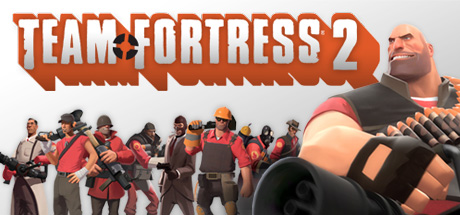


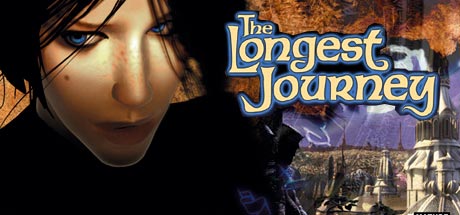
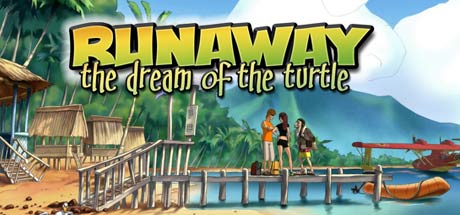
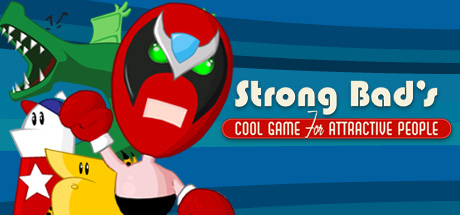
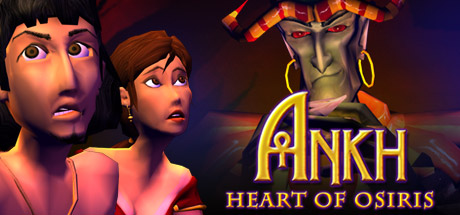
Match Dimensions Explained
❓Frequently Asked Questions
Why does Tribes: Ascend keep coming up in 'Games Like Gridman Universe' lists?
Because both lean hard into over-the-top mecha & military sci-fi action spectacle — think Gridman’s city-sized kaiju battles and Tribes’ jetpack-fueled, gravity-defying combat across massive maps. The weapon DLC expansions and chaotic, high-speed movement (like skiing down hills while firing railguns) mirror Gridman’s kinetic, physics-bending energy.
Is there an anime or live-action adaptation of Space Quest that captures Gridman Universe’s parody vibe?
No official anime or live-action Space Quest adaptation exists — it’s stayed firmly a retro PC adventure series. But the *tone* is spot-on: just like Gridman Universe flips tokusatsu tropes with self-aware humor, Space Quest mocks sci-fi clichés with absurd choices (like using a rubber chicken with a pulley in the middle) and zero consequences for going off-script.
How does Team Fortress 2 compare to NieR:Automata as a Gridman Universe alternative?
TF2 swaps NieR’s melancholic JRPG narrative and existential android drama (2B’s quiet stoicism, 9S’s unraveling psyche) for pure comedic chaos — nine wildly distinct classes (like the pyro’s flamethrower-wielding lunacy or the heavy’s minigun monologues) and hats instead of philosophical machine wars. Both deliver mecha-adjacent military sci-fi, but TF2 is Saturday-morning cartoon energy; NieR is late-night rain-soaked philosophy.
What’s the best Gridman Universe-like game if I want something funny but still action-packed?
Team Fortress 2 — hands down. Its comedy isn’t just in voice lines (‘Medic, I need healing!’ → ‘I’m not your mother!’), but baked into every class’s design and the sheer absurdity of a sentry gun duel escalating into a three-way rocket-jump melee. It matches Gridman’s balance of spectacle and satire, unlike Loki’s glitchy Diablo clone vibe or Tribes’ more serious (if fun) military pacing.