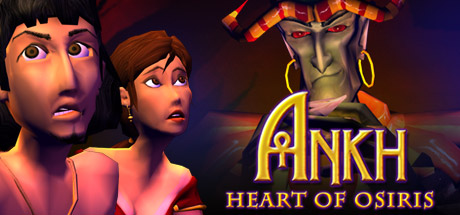
Ankh 2: Heart of Osiris
<p>This time he will not fail. This time Osiris will show the world of humans what he's made of. But the ankh alone is not enough - not as long as he hasn't found the most important part of his body: his heart.</p> <p>Life has not been kind to Assil. Only three weeks ago he managed to ward off his death curse.
🎮Game Details
💬What Players Say
"A Fun Adventure Objective Review 6 of 5 must play. 5 of 5 great story great game-play. 4 of 5 great story average game-play...."
📝Editorial Analysis
The air in the tomb is thick—not with dust, but with urgency. Not the slow, solemn weight of ancient burial rites, but the sharp, breathless pulse of a man who’s already failed once: “This time he will not fail.” That line isn’t a boast. It’s a vow scraped raw from Assil’s ribs—three weeks ago he managed something, but what? The description cuts off mid-thought, leaving only the hollow echo of near-success and the unbearable lightness of an absent heart. You feel it in your own chest: that gap between intention and wholeness, between memory and meaning. A player calls it “a Fun Adventure”—but the score breakdown tells the real story: 5/5 for great story, 4/5 for average gameplay. What lingers isn’t the puzzle solution or the platforming rhythm—it’s the quiet dread beneath Osiris’ resolve, the way his mythic stature bends under the weight of human fragility.

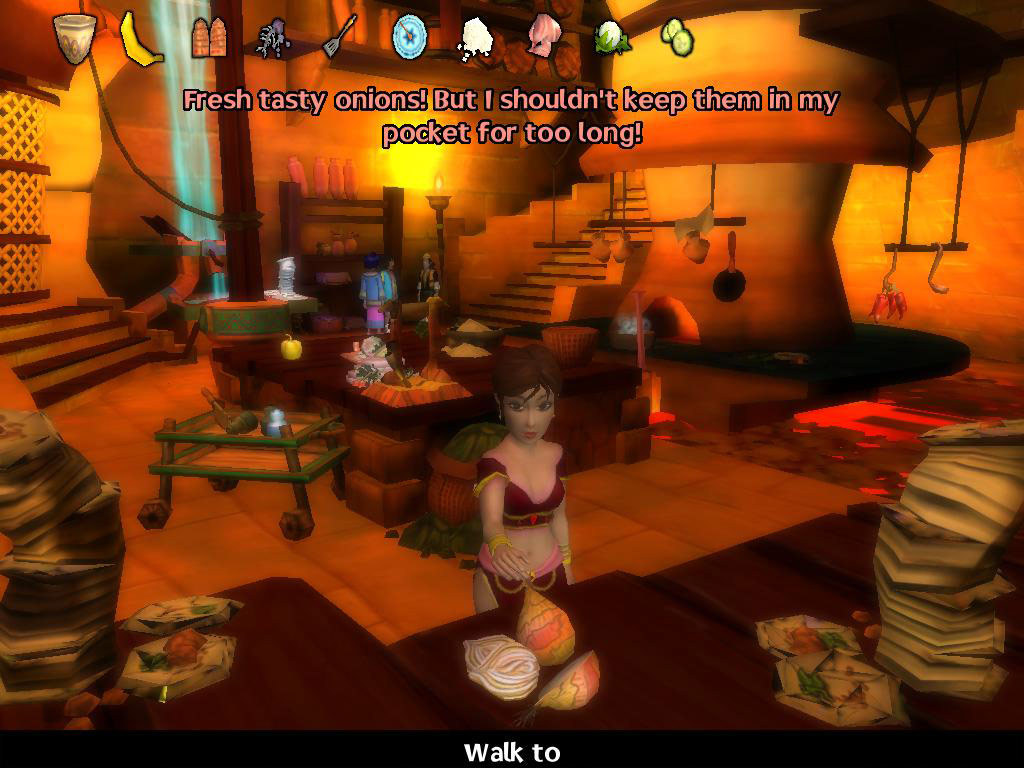
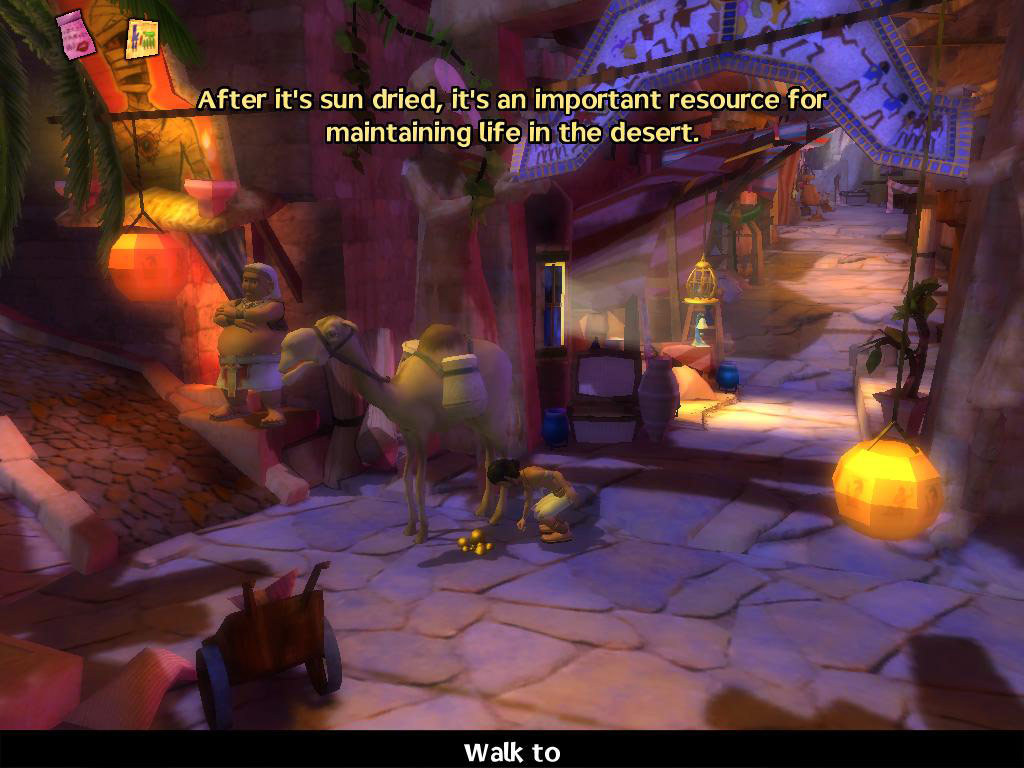
What makes Ankh 2: Heart of Osiris vibrate at this particular frequency isn’t its Egyptian setting or point-and-click scaffolding—it’s the tonal tightrope it walks between cosmic consequence and intimate absurdity. Osiris isn’t just retrieving a relic; he’s hunting his heart, the literal core of his identity, while Assil stumbles through consequences he barely grasps. There’s no grand orchestral swell when the ankh glints—just the dry click of inventory, the muffled thud of a misstep, the faint, almost embarrassed cough of a god trying to reassemble himself in plain sight. It’s funny because it’s so desperately serious—and serious because the stakes (a missing heart, a botched resurrection, three weeks of unresolved aftermath) land with the emotional precision of a misplaced syllable in a love letter. You don’t feel like a hero. You feel like someone holding a sacred object while tripping over their own sandals—awkward, tender, insistently alive.
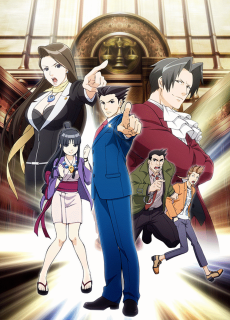
That exact blend—the detective’s logic bumping up against the parody’s pratfall, the mystery unraveling not in shadows but in misunderstandings—is why The World God Only Knows II resonates so deeply. Its protagonist Keima Katsuragi solves emotional puzzles like cold cases, dissecting girls’ inner worlds with clinical detachment—yet every breakthrough arrives wrapped in slapstick timing and fourth-wall-breaking exasperation. Like Assil navigating divine bureaucracy with mortal hangups, Keima’s genius is perpetually undermined by his own humanity, making revelation feel warm, not clinical. Then there’s Hentai Prince & the Stony Cat, where a boy literally swaps personalities to cope with grief—and does so while hiding behind manga tropes, turning trauma into farce so precise it aches. The shared dimension isn’t just Comedy & Parody + Mystery & Detective: it’s how both use those tools to probe absence—Assil’s unresolved past, Keima’s buried empathy, Yuu’s vanished sister—without ever letting the sadness calcify into melodrama. Even Ranma1/2 (2024) fits: not as nostalgia, but as structural kinship—the curse isn’t just plot device; it’s a walking metaphor for fractured identity, solved not with power-ups but with escalating social chaos, where every punchline lands because the underlying vulnerability is real.
This is for the person who laughs just before they catch their breath—not because something’s silly, but because the sheer, ridiculous effort of staying whole in a world that keeps misplacing your parts is the funniest, truest thing going. It’s for the reader who underlines lines in light novels not for romance, but for the way a character pauses mid-rant to tie their shoelace—that split-second grounding in the mundane. It’s for the player who reloads a save not to win, but to hear Assil mutter one more time about the weather while clutching a half-remembered dream of Osiris’ voice. They don’t want myth made easy. They want it stuttering, self-aware, aching with the weight of its own second chance. And when the ankh glows—not gold, but warm, uneven, slightly crooked—they’ll know exactly why.
→23 Anime That Match the Vibe
Connected through 2 aesthetic dimensions.
Connected through 2 aesthetic dimensions.
Connected through 2 aesthetic dimensions.
Connected through 2 aesthetic dimensions.
Connected through 2 aesthetic dimensions.

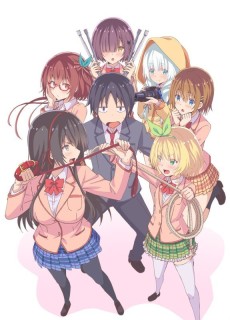
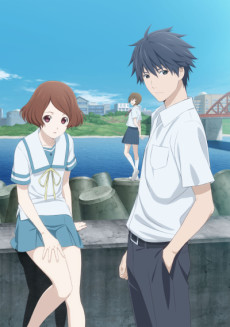
Osiris’s desperate, over-the-top quest for the “most important part” of himself mirrors Youto’s frantic shrine visits to the Stony Cat—both hinge on absurdly literal wish logic. Where the game parodies Egyptian myth with slapstick detective work, the anime twists supernatural romance into a comedy of miscommunication, each using 🔍 Mystery & Detective framing to expose how desire distorts perception. That shared tonal whiplash—between grandiose stakes and bedroom-door-slamming farce—makes their resonance unexpectedly sharp, not silly.
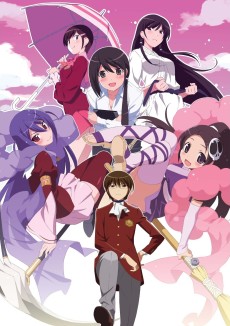
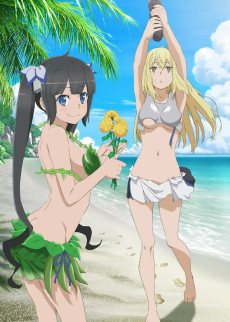
Osiris’s desperate, ankh-clutching quest for wholeness mirrors Katsuragi’s Season 2 scramble to reconcile divine logic with messy human emotion—especially when Haqua’s dry skepticism punctures his overconfidence. Where *Ankh 2* parodies Egyptian myth through slapstick archaeology, *The World God Only Knows II* weaponizes romantic detective work as supernatural farce—both hinge on **Comedy & Parody** to undercut their own mythic stakes. That shared tonal tightrope—sacred lore treated like a malfunctioning dating sim—is unexpectedly brilliant.
Connected through 2 aesthetic dimensions.

Osiris’s frantic, ankh-clutching sprint through a collapsing temple—where hieroglyphs blink like punchline captions—mirrors Ranma’s mid-air flip away from Akane’s mallet, each gag rooted in physical comedy that weaponizes cultural iconography. 😂 Where *Ankh 2* parodies Egyptian myth with slapstick archaeology, the 2024 *Ranma 1/2* reboot sharpens its satire through modernized timing and meta-awareness of its own tropes—like Ranma’s cursed gender-flip treated as both plot engine and running gag. Their shared genius lies in how mystery isn’t about solving secrets, but sustaining absurdity just long enough for the next perfectly timed stumble.

Connected through 2 aesthetic dimensions.





Match Dimensions Explained
❓Frequently Asked Questions
Why is The World God Only Knows II recommended for fans of Ankh 2: Heart of Osiris?
Because both lean hard into clever, puzzle-box storytelling where the protagonist (Keima Katsuragi) solves 'mysteries'—like cracking open a girl’s emotional defenses—using logic and pop-culture knowledge, just like Osiris decoding ancient Egyptian symbolism to recover his heart. You’ll recognize that same sharp, self-aware tone in scenes where Keima monologues about 'conquest parameters' while dodging tsundere ambushes—very much in the spirit of Assil’s wry narration amid divine chaos.
Is there an anime adaptation of Ankh 2: Heart of Osiris?
No—Ankh 2 is a visual novel/adventure game with no anime adaptation (and none announced). But if you love its blend of dry Egyptian myth parody and detective-style clue-hunting, Sailor Moon hits that sweet spot: Usagi solving magical mysteries while juggling absurd transformations and heartfelt stakes—just like Osiris navigating sarcophagus riddles and emotional revelations in the Duat.
How does Hentai Prince & the Stony Cat compare to Ankh 2 in terms of tone and structure?
Both use comedy-as-armor: Yūto’s ‘pervert persona’ mirrors Assil’s sarcastic narration as coping mechanisms, and their plots hinge on uncovering hidden truths—Yūto deciphers why girls act strangely (often tied to supernatural contracts), while Osiris reconstructs fragmented memories and heart-based lore. That scene where Yūto confronts the Stony Cat shrine’s paradox? It’s got the same low-stakes-but-high-emotion vibe as Osiris piecing together hieroglyphic clues in the Hall of Two Truths.
What’s the best anime like Ankh 2 if I want something witty, lightly supernatural, and full of playful mystery-solving?
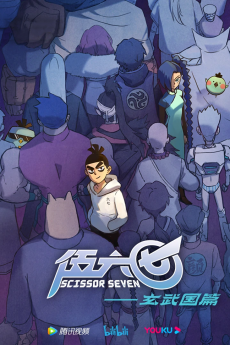
Scissor Seven Season 3—it’s got that exact rhythm: Seven’s over-the-top disguises and misdirection (like pretending to be a tea master while casing a tomb) echo Osiris’ shape-shifting antics and bluff-heavy encounters with gods like Anubis. Plus, the show’s running gag about ‘detective logic’ being hilariously flawed? That’s straight out of Ankh 2’s script—especially when Osiris confidently misreads a scarab amulet… then blames Thoth.