
I've Somehow Gotten Stronger When I Improved My Farm-Related Skills
📺Anime Details
📝Editorial Analysis
The smell of turned earth after rain—warm, loamy, alive—rises as the protagonist kneels in his field, fingers sinking into soil that glows faintly gold where he’s just tilled. A dragon, coiled like a contented cat beside him, exhales a puff of steam that smells faintly of roasted chestnuts. A demon girl in a sunhat offers him a basket of strawberries—each one pulsing with soft light—and when he takes one, his arm tingles, not with magic, but with the quiet, undeniable weight of growth. Not explosion. Not conquest. Accumulation. That moment—unhurried, tactile, absurdly tender—is the anime’s heartbeat.
What makes I've Somehow Gotten Stronger When I Improved My Farm-Related Skills feel unlike anything else isn’t its CGI or harem or dragons—it’s how it treats time. Not as a resource to be optimized, but as compost: slow, necessary, rich with unseen transformation. You don’t unlock strength—you harvest it, season after season, from the same patch of dirt. Amnesia isn’t a plot device to be solved; it’s the quiet hum beneath everything—the protagonist doesn’t remember who he was, so he pays attention to what his hands do now: pruning vines, coaxing dew from morning air, reading the subtle shift in a chicken’s posture before it lays. It makes you feel grounded, not in a clichéd “back to nature” way, but in the deeply human relief of not having to become someone else—just becoming more yourself, one seed, one sunrise, one adopted child’s laugh at a talking scarecrow at a time.
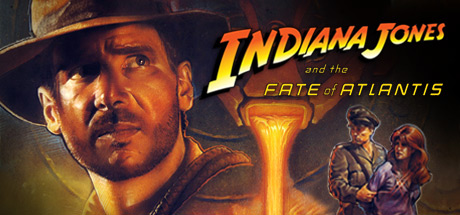
That same emotional DNA thrums in Indiana Jones® and the Fate of Atlantis™, where Indy doesn’t storm temples with brute force—he listens, deciphers, missteps, jokes mid-crisis, and solves ancient riddles not with power, but with accumulated knowledge and stubborn curiosity. The player review calls it “an archaeological wonder trapped in amber”—and yes, it’s about preservation, not domination. Like the anime’s farm, Atlantis isn’t conquered; it’s understood, layer by layer, joke by joke, clue by clue. Both works treat mystery not as something to be exploded open, but as something to be cultivated.
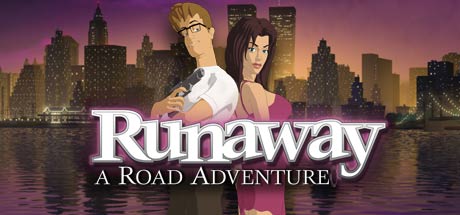
Then there’s Runaway, A Road Adventure, where Brian flees mafia goons not with guns or superpowers, but with improvisation, awkward charm, and the sheer, flustered momentum of keeping moving. The description says he escapes “without knowing how or why”—exactly like the anime’s amnesiac farmer, stumbling into strength he didn’t ask for and can’t quite explain. The player review remembers it fondly “when I was young”, calling it “one of my favourite ones”—not for spectacle, but for its warm, slightly broken, deeply personal rhythm. Both stories thrive in the liminal space between panic and peace, where danger is real but never all-consuming, and safety is found in the next small choice—not the final victory.
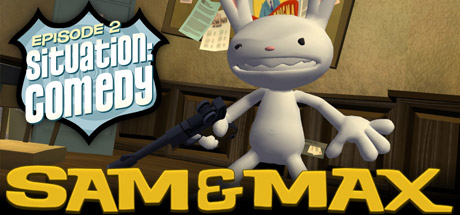
And Sam & Max 102: Situation: Comedy, with its talk-show-host hostage crisis resolved through absurd logic, puns, and a meatball-based conspiracy? Its DNA matches because it, too, weaponizes tonal whiplash as emotional honesty. The anime drops a dragon into a compost heap and treats both with equal seriousness—and Sam & Max drop federal pudding embargoes into presidential group-hug mandates, treating bureaucracy and chaos with the same deadpan reverence. Player reviews praise the “great reboot”, but what they’re really loving is the consistency of voice—the refusal to let stakes flatten tone. Like the anime, these games trust that laughter and labor aren’t opposites—they’re the same soil, just different crops.
This pairing sings to the viewer who keeps a notebook of cloud shapes, who replants basil three times before it sticks, who watches a boss battle and wonders what the monster’s lunch was. It’s for the player who saves before every dialogue branch—not out of fear of failure, but out of love for the possibility of another conversation, another wrong turn, another quiet, glowing strawberry grown exactly where it was meant to be.
🎮35 Games That Match the Vibe











Match Dimensions Explained
❓Frequently Asked Questions
Why does 'I've Somehow Gotten Stronger When I Improved My Farm-Related Skills' remind me so much of Sam & Max episodes?
Because both lean hard into absurdist escalation where mundane skill growth (like farming) triggers wildly disproportionate consequences—just like how Sam & Max’s deadpan detective work somehow spirals into meatball-based mob wars or pudding embargoes in Episode 104. The tone, pacing, and comedic whiplash between quiet competence and cartoonish chaos mirror Sam & Max 102’s talk-show hostage crisis or 103’s Ted E. Bear Casino heist—where every solved puzzle makes the world *more* unhinged, not less.
Is there a TV adaptation of Runaway, A Road Adventure like there is for Indiana Jones?
Nope—Runaway never got a live-action or animated series, unlike Indiana Jones®, which has multiple shows and films. But interestingly, Runaway shares Indy’s 1930s–2000s pulp-adventure DNA: Brian’s chaotic cross-country flight from mobsters echoes Indy’s globe-trotting Nazi-chasing, right down to the witty banter and inventory-based problem solving—even if Runaway’s New York 2000 setting swaps ancient temples for dive bars and payphones.
How do Sam & Max 103 and Indiana Jones® and the Fate of Atlantis™ compare as mystery-comedy hybrids?
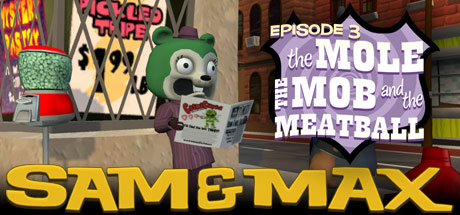
Both drop you into high-stakes conspiracies with zero chill—Indy racing Nazis to stop Atlantis’ weapon in 1939, while Sam & Max infiltrate the Ted E. Bear Mafia-Free Playland to rescue a mole buried under carnival glitter and mob slang. They nail the same rhythm: sharp dialogue (Indy’s dry one-liners vs. Max’s shotgun-wielding non-sequiturs), layered puzzles that reward observation (e.g., Indy decoding Atlantean glyphs vs. Sam & Max using a meatball as both prop and key), and a finale where logic bends just enough to land the joke—and the win.
What’s the best game like 'I've Somehow Gotten Stronger...' if I want something cozy but still packed with sarcastic, character-driven humor?
Sam & Max 102: Situation: Comedy is your perfect match—it’s got that warm, slightly ramshackle charm (think mismatched couches and fluorescent studio lights) but delivers rapid-fire wit through Sam’s weary professionalism and Max’s unhinged energy. You’ll laugh at Myra Stump’s hostage-taking talk show antics just like you’d chuckle at farm-skill upgrades accidentally summoning ancient deities—both games treat absurdity like a shared inside joke between player and protagonist.