
Persona4 the Golden ANIMATION
📺Anime Details
📝Editorial Analysis
Rain slicks the asphalt of Yasogami High’s empty parking lot, and the moped’s engine cuts out just as the first bell rings—too late, again. You hear it before you see it: the low, resonant thrum of the Midnight Channel’s static bleeding into the real world, a sound that doesn’t belong in Inaba’s humid August air but settles in your ribs like a second heartbeat. The camera lingers on the protagonist’s gloved hand gripping the handlebars—not clenched, not relaxed, just holding on, as if balance itself is a temporary agreement with reality.
That’s the feeling Persona4 the Golden ANIMATION lives inside: quiet dread wrapped in sun-bleached normalcy. Not horror, not action—but the slow, sinking certainty that something sacred has been violated, and no one else hears the static. It’s the weight of unspoken grief in a classroom full of laughing teens; the way a tsundere’s sharp retort cracks open just long enough to reveal exhaustion; the sheer, stubborn ordinariness of riding mopeds through golden-hour streets while gods whisper from fogged TV screens. This isn’t urban fantasy as spectacle—it’s urban fantasy as weather: persistent, atmospheric, humming beneath the pavement.
The games that share this emotional DNA don’t match on plot or power systems—they match on tonal gravity. Take Indiana Jones® and the Fate of Atlantis™, where 1939 hangs thick with dread, not just because Nazis are after a weapon, but because the world feels fragile, like old parchment about to tear. The player review calls it “an archaeological wonder trapped in amber”—exactly how Persona4 the Golden ANIMATION treats time: every summer day preserved with such tactile detail (the smell of rain on hot concrete, the flicker of convenience store lights at midnight) that nostalgia becomes a kind of archaeology. You’re not solving puzzles—you’re excavating meaning from routine.
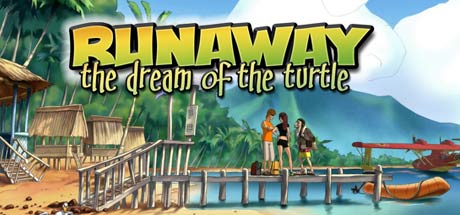
Then there’s Runaway, A Road Adventure, set in New York, 2000, where Brian flees mafia gangsters without knowing how or why. That disorientation—the sudden rupture of safety, the scrambling for coherence amid chaos—is pure Inaba. The player review admits it’s “outdated today”, yet remembers it as “one of my favourite ones”—not for polish, but for how it made confusion feel personal, urgent, strangely tender. Like when Yu walks into Junes’ food court and realizes he’s the only one who sees the fog rolling in—not as threat, but as invitation to pay attention. Both ask you to trust your unease before the plot explains itself.
And the Sam & Max episodes—102: Situation: Comedy, 103: The Mole, the Mob and the Meatball, 104: Abe Lincoln Must Die!—all pivot on absurd crises that somehow matter. Myra Stump holding her audience hostage over talk show logic; a mole vanishing inside a mafia-free playland; Abe Lincoln enacting pudding embargoes—these aren’t jokes at the stakes. They’re jokes in service of them. The player reviews all note the “great reboot”, the care taken to restore clarity (“download TTres to play in 1080p”), because the humor only lands if the world feels lived-in enough to break. Just like Persona4 the Golden ANIMATION’s tonal whiplash—Yosuke yelling about grilled eel one moment, then staring silently at a bloodstained shoe the next—the comedy isn’t relief. It’s proof the characters are still breathing, still trying to name what’s wrong.
This pairing speaks to someone who watches a scene of Chie scolding Yukiko for being “too perfect” and feels their throat tighten—not because of romance, but because she’s naming the cost of holding yourself together. Someone who plays Sam & Max not for punchlines, but for the way Max’s ridiculousness makes Sam’s quiet vigilance more devastating. Someone who saves Indiana Jones’ journal not to win, but because the handwriting feels like a lifeline across decades. These aren’t stories about saving the world. They’re about keeping faith with small truths—that fog means something, that a moped ride matters, that laughter can be armor and wound, all at once.
🎮19 Games That Match the Vibe








Match Dimensions Explained
❓Frequently Asked Questions
Why does Indiana Jones and the Fate of Atlantis feel like a Persona 4 Golden anime vibe despite being an old adventure game?
It nails that same sharp, character-driven mystery energy—like when Yu Narukami interrogates suspects in the Midnight Channel, Indy digs into occult conspiracies with dry wit and moral weight. The banter between Indy and Sophia Hapgood mirrors the Social Link warmth you get with characters like Chie or Yukiko, and the 1939 setting’s looming dread (Nazi agents hunting Atlantis) echoes P4G’s tension between everyday life and supernatural stakes.
Is there an anime adaptation of Runaway: A Road Adventure like Persona 4 Golden got?
Nope—Runaway never got an anime adaptation, unlike P4G. It stayed purely a point-and-click adventure: Brian’s chaotic escape with Gina from mobsters in 2000 NYC is all told through clever dialogue trees and visual gags—not cutscenes or voice-acted arcs. Fans love its scrappy charm (‘one of my favourites when I was young’), but it’s strictly a game-only story.
How is Sam & Max 102: Situation: Comedy different from Persona 4 Golden in tone, even though both are mystery + comedy?
P4G balances heartfelt teen drama with surreal horror—think Nanako’s hospital scene or the Velvet Room’s quiet gravity—while Sam & Max 102 goes full absurdist satire: Myra Stump holding her talk-show audience hostage over bad ratings feels like if Teddie hosted a late-night variety show gone rogue. It’s all rapid-fire jokes, cartoon logic, and zero emotional downtime—no Social Links, just pure, unfiltered chaos.
What’s the best ‘Games Like Persona 4 Golden ANIMATION’ pick if I want something with that same witty, small-town-mystery-with-heart vibe but lighter on angst?
Go for Sam & Max 103: The Mole, the Mob and the Meatball—it’s got the cozy, offbeat small-town setting (Ted E. Bear Mafia-Free Playland & Casino), a tight-knit cast riffing like the Investigation Team, and mystery stakes that feel urgent but never bleak. You’ll spot the same rhythm: banter-heavy investigations, quirky suspects, and payoff moments that land because they’re funny *and* satisfying—just swap Junes shopping mall for a meatball-themed casino heist.