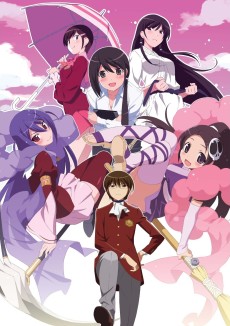
The World God Only Knows II
Katsuragi is back, and together with Elsie the hunt for loose souls continues on. This time however, they are joined by Elsie's friend and fellow Demon, Haqua.
(Source: Anime News Network)
📺Anime Details
📝Editorial Analysis
The fluorescent buzz of a high school hallway—sudden, sharp, and slightly off-key—as Keima Katsuragi pauses mid-stride, eyes locked on a girl whose hair glints like spun copper under the overhead lights. Not because she’s blushing or stammering, but because she’s glaring, arms crossed, one foot tapping with furious precision—and yet, beneath that glare, there’s the faintest tremor in her lower lip. Elsie materializes beside him, tail flicking, whispering something about “soul resonance instability,” while Haqua watches from the stairwell, arms folded, expression unreadable but heavy—not with menace, but with the quiet weight of someone who’s seen too many contracts break. That split second—where romance, absurdity, supernatural stakes, and teenage fragility all collide in the hum of cheap lighting—is where The World God Only Knows II lives.

It doesn’t feel like a harem anime. It feels like détente. Every interaction is a negotiation—not just between Keima and the girls he “conquers,” but between sincerity and performance, between emotional exposure and self-protective irony. The show pulses with tension, not tension as danger, but as suspension: the breath held before confession, the pause after a joke lands too well, the way Haqua’s dry commentary slices through Elsie’s exuberance like a scalpel—precise, necessary, never cruel. There’s no grand apocalypse looming; instead, there’s the low-grade panic of misread signals, the exhaustion of maintaining masks, the sudden, startling warmth when one slips. It’s melancholic exploration disguised as parody—every tsundere outburst a tiny fortress, every demon contract a metaphor for how we bargain with our own vulnerability.
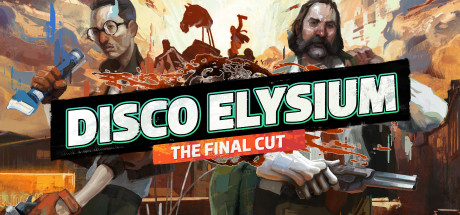
That same emotional DNA thrums in Disco Elysium - The Final Cut, where the detective’s fractured psyche isn’t just backstory—it’s the terrain. Like Keima parsing a girl’s contradictory words and posture, you parse your own skill checks: “Logic” might tell you the suspect is lying, but “Empathy” whispers that her lie is armor. The player review nails it: “Capital has the ability to subsume all critiques into itself.” That’s Haqua’s worldview—cynical, systemic, aware of how easily care gets co-opted. Both the anime and the game treat emotional labor as detective work: reading micro-expressions, backtracking through contradictions, realizing too late that your “solution” was just another layer of avoidance.
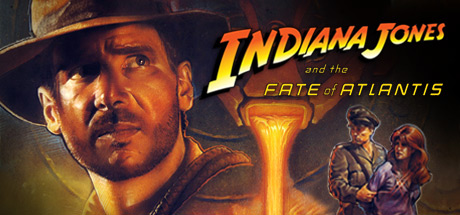
Then there’s Indiana Jones® and the Fate of Atlantis™, where archaeology becomes farce and gravitas collapses into slapstick—Nazi agents bumbling over ancient traps, Indy dodging booby-trapped corridors while delivering deadpan one-liners. Just like Keima navigating a classroom full of repressed feelings and demonic interference, Indy moves through a world where everything is both deadly serious and utterly ridiculous. The player calls it “an archaeological wonder trapped in amber”—and that’s exactly how The World God Only Knows II treats its own genre conventions: preserved, polished, reverent and gently mocking. The stakes are cosmic (lost souls, Atlantean weapons), but the tone stays grounded in human fumbles—Elsie tripping over her own tail mid-spell, Haqua sighing at Keima’s latest tactical misstep.
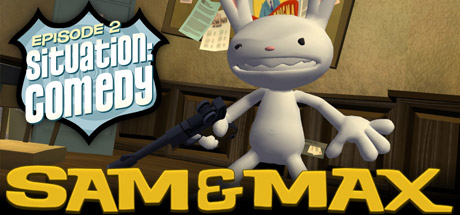
And Sam & Max 102: Situation: Comedy, where a talk show host holds her audience hostage—not with guns, but with performance anxiety made manifest. Sam & Max barge in, armed with absurd logic and rubber chickens, treating existential dread as a puzzle to be solved with duct tape and wordplay. That’s the show’s heartbeat: the belief that comedy isn’t escape—it’s calibration. When Keima deploys a perfectly timed otaku reference to disarm a girl’s anger, or when Haqua delivers a withering critique of demon bureaucracy while handing Keima a thermos of tea, it’s the same energy: using humor not to deflect feeling, but to create space where feeling can finally land.
This pairing isn’t for fans of “romance” or “comedy” as genres—it’s for people who recognize the exhaustion of being emotionally bilingual: fluent in irony but starving for sincerity, fluent in systems but aching for slippage. It’s for the viewer who watches Keima’s fingers hover over his phone—not texting a girl, but rehearsing the text—and feels their own chest tighten. For the player who chooses the “Lie” option in Disco Elysium not to deceive, but because truth feels too loud right now. They’re the ones who’ll pause mid-episode, mid-quest, mid-sentence—and laugh, sharply, because they just realized: the joke was always the shield, and the shield was always trembling.
🎮66 Games That Match the Vibe
















Match Dimensions Explained
❓Frequently Asked Questions
Why does The World God Only Knows II match with Disco Elysium — they seem totally different?
It’s all about that razor-sharp tonal whiplash: Keima’s deadpan, hyper-logical dating sim logic mirrors Disco Elysium’s detective literally arguing with his own skill voices (like Logic vs. Empathy) in real time. Both use absurd comedy to undercut melancholy — think Keima analyzing girls like case files, just like Harry DuBois dissecting a crime scene while hallucinating a communist badger named ‘The Revolutionary.’
Is there an anime or manga adaptation of Indiana Jones and the Fate of Atlantis?
Nope — it’s purely a game, and a beloved one at that. LucasArts’ 1992 point-and-click classic inspired zero official anime or manga, but its DNA is *all* over The World God Only Knows II’s blend of archaeology-adjacent stakes, Nazi villains with cartoonish menace, and Keima’s ‘heroic’ overconfidence mirroring Indy’s swagger in the WARP TV studio or Ted E. Bear Casino.
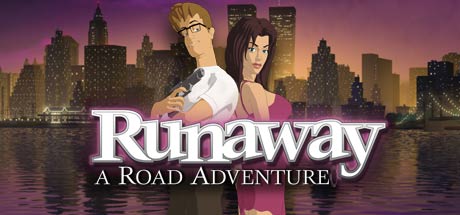
How does Runaway compare to Sam & Max 102: Situation: Comedy?
Runaway leans into grounded, almost noir-ish tension — Brian fleeing mobsters with a mysterious woman feels like a live-action rom-com thriller — while Sam & Max 102 goes full surreal satire: Myra Stump holding her talk-show audience hostage with a malfunctioning laugh track is pure cartoon chaos. Both share that 83-score sweet spot in Mystery & Detective + Comedy & Parody, but Runaway’s New York 2000 grit contrasts sharply with Sam & Max’s neon-drenched, fourth-wall-breaking absurdity.
What’s the best game like The World God Only Knows II if I want something hilarious but also emotionally weird and slightly sad?
Disco Elysium — hands down. It nails that same bittersweet cocktail: Keima’s detached analysis of girls’ emotional states? That’s Harry DuBois’ entire skill system talking back at him — ‘Shivers’ whispering dread, ‘Volition’ begging him to stop drinking, all while he investigates a murder in rain-soaked Revachol. Player reviews even call it ‘a cruel irony’ — just like how TWGOKII’s dating mechanics mask real loneliness and growth.