
86 EIGHTY-SIX
Called “Juggernaut,” these are the unmanned combat drones developed by the Republic of San Magnolia in answer to the attacks by the autonomous unmanned drones of the neighboring Empire of Giad, the “Legion”. But they’re only unmanned in name. In reality, they are piloted by the Eighty-sixers—those considered to be less than human and treated as mere tools.
Determined to achieve his own mysterious ends, Shin, the captain of Spearhead Squadron, which is comprised of Eighty-sixers, continues to fight a hopeless war on a battlefield where only death awaits him.
(Source: Crunchyroll)
📺Anime Details
📝Editorial Analysis
The static hiss of a broken comms channel. A single, unblinking red light on a cracked cockpit console—not the Legion’s, but theirs: a Juggernaut’s interior, dim, cold, smelling of ozone and dried blood. Shin’s hand hovers over the throttle, knuckles white—not from fear, but from the weight of knowing every command he gives will erase another name from a list no one else keeps. There’s no heroic music. Just wind, distant explosions, and the low groan of metal stressed beyond design limits. That silence before the order—that’s where 86 EIGHTY-SIX lives.

It doesn’t feel like war as spectacle. It feels like erasure made audible. The Republic’s propaganda calls them “unmanned”—a lie so total it hollows out language itself. What lingers isn’t the mecha battles (though they’re brutal, precise, exhausting), but the way Lena’s voice cracks when she reads deployment orders aloud, as if speaking the names might anchor them to reality—and how often those names vanish before the sentence finishes. This is dystopia not as ruined skyline, but as bureaucratic suffocation: class struggle calcified into policy, tragedy worn like standard-issue fatigues. You don’t just watch people die—you watch them stop being counted. That’s the ache: grief without witnesses, courage without credit, survival that feels like complicity.
BioShock™ resonates because it weaponizes the same suffocating irony: a utopia built on dehumanization, sold as liberation. Its description calls it a “shooter unlike any you’ve ever played,” and yes—the plasmids, the Big Daddies—but what sticks is the slow, sickening realization that Rapture’s “objectivist” paradise demanded the erasure of the “unfit” just as San Magnolia demands the Eighty-sixers’ silence. A player review calls it “one of the most revolutionary games ever”—and it is, precisely because its horror isn’t in the splicers’ mutations, but in the logic that produced them. Like 86 EIGHTY-SIX, it forces you to move through a world where ideology has already murdered empathy, and every corridor whispers: you were never meant to see this.
Assassin's Creed™: Director's Cut Edition shares that bone-deep tension between duty and disillusionment. Its description frames it as redefining action by merging “tactics” with narrative weight—and while its visuals are dated (as one reviewer notes), its core is tactical warfare as moral navigation. Altaïr doesn’t just assassinate; he decodes systems of control, questions orders, watches ideology curdle into tyranny. That mirrors Shin’s arc—not as a rebel shouting slogans, but as a captain who calculates survival within a machine designed to grind him down. The game’s “Adult & Dark Seinen” dimension isn’t about gore—it’s about the exhaustion of seeing the gears turn, knowing your blade serves the very hierarchy that denies your humanity. Both demand you fight inside the system until the system itself becomes the enemy.
Tribes: Ascend, at first glance, seems all velocity and chaos—“mindless fun,” as a player admits. But look deeper at its listed dimensions: Mecha & Military Sci-Fi, Cyberpunk & Dystopia. Its legacy isn’t just speed—it’s squad-based asymmetry where lighter classes scout, heavies hold lines, and everyone depends on coordinated drops, flares, and callouts… yet remains utterly expendable in the meta. That friction—between razor-sharp teamwork and systemic disposability—echoes Spearhead Squadron’s reality. They don’t win wars; they buy time. Their “fun” is survival under fire, their “expansions” are just new ways to delay the inevitable. The player’s wistful note—“it could have been expanded… had so much potential”—mirrors how 86 EIGHTY-SIX makes you ache for the futures these kids should’ve had, not the ones they’re forced to pilot.
This pairing isn’t for fans of clean victories or power fantasies. It’s for the ones who pause mid-battle to read a letter from home they’ll never deliver. For players who replay BioShock’s audio diaries not for lore, but to hear the last gasp of a person the system called “expendable.” For anyone who’s ever felt the quiet fury of being capable, necessary, and still invisible—who recognizes that the heaviest armor isn’t plating or plasmids, but the weight of being told your life isn’t worth naming. These aren’t stories about saving the world. They’re about refusing to let the world forget how it broke you—and still choosing, against all logic, to steer straight into the storm.
🎮30 Games That Match the Vibe
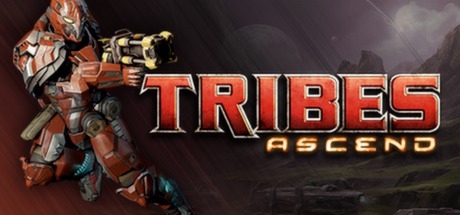









Match Dimensions Explained
❓Frequently Asked Questions
Why does Tribes: Ascend feel so similar to 86 EIGHTY-SIX’s aerial combat scenes?
Because both lean hard into high-speed, physics-based movement in open battlefields—think Shin’s gravity-defying ‘Legion’ dashes across snowy plains mirrored in Tribes: Ascend’s jetpack-and-skis traversal over vast, undulating terrain. The Mecha & Military Sci-Fi dimension ties them together, and players even mention how the tactical use of terrain and momentum in Tribes’ ‘Capture the Flag’ modes echoes the coordinated, real-time coordination seen in 86’s ‘Legion vs. Legion’ skirmishes.
Is there an anime or manga adaptation of BioShock that’s like 86 EIGHTY-SIX?
No official anime or manga adaptation of BioShock exists—but fans often compare BioShock’s tone to 86 because both are Adult & Dark Seinen political thrillers set in collapsing dystopias. Think Atlas’ radio monologues echoing Lena’s fragmented broadcasts, or Rapture’s decaying art deco halls feeling as claustrophobic and morally ambiguous as the Republic’s propaganda-saturated bunkers. That shared Cyberpunk & Dystopia + Political Thriller DNA is why it’s on the match list despite no direct adaptation.
How does Assassin’s Creed: Director’s Cut Edition compare to 86 EIGHTY-SIX in terms of military strategy and moral weight?
It’s way less about large-scale mechanized warfare and more about intimate, stealth-driven tactical warfare—like Altair navigating Acre’s rooftops versus Shin leading a squad through a ruined city. But both share that Adult & Dark Seinen intensity: Altair’s disillusionment with the Brotherhood mirrors Shin’s crisis of faith in the Republic’s ideology, and the Director’s Cut’s emphasis on choice-driven consequences (even if limited by 2007 tech) gives it a thematic kinship with 86’s heavy focus on agency amid systemic oppression.
What’s the best game like 86 EIGHTY-SIX if I want that bleak, rain-soaked dystopian vibe with deep political tension?
BioShock™ is your strongest match—it nails that oppressive, rain-lashed, underwater-dystopia atmosphere (Rapture’s flooded corridors dripping with decay), and its layered political thriller storytelling (Andrew Ryan’s objectivist nightmare vs. Fontaine’s populist manipulation) hits the same gut-punch moral complexity as 86’s critique of fascism and dehumanization. With a 76 score and shared dimensions in Cyberpunk & Dystopia and Adult & Dark Seinen, it’s the closest tonal sibling on the list.