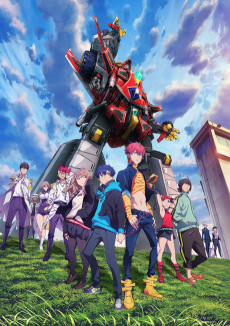
SSSS.DYNAZENON
One day, Yomogi Asanaka, a first-year student at Fujiyokidai High School, runs into a mysterious man named Gauma who claims to be a “kaiju user.”
The sudden appearance of a kaiju is followed by the entry of the gigantic robot, Dynazenon. In the wrong place at the wrong time are Yume Minami, Koyomi Yamanaka, and Chise Asukagawa, who are dragged into the fight against the kaiju.
(Source: Funimation)
📺Anime Details
📝Editorial Analysis
The rain in SSSS.DYNAZENON doesn’t fall—it hangs, thick and silver, as Yomogi Asanaka stands frozen beneath a flickering streetlamp, watching Gauma’s silhouette dissolve into static mid-sentence. Not with drama, not with fanfare—just a quiet unraveling, like a tape rewinding without sound. His hand is still outstretched. The kaiju’s roar hasn’t even faded from the air yet, but something deeper has already cracked open: the certainty that reality is held together by fragile, shared attention.

That’s the feeling—not spectacle, not scale, but tremor. Not the weight of mecha landing, but the hush after, when five teenagers stand ankle-deep in wet asphalt, breathing hard, realizing they’ve just done something impossible together, and no one’s written the rules for what comes next. It’s heterosexual romance that blooms in glances across crowded hallways—not confessions, but the ache of almost-speaking; it’s coming of age as quiet recalibration, where power isn’t claimed, but accepted, reluctantly, like a borrowed coat two sizes too big. The denpa pulse underneath it all isn’t just stylistic—it’s the hum of uncertainty made audible, the frequency at which adolescence vibrates when you’re holding hands with someone while a city burns behind you and you don’t know if you’re saving it—or each other.
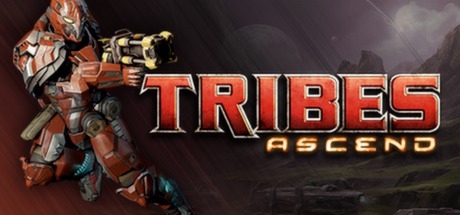
Tribes: Ascend shares that same breathless, collective rush—not in story, but in motion. Its description calls it “Mecha & Military Sci-Fi, Action Spectacle,” and the player review nails the emotional core: “Man, I used to love this game. Just mindless fun.” But it’s not mindless—it’s synchronized. The glide, the jetpack arc, the split-second trust in your teammate’s grenade timing—it’s the same electricity that crackles when Yume, Koyomi, Chise, and Yomogi finally move as one inside Dynazenon, not because they’ve mastered the system, but because they’ve stopped hesitating at the same time. That euphoria isn’t about winning. It’s about the shared velocity of becoming capable—together.
Then there’s NieR:Automata™, tagged with “Mecha & Military Sci-Fi, Action Spectacle, JRPG Narrative.” Its description frames androids 2B, 9S, and A2 fighting machines in a dystopia—but the player review cuts deeper: “We’re trapped in a never-ending spiral of life and death” and “If a being can feel pain, fear, or loneliness, does it matter if it’s artificial?” That’s the quiet thunder beneath SSSS.DYNAZENON’s surface too. Gauma isn’t just a kaiju user—he’s a man who’s worn his grief like armor for decades, and the show never asks us to forgive him, only to witness him soften. Like 2B and 9S, the characters in SSSS.DYNAZENON aren’t defined by their roles (kaiju user, pilot, bystander) but by how tenderly they hold space for each other’s fractures—even when they don’t have the words.
And the Prince of Persia trilogy—Warrior Within, The Two Thrones, The Sands of Time—all share the dimension “Time & Memory, Action Spectacle.” Their descriptions orbit trauma, consequence, and the body remembering what the mind tries to bury: Dahaka’s chase, the Prince’s corrupted shadow, the dagger’s rewind—all literalize how memory pursues you. The player reviews echo it: “a journey,” “my childhood completing it was a journey,” “tactical platforming that is satisfying due to the locked directions.” That’s SSSS.DYNAZENON’s rhythm too—the way Yomogi’s hesitation isn’t weakness, but muscle memory of avoidance, and every time he steps forward, it’s not heroism—it’s retraining his nervous system. The fight scenes don’t escalate—they recoil, pause, breathe, then surge again—not because the stakes rise, but because the characters finally let themselves feel the ground beneath them.
This is for the person who replays the cafeteria scene where Chise quietly slides her lunch box toward Yomogi—not because she’s bold, but because she’s done waiting for permission to care. For the player who still feels the phantom vibration of a DualShock controller from Tribes: Ascend’s ski-jump launch, or who paused NieR:Automata™ mid-battle to stare at 9S’s trembling hands, or who, at twelve years old, ran through Babylon’s crumbling halls whispering “I remember this part” like a prayer. They don’t want catharsis. They want resonance: the shiver when fiction names the quiet, stubborn, human work of showing up—again and again—even when the world’s on fire, and all you have is a borrowed robot, a shared umbrella, and the terrifying, beautiful certainty that you’re not alone in the tremor.
🎮15 Games That Match the Vibe


Match Dimensions Explained
❓Frequently Asked Questions
Why does SSSS.DYNAZENON feel so much like Prince of Persia: The Sands of Time?
It’s all about that tactile, momentum-driven platforming and time-bending tension—like when the Prince rewinds a misstep mid-leap, DYNAZENON’s Gojo constantly recalibrates his stance mid-combo during giant mecha fights. Both hinge on precise timing, environmental rhythm, and that same breathless, almost balletic action spectacle—even if PoP leans into ancient Persia while DYNAZENON blasts through Tokyo with kaiju-sized consequences.
Is there a NieR:Automata game with mecha combat and philosophical depth like DYNAZENON?
Absolutely—NieR:Automata is *the* match: 2B’s blade work against towering machine lifeforms mirrors DYNAZENON’s human-piloted mecha duels, and both dig deep into identity, sacrifice, and what ‘life’ means (think 9S’s emotional unraveling vs. Gojo’s quiet grief over lost friends). It’s not just mecha-as-weapon—it’s mecha-as-metaphor, wrapped in gorgeous, melancholic action spectacle.
How does Tribes: Ascend compare to DYNAZENON for pure action spectacle?
Tribes: Ascend delivers that same adrenaline-fueled, physics-defying chaos—imagine DYNAZENON’s gravity-defying mecha dashes and aerial combos translated into jetpack-powered flag captures across snowy canyons. It’s less narrative-driven than DYNAZENON but nails the same visceral ‘mindless fun’ rush, especially in team-based objective modes where coordinated movement and split-second aim feel just as electric as Gojo and Yume syncing up for a finisher.
What’s the best game like DYNAZENON if I want that brooding, time-haunted vibe with intense chases?
Prince of Persia: Warrior Within is your perfect match—Dahaka’s relentless, screen-filling pursuit through crumbling underworld corridors hits the same nerve as DYNAZENON’s escalating stakes and psychological weight. That oppressive sense of inevitability, layered with raw swordplay and time-warped environments? Yeah—it’s got that exact brooding, urgent energy, especially when you’re scrambling to survive a chase that feels personal, not just procedural.