
Attack on Titan
Several hundred years ago, humans were nearly exterminated by titans. Titans are typically several stories tall, seem to have no intelligence, devour human beings and, worst of all, seem to do it for the pleasure rather than as a food source. A small percentage of humanity survived by walling themselves in a city protected by extremely high walls, even taller than the biggest of titans.
Flash forward to the present and the city has not seen a titan in over 100 years. Teenage boy Eren and his foster sister Mikasa witness something horrific as the city walls are destroyed by a colossal titan that appears out of thin air. As the smaller titans flood the city, the two kids watch in horror as their mother is eaten alive. Eren vows that he will murder every single titan and take revenge for all of mankind.
(Source: MangaHelpers)
📺Anime Details
📝Editorial Analysis
The first time Eren screams—not in rage, but in raw, animal terror—as the Colossal Titan’s steam billows over the crumbling gate of Shiganshina, the world doesn’t just end. It unspools. That heat-haze distortion isn’t visual flair—it’s the physical sensation of reality thinning, of centuries of fragile safety dissolving into a single, suffocating breath. You feel your own throat tighten. Not because of gore—though there is blood—but because the walls weren’t just stone. They were silence. And silence, once broken, can never be refilled.
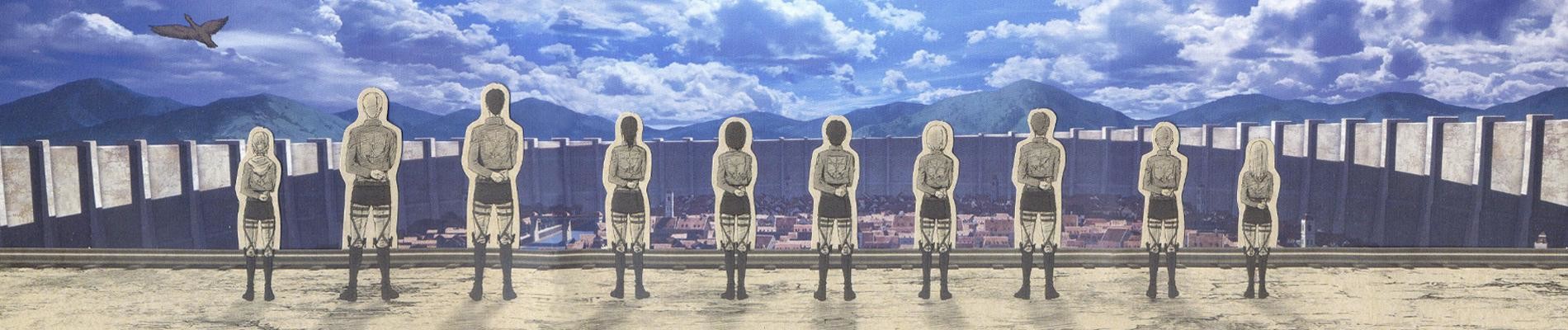
What makes Attack on Titan’s atmosphere so singular isn’t its kaiju scale or military structure—it’s the weight of inherited trauma, compressed into teenage shoulders and measured in meters of wall height. It’s the dread of memory before memory: a post-apocalyptic setting where the apocalypse isn’t past—it’s archived, ritualized, then violently reactivated. There’s no nostalgia here, no romantic ruin. Just the cold arithmetic of survival stacked against the grotesque joy of consumption—and the horrifying suspicion that the devourers remember more than the devoured. You don’t just watch it—you brace. For betrayal. For revelation. For the moment a friend’s smile freezes, then fractures, as their eyes go hollow with something older than language.
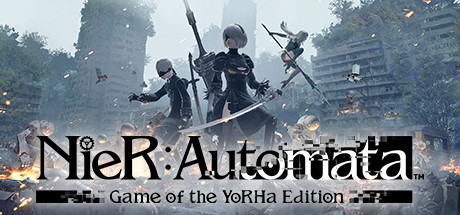
That same visceral bracing lives in NieR:Automata™, where androids 2B, 9S, and A2 fight machines in a machine-driven dystopia—and player reviews echo the anime’s emotional core: “We’re trapped in a never-ending spiral of life and death.” Not metaphor. Not theme. Spiral. Like the Rumbling’s cyclical logic, like the Founding Titan’s inherited memories looping across generations—this isn’t tragedy as event, but as structure. Both works force you to question agency inside systems designed to erase it. The cyberpunk & dystopia dimension isn’t aesthetic—it’s ontological. When 9S weeps over corrupted data, it lands with the same gut-punch as Mikasa clutching Eren’s scarf after he’s already gone—not to war, but beyond it.
Then there’s Prince of Persia®: The Sands of Time, where ancient Persia’s scorched sands hold legends “borne by blood and ruled by deceit”—a phrase that could describe Wall Maria’s foundation stone. Its player review praises “tactical platforming that is satisfying due to the locked directions,” which mirrors Attack on Titan’s own choreographed brutality: every vertical maneuver, every gear-swing, every ODM gear pivot is locked, precise, desperate—a dance where hesitation equals dismemberment. The Sands of Time weaponizes memory as rewind mechanic; Attack on Titan weaponizes memory as inheritance, as curse, as weaponized history. Both treat time not as line, but as trapdoor—one misstep, and you’re buried under what came before.
Even Pirates Vikings & Knights II, with its three-way war for honor, glory, and gold, resonates—not in tone, but in tactical warfare texture. Its player review laments imbalance (“devs R ass at balance”) while praising the chaotic, community-driven intensity of actual servers. That friction—between idealized code (the Wall’s perfect geometry, the Survey Corps’ doctrine) and the messy, unscripted violence of human collision—is pure Attack on Titan. The anime’s battles aren’t won by power alone; they’re won by adaptation mid-collapse: shifting alliances, improvised tactics, the sudden, ugly calculus of who lives when the Titans breach. PVK II’s hilarious, brutal melee—Vikings swinging axes while Pirates fire flintlocks mid-air—mirrors the show’s tonal whiplash: absurd, terrifying, darkly funny, and utterly human in its scrambling.
This isn’t about shared aesthetics. It’s about shared pressure points: the feeling of standing on a ledge built by ghosts, knowing the ground beneath you was paved with lies, and still choosing to leap—not toward victory, but clarity.
You’d love these pairings if you’ve ever paused mid-episode to stare at your own hands, wondering what they’d do if given the power to erase a generation’s pain—or if you’ve spent twenty minutes mastering a single wall-run in Prince of Persia just to feel, for three seconds, in control of time’s collapse. If your idea of catharsis isn’t triumph—but the quiet, shuddering exhale after the scream finally tears loose. If you don’t want heroes. You want people who break—and keep moving, even when their bones are hollow with inherited grief.
🎮22 Games That Match the Vibe



Match Dimensions Explained
❓Frequently Asked Questions
Why does Prince of Persia: The Sands of Time feel like Attack on Titan despite having no Titans?
It’s all about that high-stakes, momentum-driven movement and desperate evasion—like when you’re swinging across crumbling ruins as the Prince, dodging traps and enemies in tight sequences, it mirrors Eren’s vertical maneuvering system in sheer kinetic tension and split-second timing. The game’s rewind mechanic also echoes AoT’s time-bending urgency (think the Rumbling’s inevitability), and the dagger’s corrupting power feels tonally aligned with the Founding Titan’s tragic weight.
Is there an Attack on Titan video game adaptation I should actually play?
No official AoT game captures the full scope well—but NieR:Automata comes closest in spirit: its androids 2B and 9S grapple with identity, cyclical war, and existential dread just like Eren and Historia, while the machine-infested dystopia and brutal, fluid combat (especially the pod-assisted aerial combos) channel AoT’s scale and despair. Critics even noted how the game’s ‘never-ending spiral of life and death’ line hits like a gut punch straight out of the basement scene.
How does Pirates Vikings & Knights II compare to Unreal Tournament for AoT-style chaos?
Both deliver frantic, skill-based action spectacle—but PVKII trades UT’s laser-focused arena fragging for AoT-like squad-level mayhem: imagine Viking berserkers charging like Colossal Titan shockwaves, or Pirate grappling hooks yanking enemies mid-air like ODM gear swings, all in chaotic 32-player battles where terrain matters (just like Wall Maria’s collapsing streets). UT’s pure speed and precision feels more like elite Scout Regiment duels, while PVKII’s class-based chaos mirrors the messy, grounded brutality of early-season Titan fights.
What’s the best ‘grim, fast-paced, and emotionally heavy’ game like Attack on Titan?
NieR:Automata is your answer—its rain-lashed ruined cities, haunting piano score, and androids 2B and 9S wrestling with grief, loyalty, and dehumanization hit the same emotional rawness as Mikasa’s trauma or Levi’s weariness. Combat is lightning-fast but weighty (those sword combos *thud* like Titan punches), and the cyberpunk dystopia feels as suffocating and morally gray as Paradis under Marley’s shadow.